
Last updated November 2, 2026
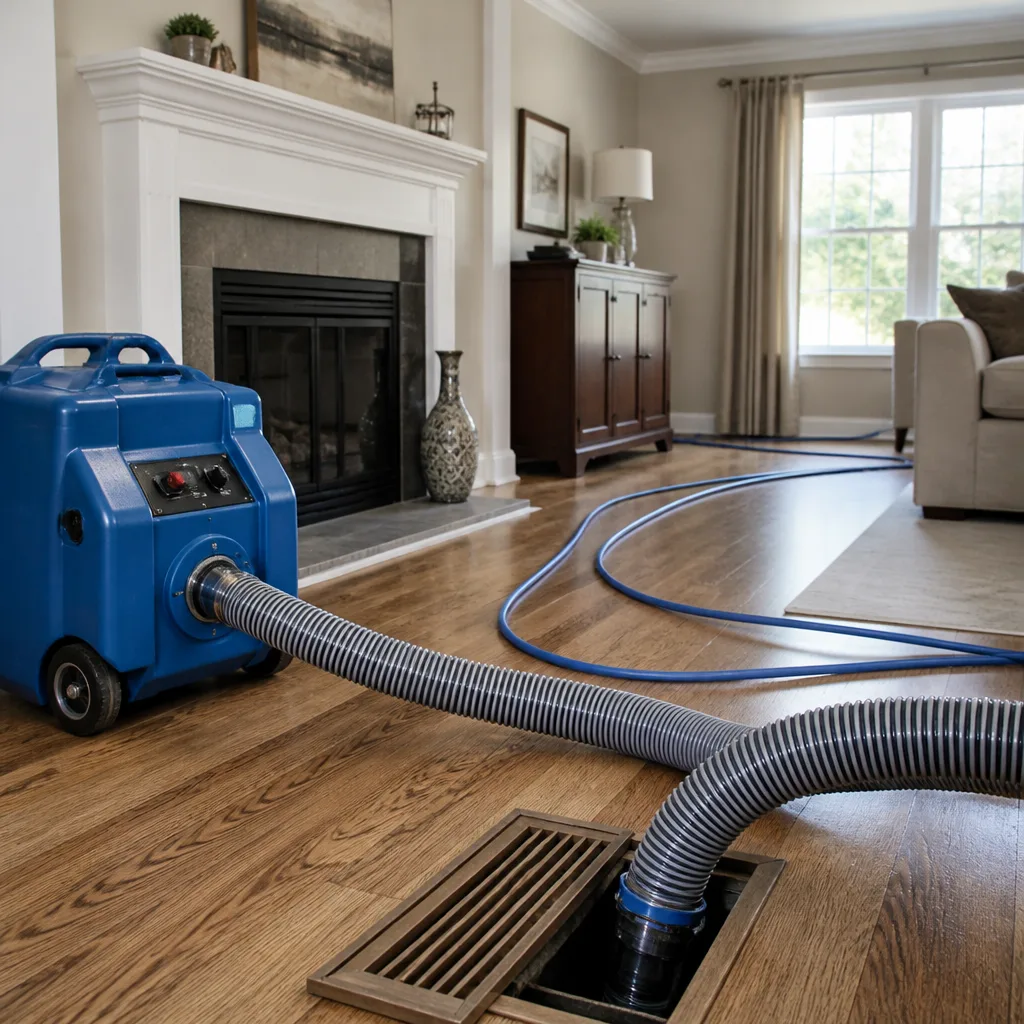 Whole-home duct cleaning
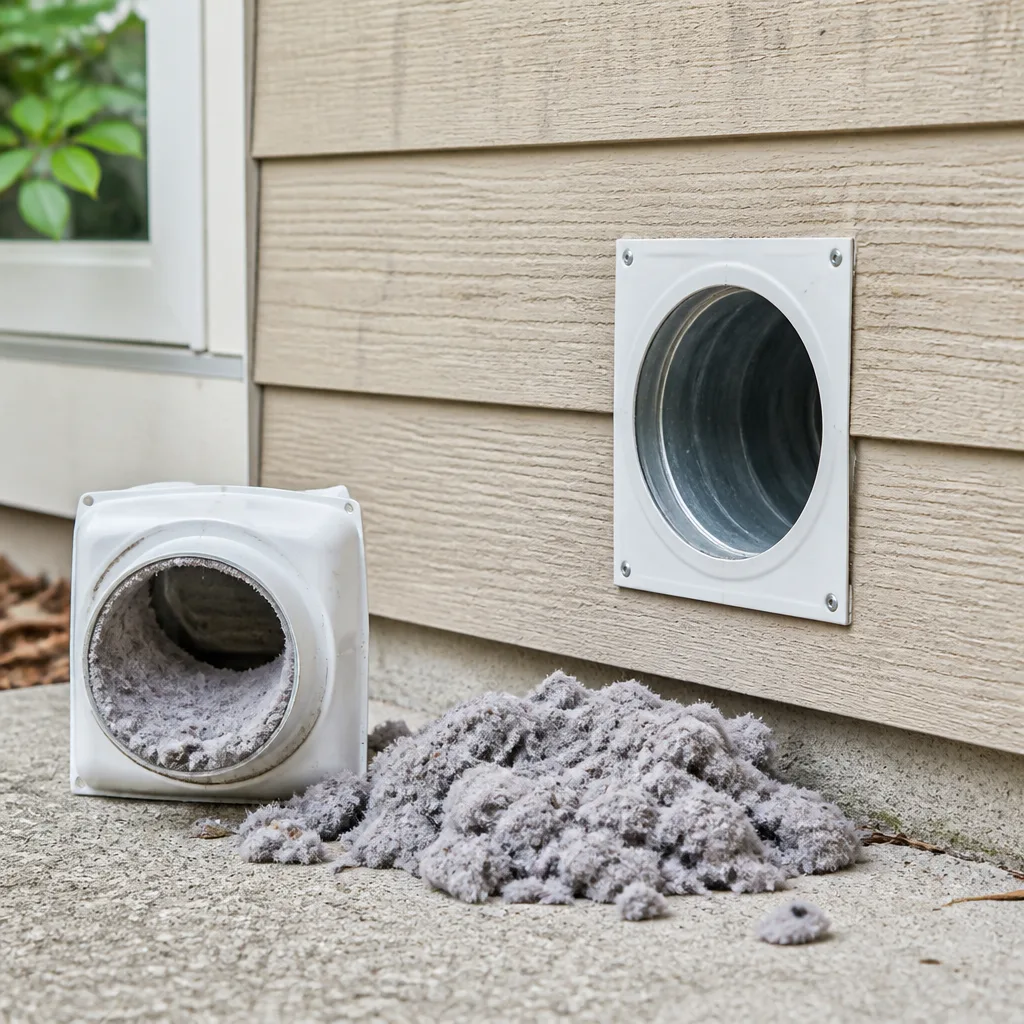 Dryer vent cleaning
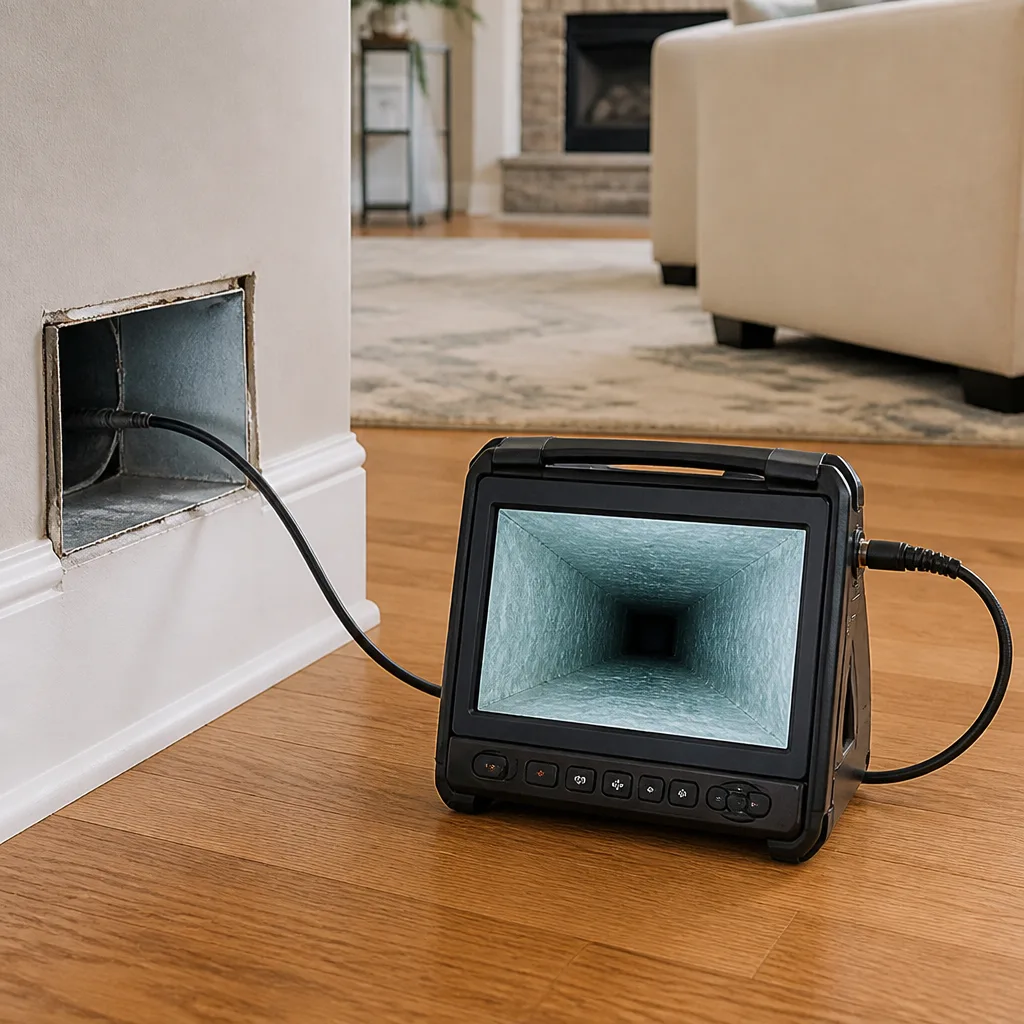 Camera inspection
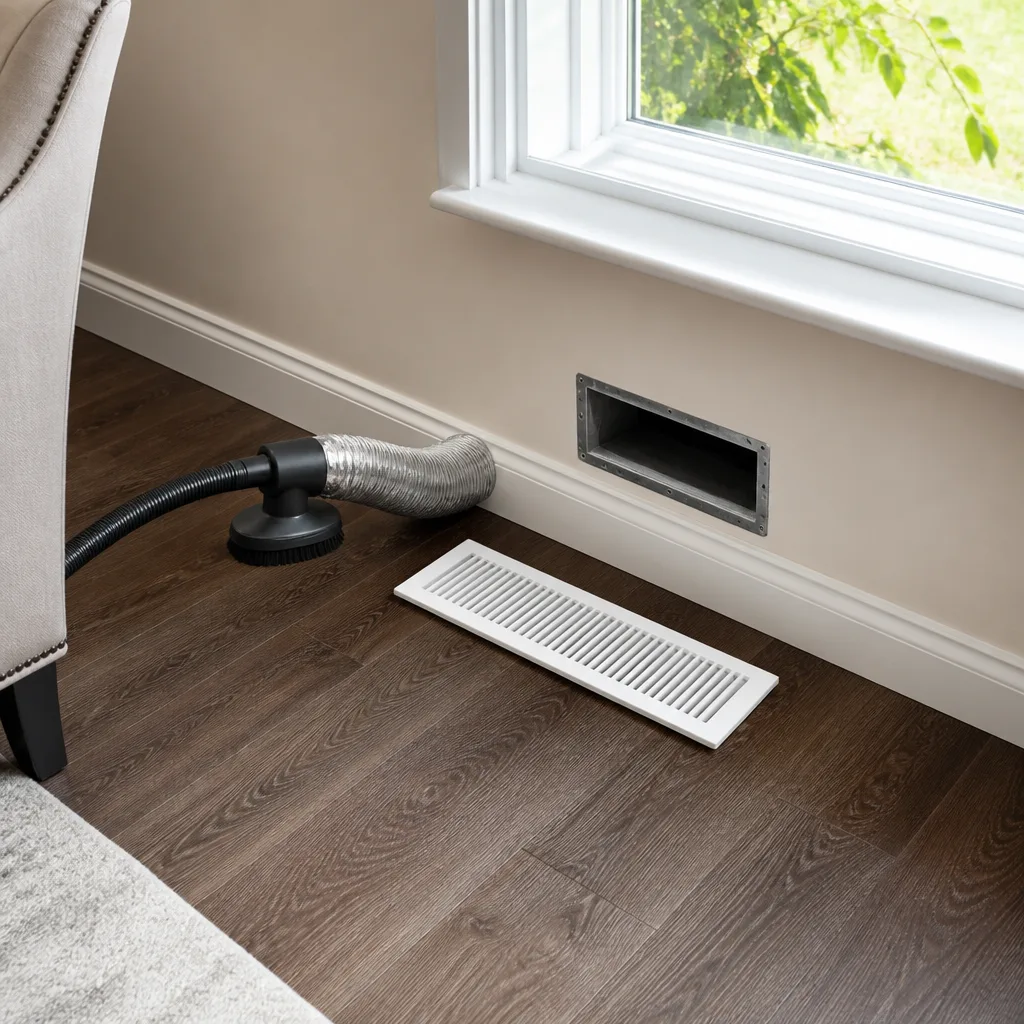 Sanitizing & deodorizing
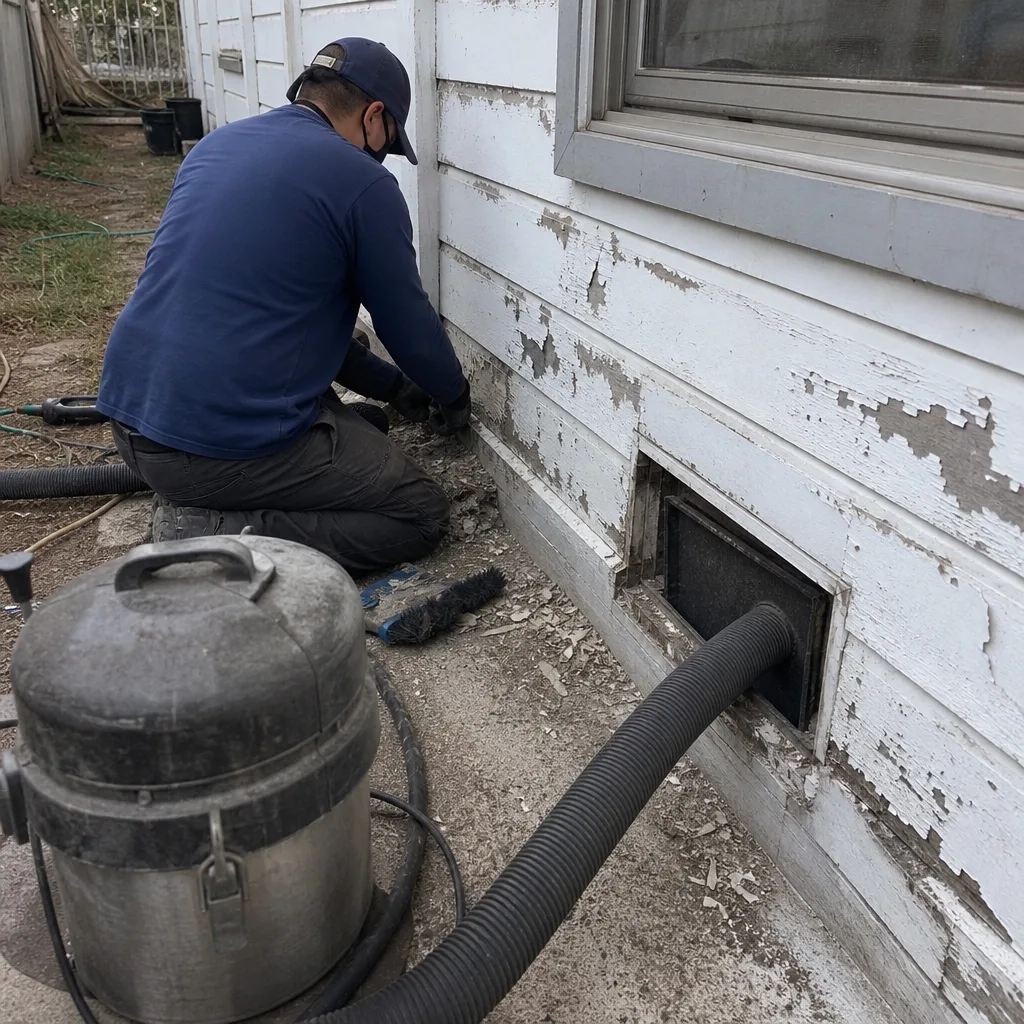
Whole-system duct and dryer vent check with before-and-after photos - you see exactly what came out of your vents
That "$99 whole-house special" is a bait ad - the real number appears once they are in your hallway, or the "clean" is a shop-vac at the register. We photograph the inside of your ducts before and after instead.
Air Duct Cleaning Maintenance Checklist for San Pedro Homeowners
Most duct maintenance checklists tell you to “change your filter every 90 days.” That advice was written for Phoenix, not for a neighborhood sitting two miles from one of the busiest commercial ports on the West Coast. In San Pedro, your ductwork contends with salt air that accelerates corrosion, diesel particulate from the Port of Los Angeles that settles as fine black dust, and a marine layer that keeps humidity high enough to turn accumulated debris into a damp, compacted mat inside your vents. This guide gives you a calibration schedule built around those specific conditions, so you know exactly what to inspect, when to schedule Air Duct Cleaning services, and when to call in equipment that can actually reach what’s inside your ducts.
Quick Answer
A realistic air duct cleaning maintenance checklist for San Pedro homeowners has three tiers: monthly filter checks (especially during Santa Ana wind events and summer port-traffic peaks), quarterly visual inspections of registers and return grilles for dust buildup or moisture staining, and a full professional extraction every 3 to 5 years using contact-vacuum equipment rather than a shop vac and a blower. Homes within a mile of the harbor or along the 110 freeway corridor often sit closer to a 3-year interval because of diesel particulate loading. If you haven’t had your ducts cleaned since you moved in, start with a professional assessment rather than guessing at their condition.
Styles & brands we work with
- Whole-home duct cleaning
- Dryer vent cleaning
- Camera inspection
- Sanitizing & deodorizing
Table of Contents
- San Pedro’s Environmental Stressors: What Your Ducts Are Actually Collecting
- The Monthly Filter Checklist: Your First Line of Defense
- Quarterly Visual Inspection: What to Look For at Registers and Grilles
- Professional Extraction: Why 3-5 Years Is the Realistic Interval Here
- Post-Renovation and Post-Pest Checklist: The Section Most Guides Skip
- What You Can Self-Inspect vs. What Requires a Camera Scope
- Record-Keeping Template for Resale and Warranty Documentation
- Common Mistakes to Avoid
- When to Call a Professional
San Pedro’s Environmental Stressors: What Your Ducts Are Actually Collecting
Your ductwork is a collection system for whatever is in the air outside your home. In San Pedro, that air is unlike almost any other residential market in Los Angeles County. We’re not being dramatic. The Port of Los Angeles processes millions of container units annually, and the diesel particulate from trucks, yard equipment, and ships doesn’t stay at the terminal. It travels inland, settles on roofs and window screens, and gets pulled into HVAC returns as fine black dust. Meanwhile, the marine layer rolls in most nights from late spring through early fall, keeping relative humidity elevated in crawl spaces, attics, and inside duct runs. That combination of fine particulate and moisture is what turns a dusty duct into a clogged, compacted one.
Three specific San Pedro conditions affect duct maintenance intervals more than any generic calendar schedule ever could:
- Port particulate: If you live in Harbor City, coastal San Pedro, or anywhere within a mile of the Vincent Thomas Bridge corridor, your ducts accumulate diesel soot at roughly twice the rate of inland neighborhoods. This isn’t an estimate pulled from a national chart; it’s what we observe when we camera-scope ductwork in these areas.
- Marine layer and humidity: Homes in lower San Pedro, around Gaffey Street and down toward Point Fermin, see more persistent humidity than the upper terraces. That humidity doesn’t just make dust stick; it supports mold growth when organic debris like pet dander and skin cells is present in the duct lining.
- Santa Ana winds: When offshore winds blow from the east, they pick up fine dust from the inland valleys and drive it through every gap in your building envelope. Your return grilles pull that dust directly into the duct system. October through February is the worst stretch.
The takeaway is simple: a checklist written for a dry, inland climate will systematically under-serve you here. Your ducts work harder because San Pedro’s air is dirtier and damper. The maintenance schedule below is built around that reality.
The Monthly Filter Checklist: Your First Line of Defense
Filter checks in San Pedro should happen every 30 days, not every 90. The reason is straightforward: when port activity peaks in the summer and autumn months, your filter reaches capacity faster. Once a filter is clogged, your system doesn’t stop pulling air through it; it starts pulling air around it, through gaps in the filter frame, and that bypass air carries unfiltered particulate directly into your ductwork. A clogged filter isn’t just an air-quality problem. It’s a duct contamination mechanism.
Here’s what to do monthly, in order:
- Locate every filter in your system. Most San Pedro homes built after 1980 have one central return filter. Older homes, especially bungalows in the coastal grid, may have filters at each return grille. A system with a Honeywell whole-house filtration unit will have an additional media filter at the air handler.
- Pull the filter and hold it up to a light source. If you can’t see light through the filter material, it’s saturated regardless of how many days it’s been in service. Replace it.
- Note the color and texture of the debris. Black, oily residue indicates diesel particulate from port traffic. Gray, fluffy dust indicates general household dust. If you see moisture stains or dark spotting in patches, that’s a sign of condensation or moisture intrusion, and it warrants a closer look at the duct run behind that filter.
- Check the filter frame seal. Gaps around the filter edge allow bypass air. If the frame doesn’t seal tightly, use a filter with a foam gasket edge or have the filter slot checked by a technician.
- Write the date on the filter frame before installing it. This takes five seconds and removes all guesswork when you’re standing in front of the return six weeks later trying to remember when you last made the swap.
For San Pedro specifically, we recommend using a MERV 8 to MERV 11 pleated filter as a baseline. Anything lower lets too much fine particulate through. Anything higher, like a MERV 13, can restrict airflow on older systems that weren’t sized for that resistance. If you run an Aprilaire whole-home air purifier or similar, follow the manufacturer’s media replacement schedule for that unit separately, because the main HVAC filter isn’t doing that work.
Quarterly Visual Inspection: What to Look For at Registers and Grilles
Four times a year, take fifteen minutes to walk your home and look at every supply register and return grille. This is not a cleaning task. It’s an inspection task. You’re looking for evidence of what’s happening on the other side of the grille, inside the duct run. San Pedro’s coastal air creates specific failure patterns that you can spot early if you know what you’re looking for.
Here’s the quarterly checklist:
- Dust accumulation on the register face or louvers. Light household dust is normal. Heavy, dark, oily buildup that returns within days of wiping is a sign of port particulate loading inside the duct system. The register is the exhaust point; what you see there has already traveled through the entire run.
- Visible mold or dark staining at the grille edges. In San Pedro’s damp marine layer, condensation at grille openings is common in coastal homes with older single-pane windows or uninsulated wall cavities. Mold at the grille doesn’t necessarily mean mold throughout the system, but it does mean moisture is present where it shouldn’t be, and the duct run behind that grille deserves a professional look.
- Rust or corrosion on metal registers or visible duct interiors. Salt air from the harbor accelerates corrosion on uncoated steel duct components. If registers look pitted or show orange-brown streaks, the ductwork behind them may be deteriorating.
- Airflow changes. If one room suddenly feels stuffy or a register that used to push noticeable airflow now feels weak, that’s a restriction somewhere in the run. It could be a disconnected joint, a collapsed flex duct, or years of debris compaction at a bend.
- Odor at startup. A musty or dusty smell when the system first kicks on is the signature of debris sitting in the ductwork during off-cycles and being stirred when airflow resumes.
Keep a simple notebook entry or phone note for each inspection. Even one line, like “March 15, no visible buildup at returns, Master bedroom register airflow seems reduced,” gives you a baseline for comparison and gives any technician you later hire a starting point.
Professional Extraction: Why 3-5 Years Is the Realistic Interval Here
The National Air Duct Cleaners Association says there’s no universal schedule for professional duct cleaning. That’s true, but it’s not helpful. For San Pedro, our field experience says the practical interval is every 3 to 5 years, with the shorter end applying to homes near the harbor, along major truck routes like Gaffey Street or the 110, or homes with pets and older HVAC systems. The longer end applies to homes in upper San Pedro with newer sealed duct systems, whole-house filtration, and disciplined filter habits.
Why every 3 to 5 years? Because that’s typically how long it takes for a meaningful debris layer to develop inside the return and supply runs. A thin dust film is normal and relatively harmless. The problem starts when that film becomes a thick, oily mat that traps moisture, feeds dust mites, and provides a medium for mold growth when humidity spikes. Port particulate accelerates this because diesel soot is sticky. It binds other debris together and adheres to duct walls in a way that ordinary household dust doesn’t.
Professional extraction in San Pedro should include:
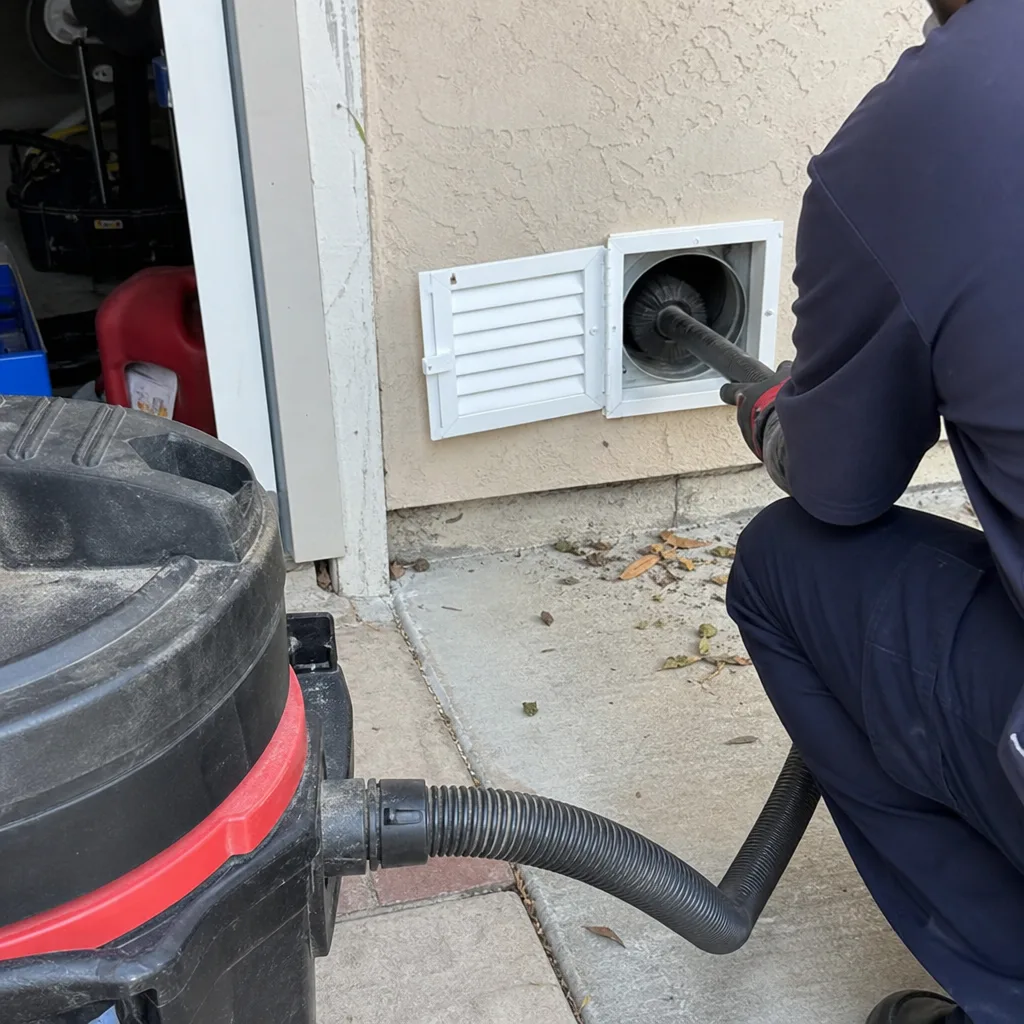
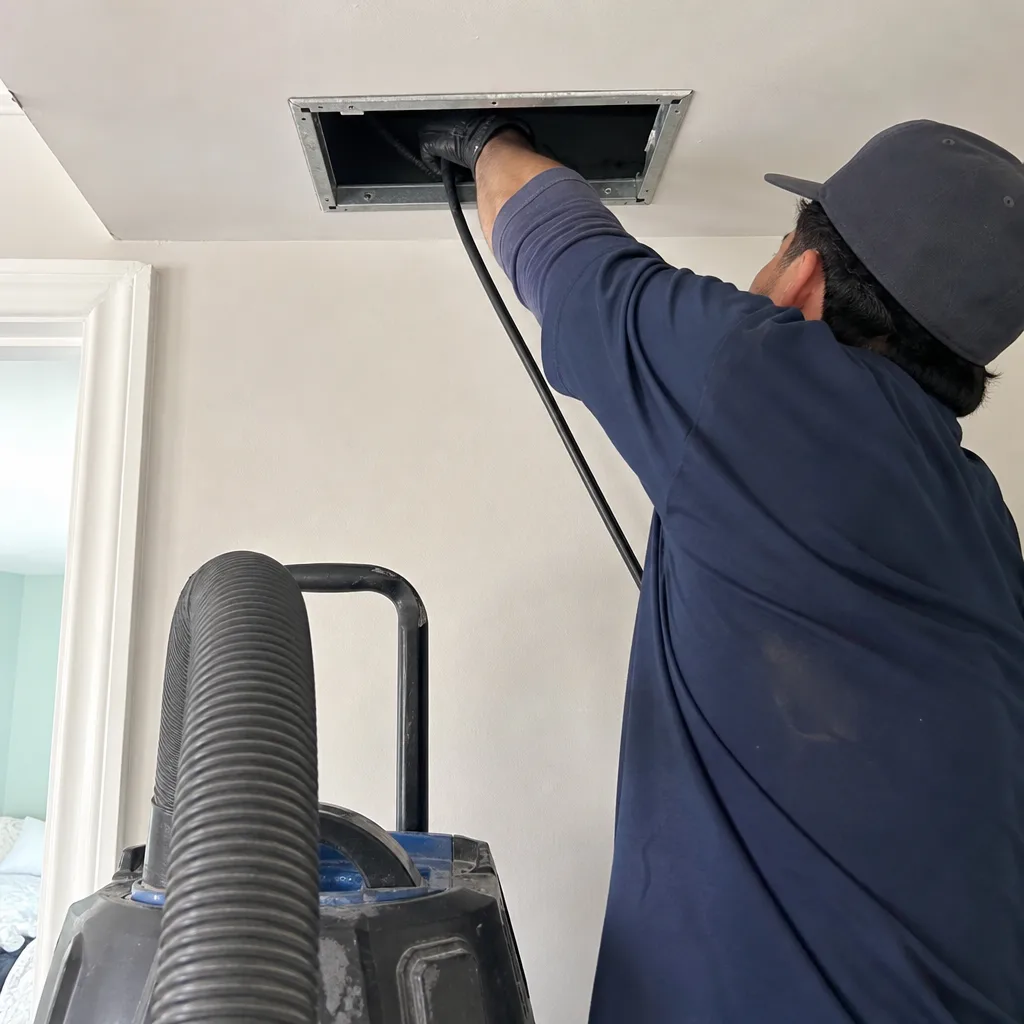
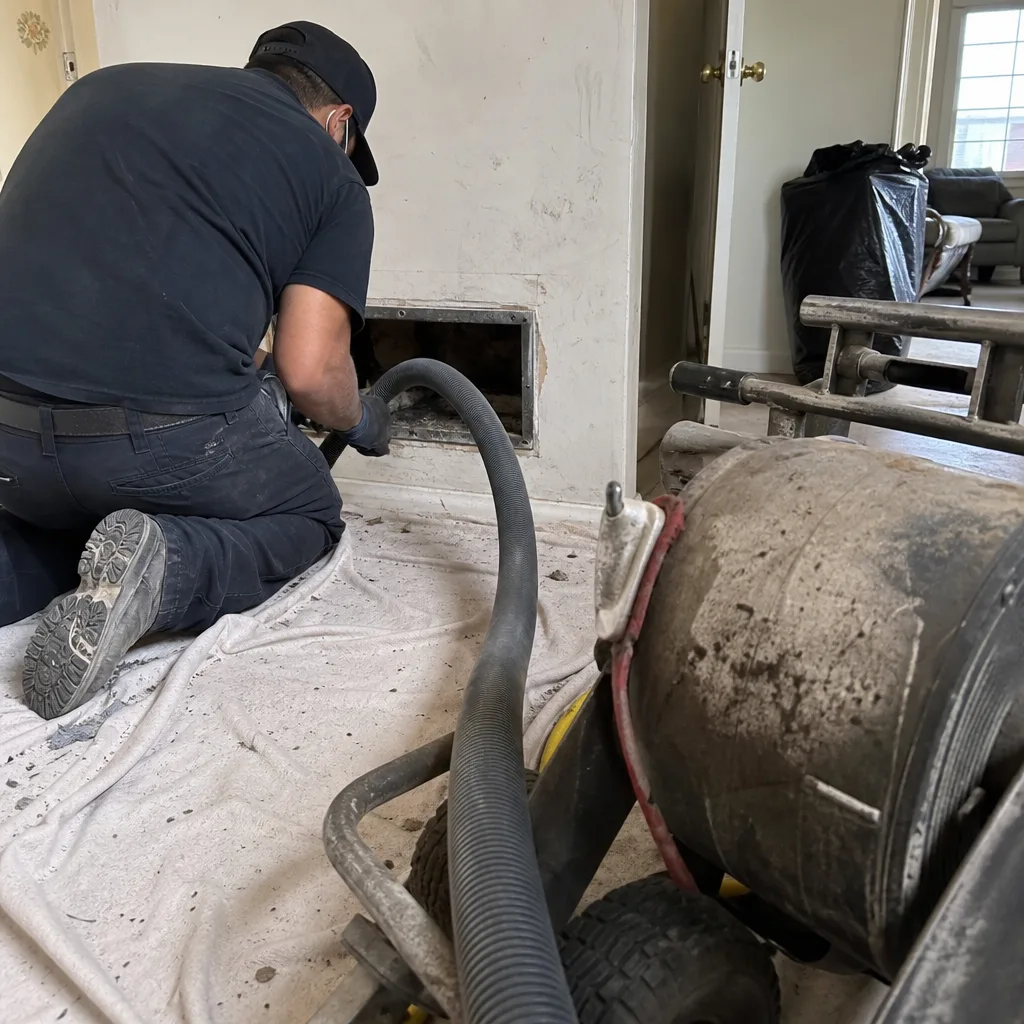
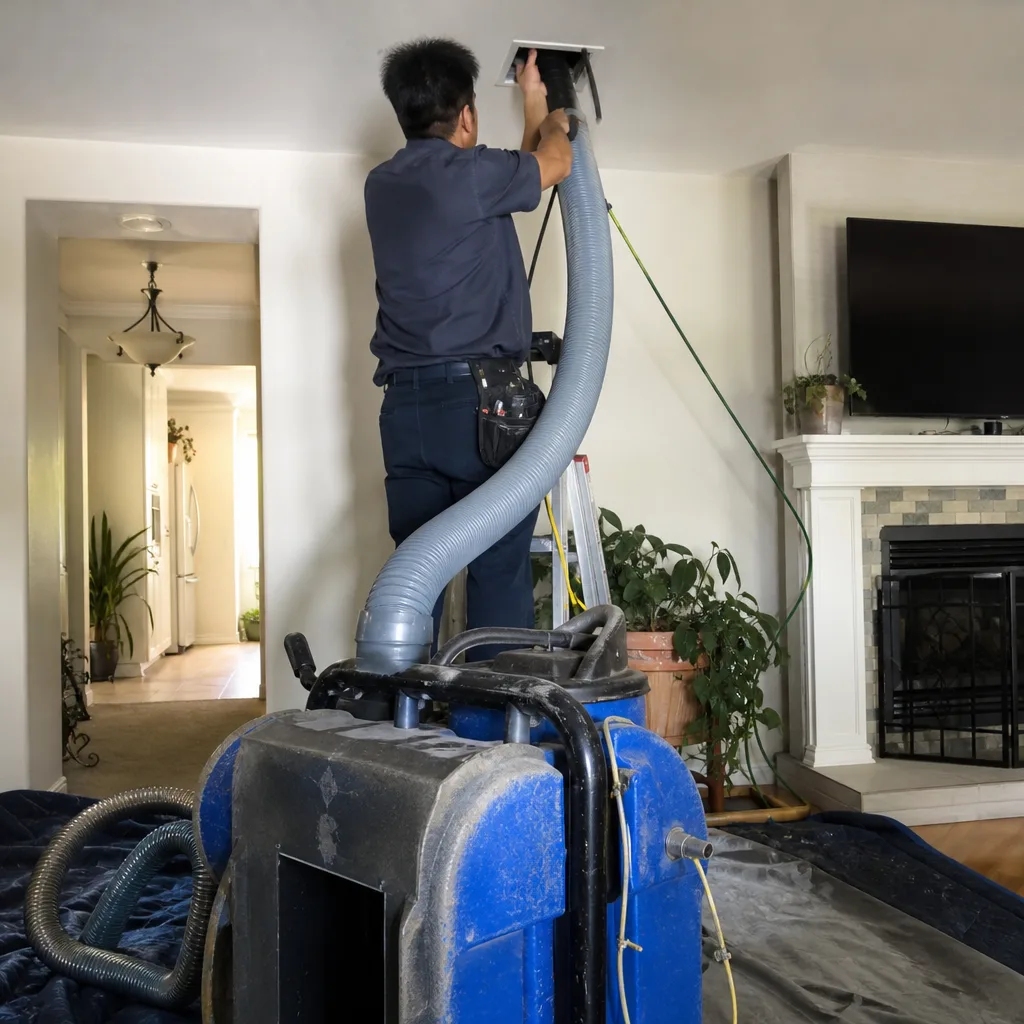
- Contact-vacuum agitation of every accessible supply and return run. Equipment like Nikro professional duct cleaning machines with rotating brush attachments physically scrubs the duct walls while simultaneously extracting loosened debris. This is the difference between cleaning and advertising.
- Negative-air containment during the process. Systems like Abatement Technologies negative-air units pull a vacuum on the duct system so that debris dislodged during cleaning is captured at the source, not blown into your living room. Without this, you’re just redistributing the dirt.
- Inspection of the entire duct ecosystem, including the plenum, the coil, and the return drop. A cleaning that skips the return side removes half the debris in the system.
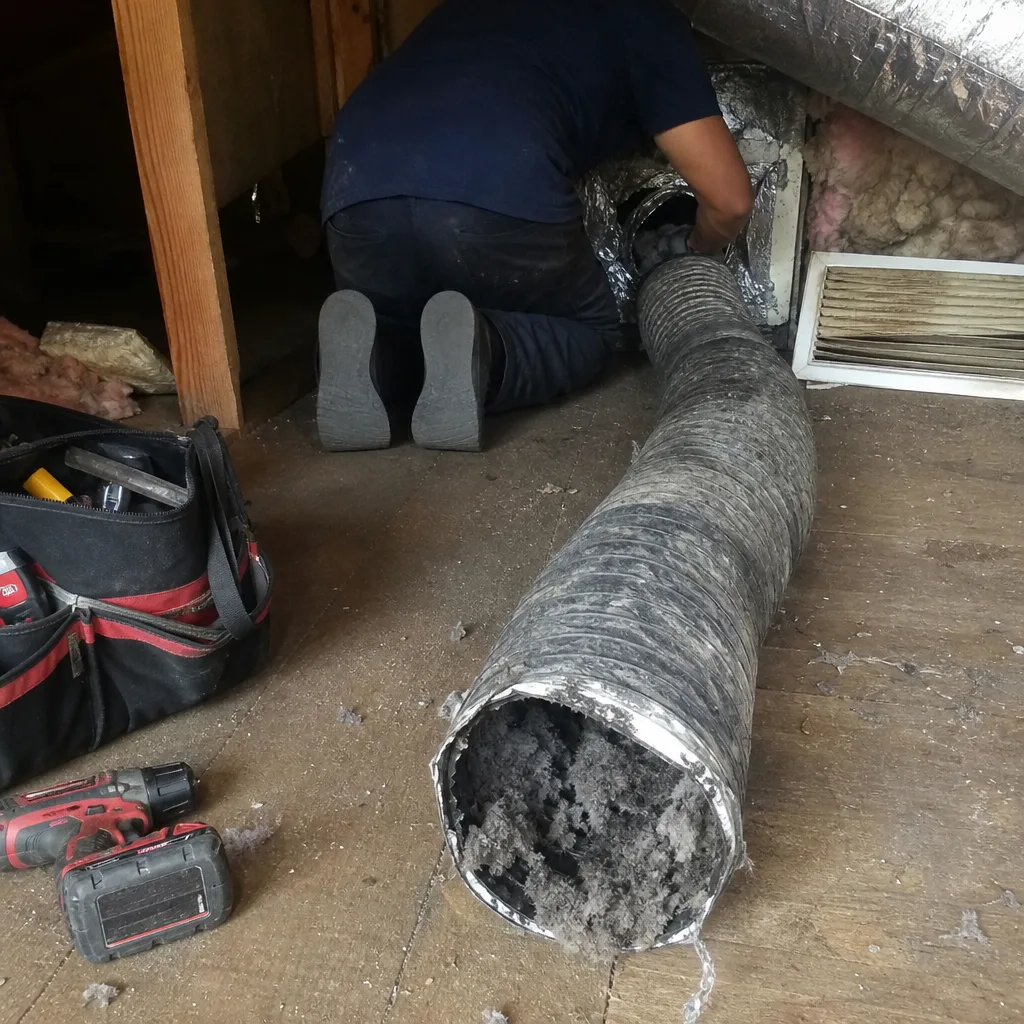
- Documentation. Before-and-after photos of the interior of your ducts, not just the registers. If a company can’t show you what the inside of your ducts looked like before they started and after they finished, you can’t verify the work was done.
For the full picture on what professional cleaning involves in this area, see our guide on Air Duct Cleaning in San Pedro.
Post-Renovation and Post-Pest Checklist: The Section Most Guides Skip
Most duct maintenance advice assumes a stable household. San Pedro’s housing stock includes a lot of older homes, and renovation is constant. Every remodeling project that involves drywall work, floor sanding, or demolition generates fine particulate that your HVAC system will happily distribute throughout the house while work is underway. If you ran your system during a remodel, even occasionally, that dust is now inside your ducts. Period. No filter on the face of the earth catches everything, and construction dust is exactly the fine, abrasive particulate that settles deep in runs and gets re-released for months after the project is done.
Post-renovation checklist:
- Replace your filter immediately after the project ends, even if you replaced it last week. Construction dust cakes filters fast.
- Inspect every register for drywall dust accumulation. White or gray chalky powder at registers is a reliable indicator that the duct system has been contaminated.
- Schedule a professional duct cleaning if the renovation involved any of the following: drywall installation or removal, floor sanding, tile cutting, attic insulation work, or the replacement of the HVAC system itself.
- Check the return side especially. Construction dust gets pulled directly into returns and coats the return duct, the filter, and the coil. A return-side cleaning is not optional after a remodel.
Post-pest activity is the other overlooked trigger. San Pedro’s older neighborhoods with mature landscaping deal with rodents, and rodents will nest in duct systems. If you’ve had evidence of rodents in your attic, crawl space, or home, and you haven’t had your ducts inspected since, there’s a meaningful chance the ductwork was affected. Signs of pest intrusion include droppings at registers, scratching sounds from duct runs, unexplained odors, or shredded insulation material appearing at supply vents. After pest remediation, have the duct system professionally cleaned and inspected for damage. Rodents chew through flex duct and create entry and exit points that then leak conditioned air. This is when Air Duct Repair in San Pedro becomes necessary, because cleaning alone won’t fix a compromised duct run.
What You Can Self-Inspect vs. What Requires a Camera Scope
There’s a line between what a homeowner can reasonably assess and what requires professional equipment. Knowing where that line sits – covered in our Air Duct Cleaning Troubleshooting: Common Problems and How to Fix Them – keeps you from either ignoring a real problem or paying for an inspection you didn’t need.
You can legitimately self-inspect:
- Register and grille faces. You can see dust buildup, mold staining, and physical damage without any special tools.
- Filter condition. You can determine if a filter is saturated by holding it to a light source.
- Airflow at each register. A simple hand test will tell you if airflow feels balanced across rooms, and changes from your baseline are meaningful.
- Visible duct sections. Exposed sheet metal duct runs in garages, basements, or utility closets can be visually inspected for disconnected joints, crushed sections, or visible dust accumulation at seams.
- Odors. You know what your home smells like. Changes at system startup are a legitimate finding.
What requires a camera scope or professional expertise:
- Interior duct wall condition. You cannot see inside a supply run from the register opening. A camera scope run through the duct system shows what’s actually on the duct walls: dust accumulation depth, mold presence, debris blockages, and physical damage inside flex runs.
- Coil condition. The evaporator coil sits inside the air handler and requires access panels to inspect. A coil coated in dirt and hair is one of the most common findings after years without professional maintenance, and it affects system efficiency and air quality.
- Plenum and transition areas. These areas at the supply and return connections to the air handler are common locations for debris accumulation and air leaks, and they’re not visible from any register.
- Mold verification. Visible mold at a grille tells you something is happening. Determining whether it extends into the duct run, and what type of mold it is, requires professional inspection. We don’t guess at this. If you see mold at a grille in a San Pedro home, the sensible next step is a professional assessment of the duct system.
The reason this matters is straightforward: mold and deep debris don’t announce themselves at the register. By the time you see evidence at the grille, the condition inside the duct is typically further along than the visible portion suggests. A camera scope gives you documentary evidence of what’s inside your ducts, and that evidence is exactly what you want in hand if you’re scheduling a cleaning, comparing quotes, or preparing to sell your home.
Record-Keeping Template for Resale and Warranty Documentation
Homeowners rarely think about duct maintenance records until they need them. In San Pedro’s real estate market, where homes sell with disclosures about everything from hillside movement to port noise, documentation of HVAC and duct maintenance is a legitimate asset. If you ever sell your home, a complete record of duct cleaning dates, filter changes, and inspections tells a buyer that the system they’re inheriting has been maintained. It also protects you if a post-sale dispute arises about the condition of the HVAC system.
Here’s a simple record-keeping format that takes thirty seconds per entry and provides real utility:
- Date of filter replacement and filter brand, MERV rating, and cost. This shows consistent maintenance and gives you a running sense of how quickly filters are loading in your specific home.
- Date of each quarterly register inspection and one-sentence findings. Even “No visible buildup, airflow normal in all rooms” is worth writing down.
- Date of professional duct cleaning, the company used, and before-and-after photos. Keep the photos in a folder with the date in the filename. Photos are evidence.
- Date of any duct repair or modification, with a description of what was done and why. If a section of flex duct was replaced in 2022, write that down. Future buyers and future technicians will thank you.
- Date of any pest activity or water intrusion events that affected the HVAC system. Even if remediation wasn’t needed, the record matters.
You can keep this in a notes app, a spreadsheet, or a binder next to the air handler. The format matters less than the consistency. Homes in San Pedro change hands regularly, and the ones with thorough maintenance records sell more smoothly. That’s not a guess; it’s what we observe working with homeowners who are preparing properties for sale and with buyers who want verification that the ducts they’re inheriting have been cleaned.
Common Mistakes to Avoid
- Following a generic 90-day filter schedule. San Pedro’s port particulate and Santa Ana dust loads filters faster than inland averages. Check monthly. Replace when saturated, not when the calendar says so.
- Using the cheapest available fiberglass filter. A $2 fiberglass filter catches large debris and passes everything else. That fine particulate is exactly what accumulates on duct walls and coil surfaces. Use at least a MERV 8 pleated filter.
- Hiring the lowest-bid duct cleaning company. If the price seems too good, you already know why. A company that arrives with a shop vac and a blower cannot clean ducts. They can move dust around. Ask what equipment they use before you book.
- Running the HVAC system during renovation work. Every hour the system runs during a remodel, it’s pulling construction dust into your ducts. Turn the system off, seal the returns, and if you must run it, replace the filter when the project wraps.
- Ignoring reduced airflow in a single room. That’s not a quirk. It’s a sign of a restriction in that run, and in San Pedro’s older housing stock, it’s often a disconnected or collapsed flex duct or a debris blockage at a bend.
- Assuming a new home means clean ducts. New construction leaves debris in duct systems routinely. Drywall dust, sawdust, and packaging material end up in the ductwork during construction. If your San Pedro home was built or renovated and the ducts were never cleaned afterward, assume they contain construction debris.
- Treating dryer vent maintenance as optional. Lint accumulation in dryer vents is a leading cause of residential fires. In San Pedro, where many homes route dryer vents through attics, crawl spaces, or long lateral runs, the risk is amplified. For more on this, see our dedicated guide on Dryer Vent Cleaning in San Pedro.
When to Call a Professional
You need professional assessment if you see visible mold at any register or grille, if you’ve had pest activity in your home that may have affected the duct system, if you’ve completed a renovation and ran the HVAC system during construction, if you detect a persistent musty odor at system startup, or if you’ve lived in your home for three or more years and have never had the ducts cleaned. Any one of these conditions warrants a camera scope inspection and a professional cleaning if indicated. If you need Air Duct Cleaning San Pedro home assessment, we offer free estimates in San Pedro and throughout the South Bay. Call (877) 573-0759 to schedule a look at your system.
See the difference
 Before
 After
 Before
 After
 Before
 After
Frequently Asked Questions
Whole-system air duct cleaning in San Pedro typically ranges from $400 to $900 for a single-family home, depending on the number of systems, the home’s square footage, and the condition of the ductwork. Homes with heavy port particulate loading, multiple return drops, or pest contamination fall toward the high end. We quote one flat price per system before work starts, and that price includes full contact-vacuum cleaning with negative-air containment, not a per-vent rate that changes once we’re on site. Call (877) 573-0759 for an exact quote based on your home and system. Estimates are free.
San Pedro homes within a mile of the harbor or major truck routes typically need professional duct cleaning every 3 to 4 years; homes in upper San Pedro with sealed ducts and consistent filter maintenance can often go 5 years. The deciding factor is what’s actually inside your ducts, which a camera inspection reveals directly. If you’re noticing persistent dust on surfaces within days of cleaning, dark oily deposits at registers, or reduced airflow, those are signs that your interval has been reached regardless of the calendar.
Cheap duct cleaning quotes almost always mean a technician with a shop vac and a spinning brush attached to a drill, working register to register without negative-air containment. That process dislodges dust but doesn’t capture it, and it can’t reach deep into supply and return runs. Companies using professional equipment like Nikro or Rotobrush contact-vacuum systems with Abatement Technologies negative-air containment have significantly higher equipment costs, and those costs show up in the quote. If the price difference seems dramatic, the equipment difference is the explanation. To learn what full professional cleaning involves in this area, see our page on Air Duct Cleaning in San Pedro.
You know by asking for before-and-after photos of the interior of your ducts, not just the registers. A legitimate professional cleaning includes camera documentation of the duct walls before the work and after the work. At Air Duct Cleaning San Pedro, we provide that documentation as standard practice. If a company can’t show you before-and-after evidence, you have no way to verify the work, and that’s exactly why some low-bid companies count on.
You can vacuum accessible register openings and wipe down grille faces, but you cannot effectively clean the interior of a residential duct system without professional equipment. Supply and return runs extend well beyond the reach of any consumer vacuum attachment, and without negative-air containment, any agitation you do manage simply propels dust deeper into the run or out into your living space. The tools that actually clean ducts are the same systems restoration contractors use: contact-vacuum brush systems like Rotobrush and Nikro units. That’s not something you can rent or replicate with household tools.
Duct cleaning reduces the amount of accumulated particulate available for re-release into your living space, which can help reduce allergy symptoms for occupants sensitive to dust mites, mold spores, and port-related particulate. It’s not a cure for allergies, and it works best in combination with consistent filtration, either through quality HVAC filters or a whole-house system like a Honeywell or Aprilaire unit. Our focus is on removing what’s been accumulating in your ducts and capturing it during the process, not on making medical claims. If you’re seeing persistent dust and dealing with allergy symptoms in a San Pedro home, a professional cleaning is a reasonable first step, and we’ll show you what came out of your ducts when we’re done.
The Bottom Line
San Pedro’s air is different from anywhere else in Los Angeles. Port particulate, marine-layer humidity, and Santa Ana wind dust combine to make duct maintenance here a condition-based exercise, not a calendar one. The practical checklist is this: check filters monthly and replace them when saturated, inspect registers quarterly for dust, staining, or airflow changes, and schedule professional extraction every 3 to 5 years depending on your proximity to the harbor and your household conditions. After any renovation or pest remediation, assume your ducts were affected and have them professionally cleaned. Keep records of everything. When you do schedule a cleaning, demand proof of process: contact-vacuum equipment, negative-air containment, and before-and-after photos. That’s the difference between clean ducts and theater. Call (877) 573-0759 for a free estimate in San Pedro.
Written by the team at Air Duct Cleaning San Pedro, serving San Pedro since 2017. Explore more guides & resources on maintaining your HVAC system.