
Last updated November 2, 2026
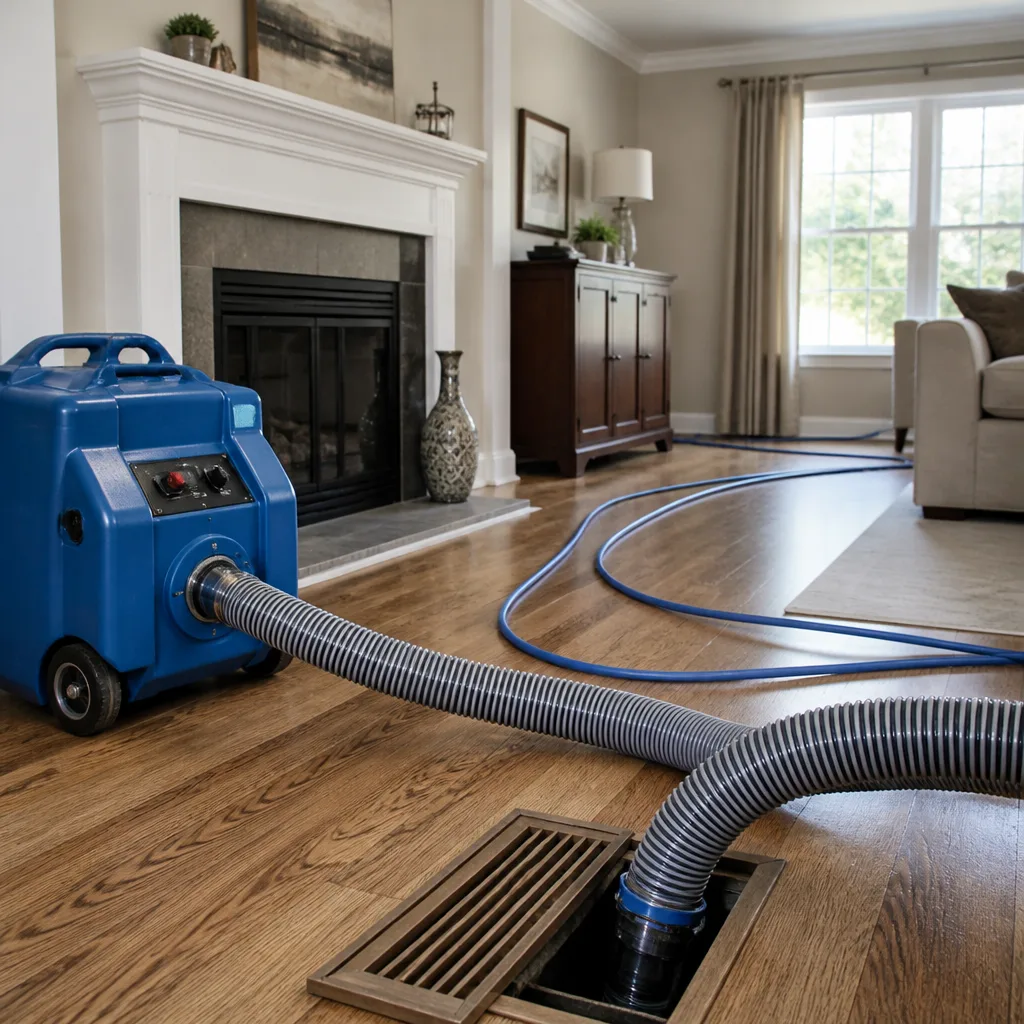 Whole-home duct cleaning
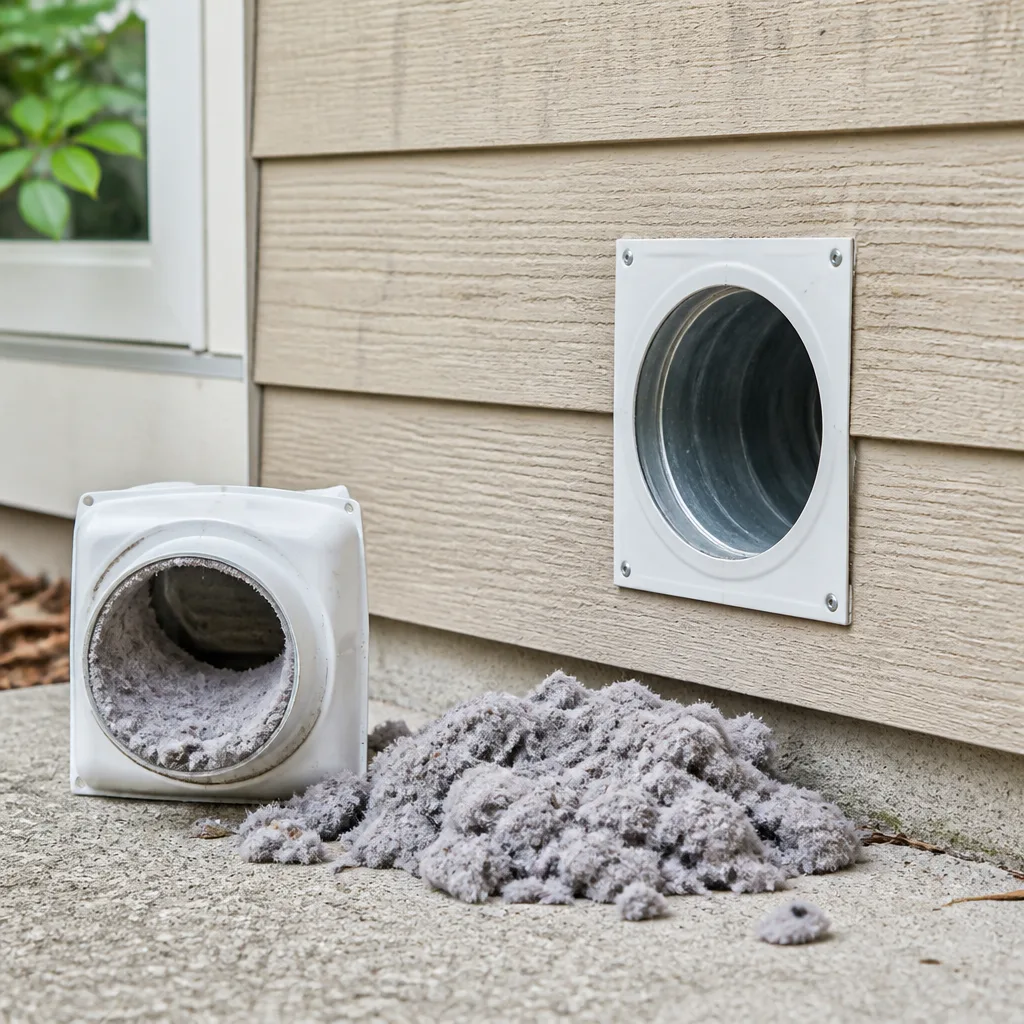 Dryer vent cleaning
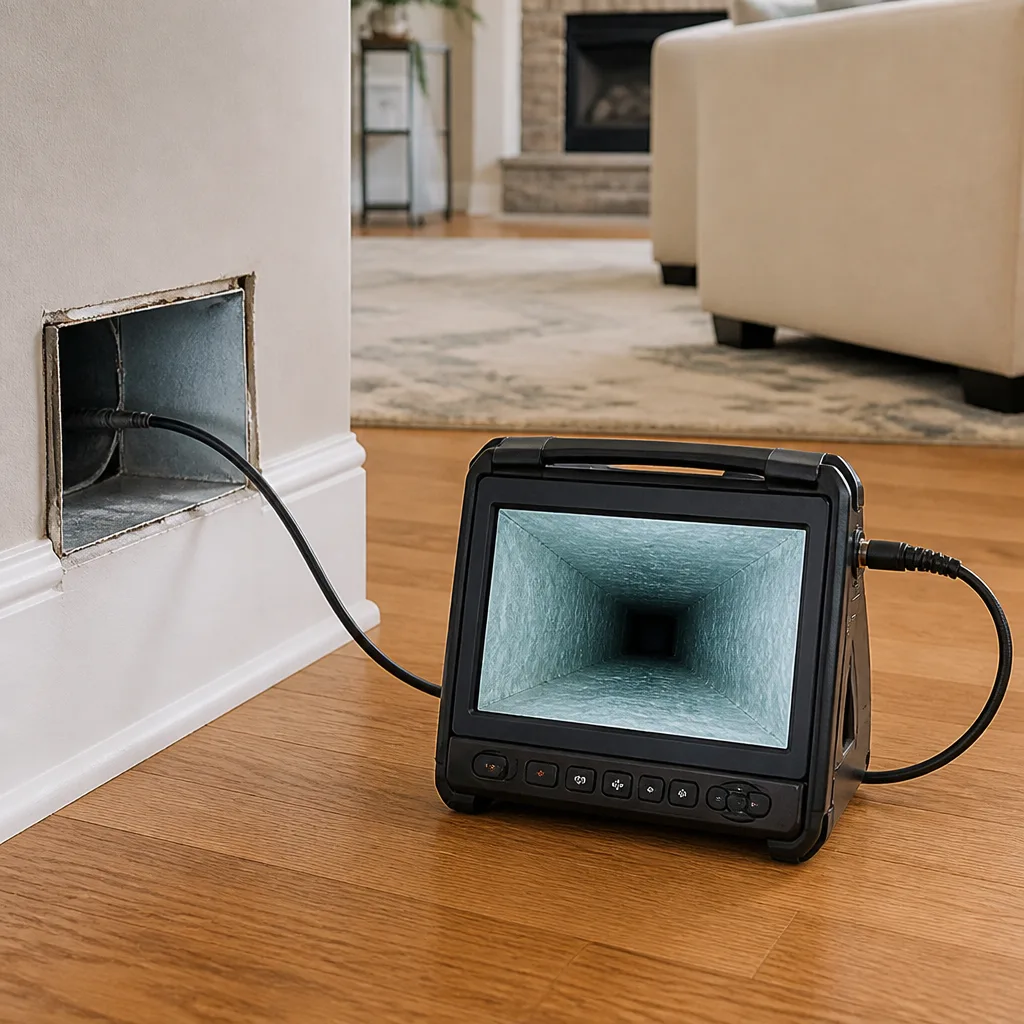 Camera inspection
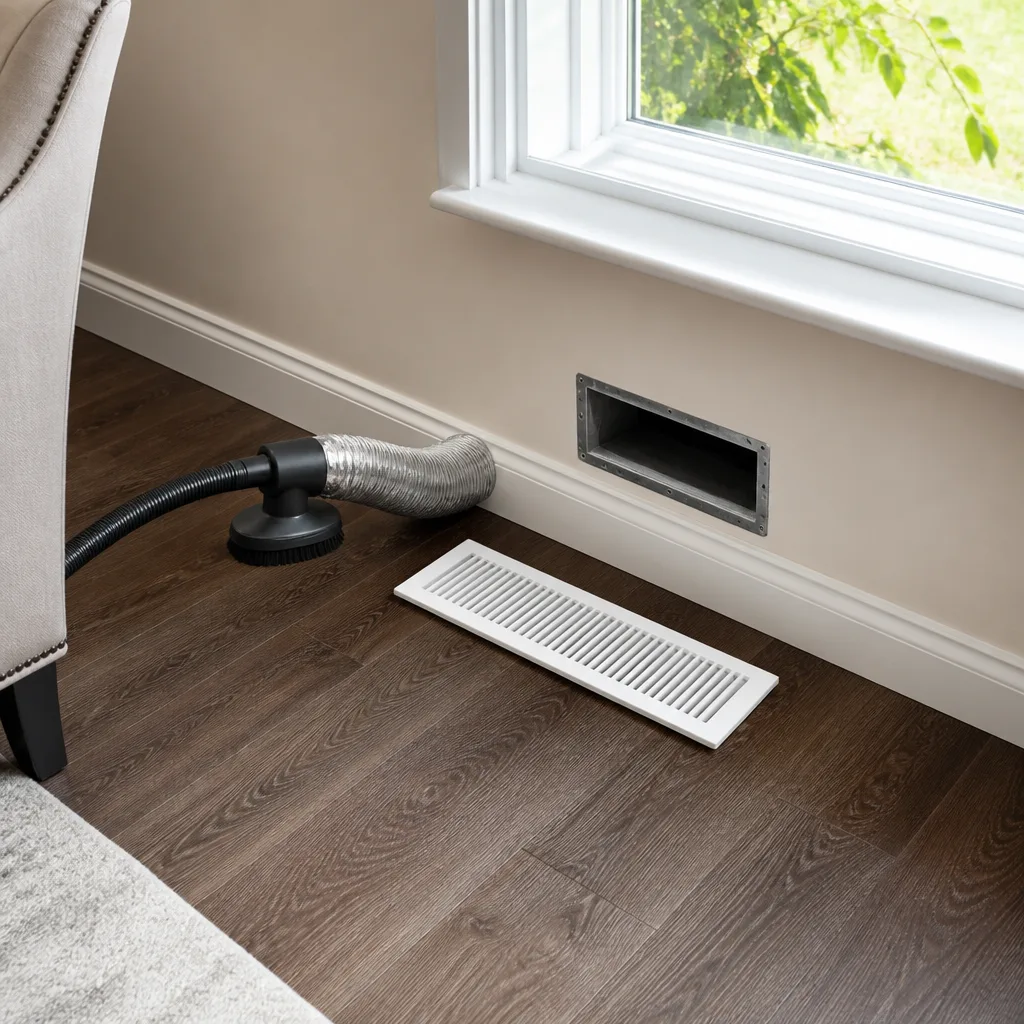 Sanitizing & deodorizing
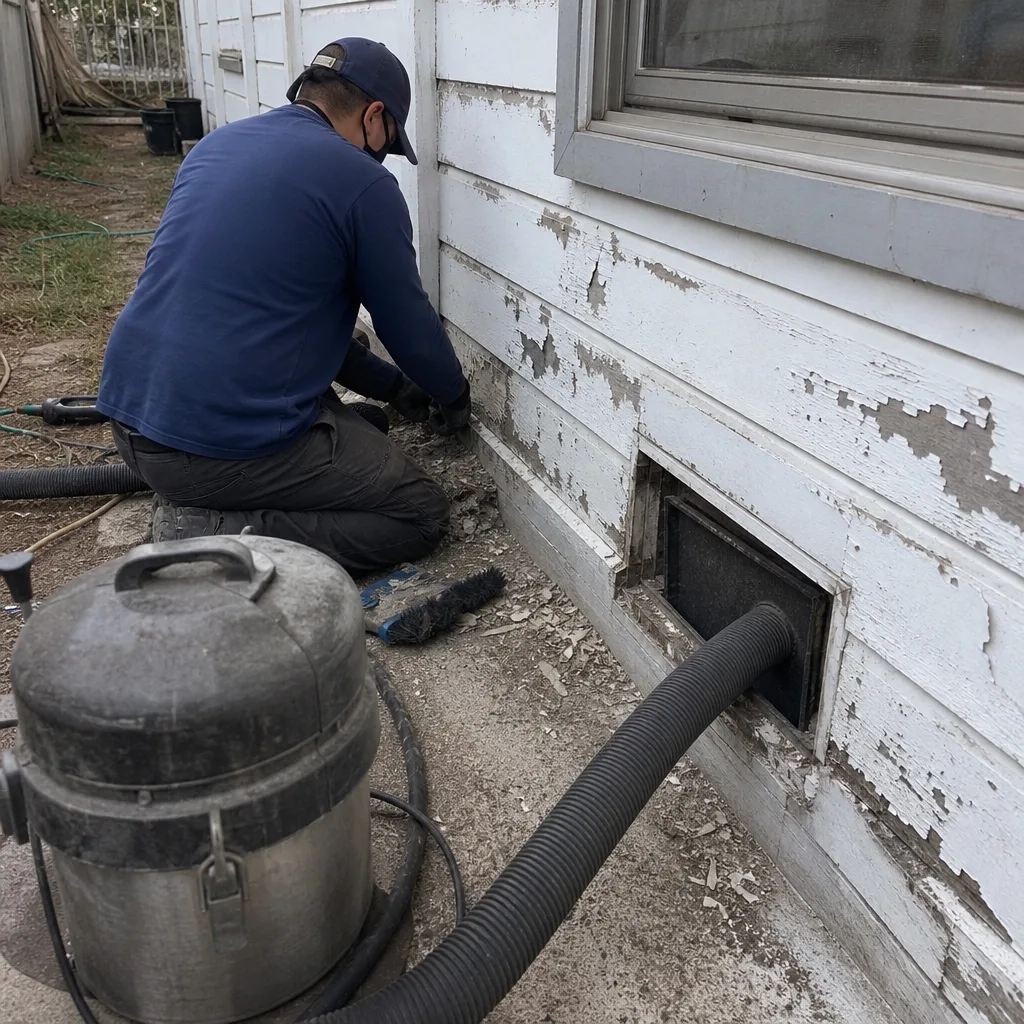
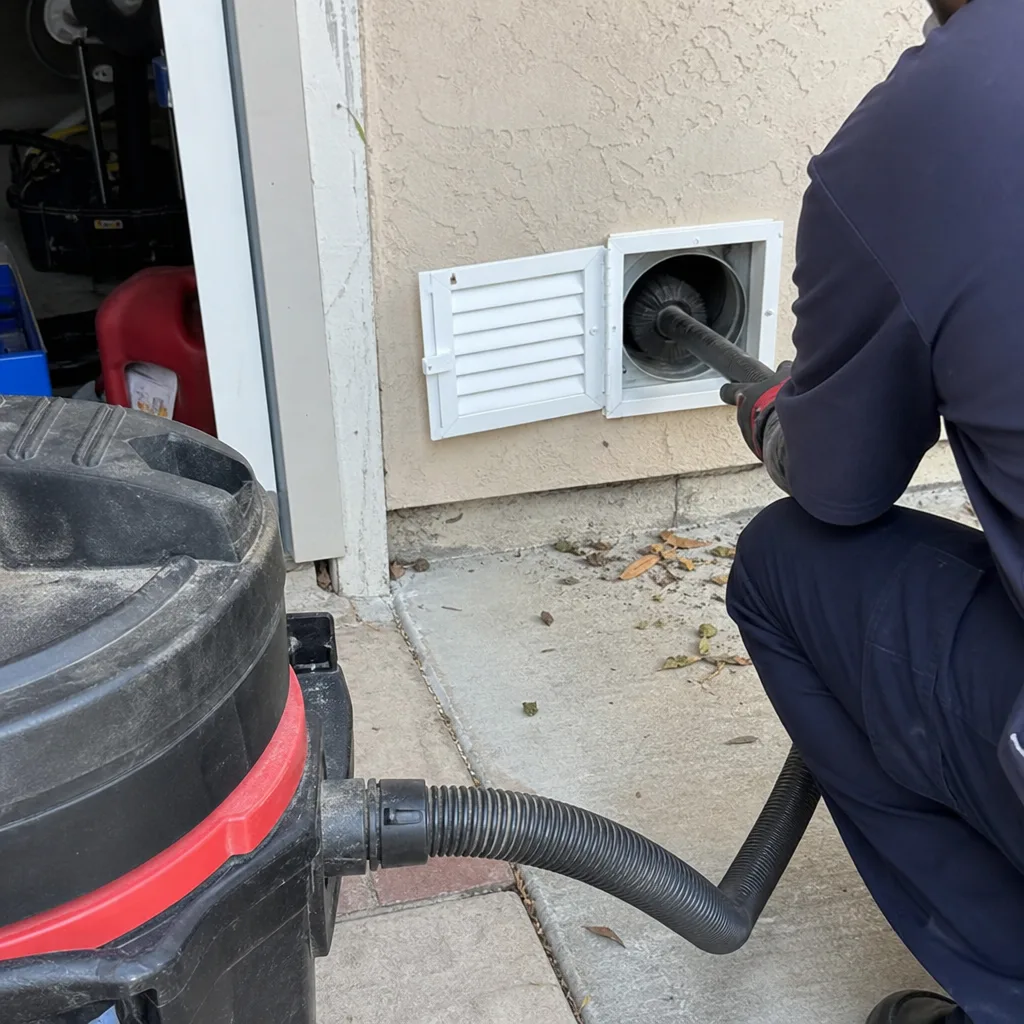
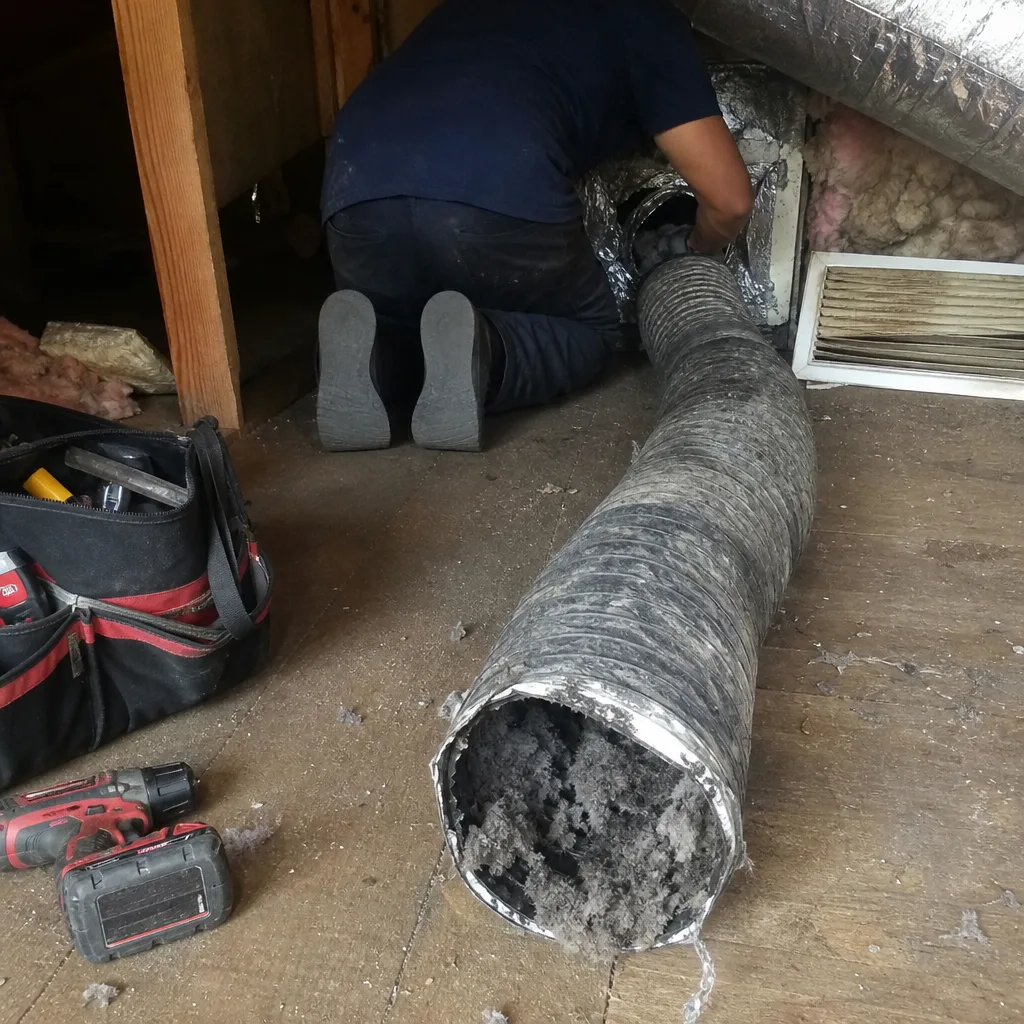
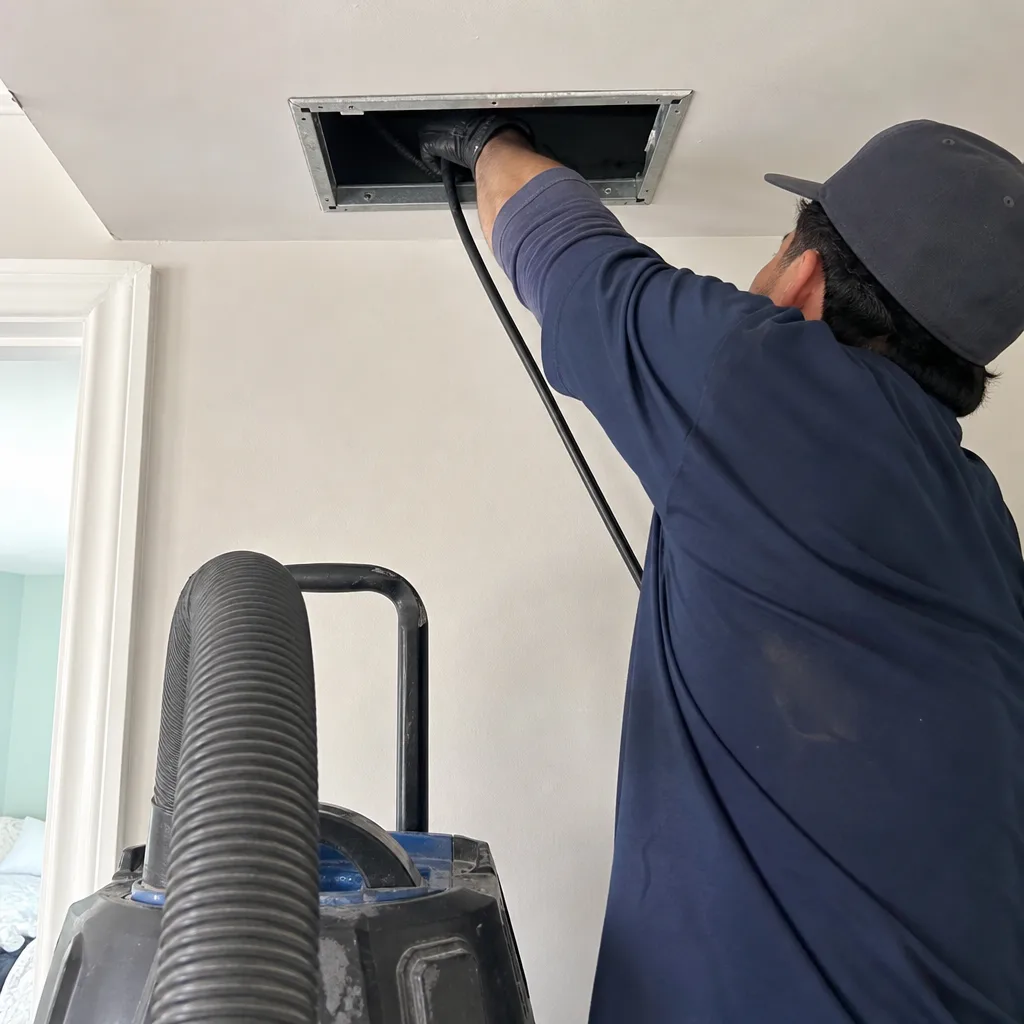
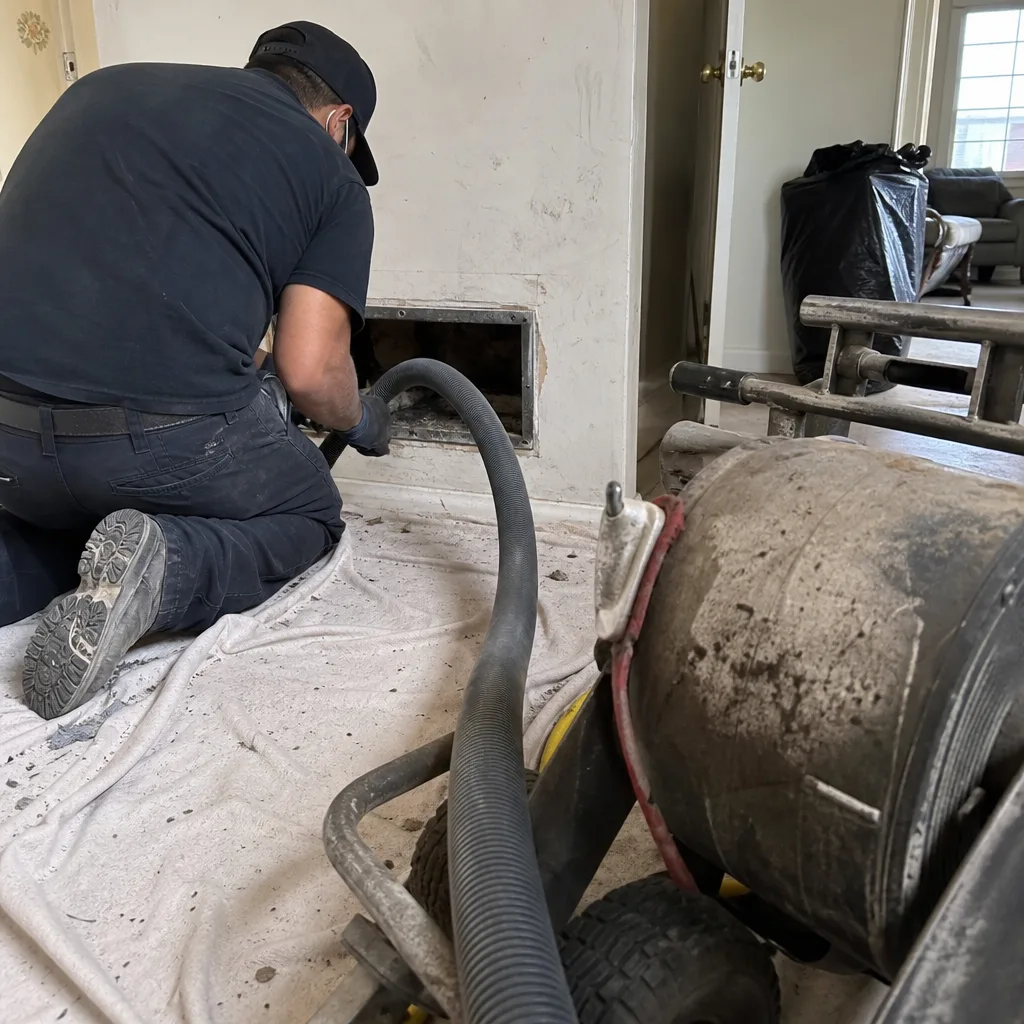
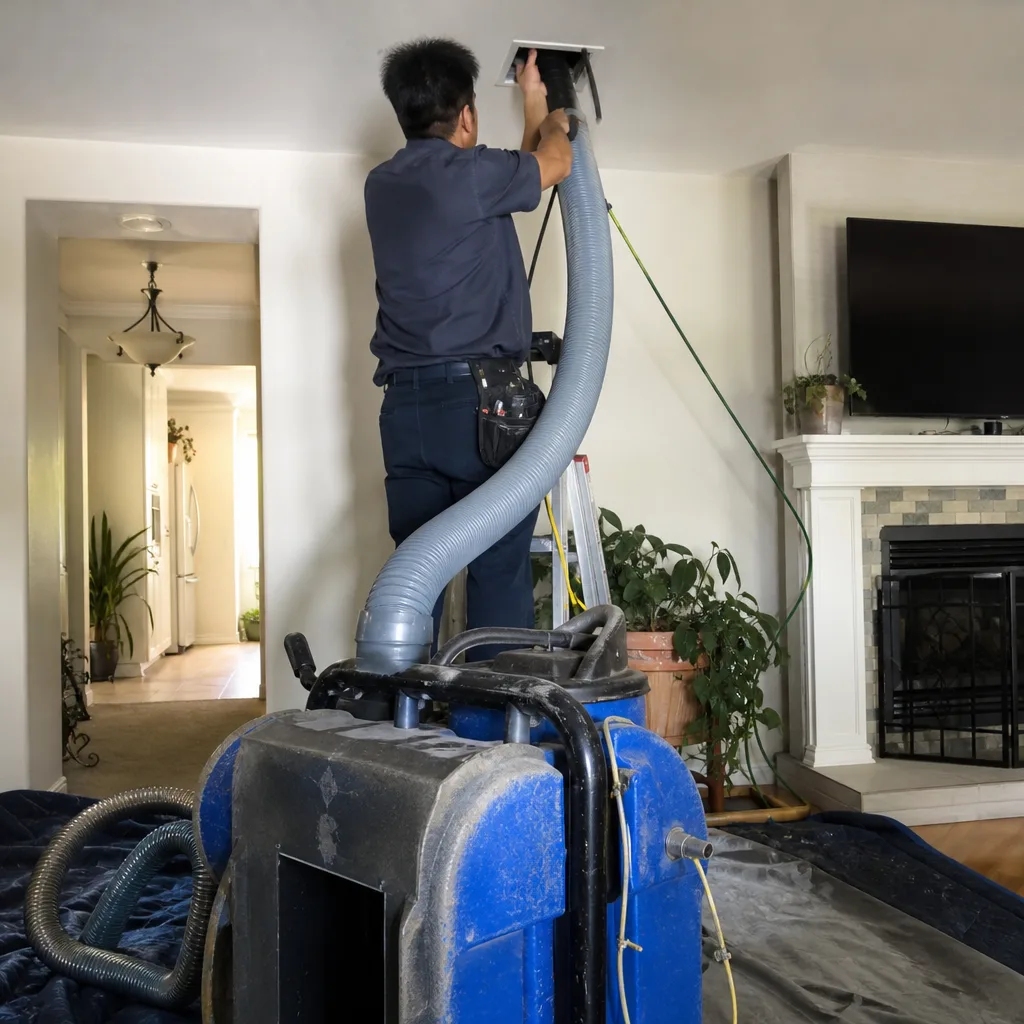
Whole-system duct and dryer vent check with before-and-after photos - you see exactly what came out of your vents
That "$99 whole-house special" is a bait ad - the real number appears once they are in your hallway, or the "clean" is a shop-vac at the register. We photograph the inside of your ducts before and after instead.
Air Duct Cleaning Warning Signs: A San Pedro Homeowner’s Reference Guide
Here’s what most guides won’t tell you: a musty smell from your vents is a late-stage warning sign. By the time you can smell mold growth in ductwork, it’s already colonized enough surface area to require containment-grade remediation, not just a routine cleaning. This guide is written specifically for San Pedro homeowners, because our marine climate, port proximity, and older housing stock create a set of duct problems you won’t find addressed in generic advice or even in The Complete Air Duct Cleaning Guide for San Pedro Homeowners. In the sections below, you’ll learn to recognize the early mechanical and structural indicators that precede sensory symptoms, understand which warning signs justify a cleaning versus a repair, and see why a camera inspection is the only verification method that counts.
Styles & brands we work with
- Whole-home duct cleaning
- Dryer vent cleaning
- Camera inspection
- Sanitizing & deodorizing
Quick Answer
The earliest reliable warning signs that your air ducts need professional attention are mechanical and structural: uneven airflow between rooms, register discoloration patterns, and air filters loading faster than their rated lifespan suggests. Sensory symptoms like musty odors, visible dust plumes from vents, and persistent allergy flare-ups indicate a problem that has already progressed significantly. In San Pedro specifically, rust staining around exterior registers and particulate banding on walls above supply vents are location-specific indicators that warrant immediate inspection.
Table of Contents
- Early-Stage vs. Late-Stage Warning Signs: Why the Distinction Matters
- San Pedro-Specific Warning Signs You Won’t Find in Generic Guides
- Uneven Airflow and Register Discoloration: The Overlooked Mechanical Indicators
- Filter Loading Rates: Your Ducts’ Hidden Diagnostic Report
- The Post-Renovation Warning Window: Drywall Dust and Insulation Fiber
- What a Camera Scope Reveals That Visual Inspection Cannot
- Cleaning vs. Replacement: How to Know Which One You Actually Need
- Common Mistakes to Avoid
- When to Call a Professional
- Frequently Asked Questions
- The Bottom Line
Early-Stage vs. Late-Stage Warning Signs: Why the Distinction Matters
Most duct-cleaning warning sign guides recycle the same five symptoms: visible dust, musty smell, high energy bills, allergy flare-ups, and “you’ve never had it done” – but for Choosing the Right Air Duct Cleaning Brand: A Buyer’s Guide for San Pedro, the focus is on evaluating providers, not just symptoms. Those are real, but they’re late-stage. They show up after a problem has been developing for months or years. The early indicators are quieter and more mechanical. Understanding the difference matters because the cost and complexity of remediation are wildly different at each stage.
Early-stage indicators are things you’ll notice if you’re paying attention to how your HVAC system behaves rather than just how it smells:
- Uneven airflow between rooms – one bedroom stays warm in summer while the living room cools fine, or vice versa. This often signals partial blockage in branch ducts.
- Register discoloration patterns – darkening or staining around the edges of supply registers, which suggests particulates are being deposited as air exits.
- Filter loading faster than expected – a filter rated for 90 days that looks clogged at 30 days is telling you the duct interior is shedding or holding debris.
- Increased dust accumulation on horizontal surfaces in rooms farthest from the return vent, not evenly throughout the house.
- Subtle changes in system runtime – your AC or furnace cycling longer to hold the same temperature, without an obvious weather explanation.
Late-stage indicators are the ones everyone already knows: persistent musty or stale odors when the system runs, visible mold growth on registers or nearby surfaces, respiratory symptoms that worsen at home and improve when away, and visible dust plumes blowing from supply vents. In our experience working with San Pedro homes, by the time any of these appear, the internal duct condition has typically degraded to the point where a standard cleaning needs to be paired with either repair work or containment-grade extraction. The window between “maintenance cleaning would have solved it” and “now we’re talking about remediation” is wider than most homeowners realize, which means there’s real value in catching the early signs.
San Pedro-Specific Warning Signs You Won’t Find in Generic Guides
San Pedro sits directly on the Pacific, roughly twenty miles south of downtown Los Angeles, with the Port of Los Angeles wrapping around its eastern edge. That geography is not a footnote. It directly affects what accumulates inside your ductwork and what the warning signs look like on the outside of your home.
Rust Staining Around Exterior Registers
Marine air carries salt, and salt accelerates corrosion on any exposed metal. If you have registers or grilles on exterior walls, or registers in rooms that see regular ocean breeze through open windows, look for rust staining around the register frame or on the wall surrounding it. That rust isn’t just cosmetic on the register itself. It tells you that moisture-laden air is entering the duct opening, and where moisture enters, biological growth follows. Homes in the coastal flats and hillside neighborhoods between Western Avenue and Gaffey Street are particularly prone to this because the marine layer lingers longer in those pockets.
Particulate Banding on Walls Above Supply Vents
Port diesel particulate matter is fine enough to stay suspended in outdoor air and small enough to pass through many standard furnace filters. Over time, it deposits on the interior walls of supply ducts and then re-enters your living space. The visual signature is distinct: a gray-brown band of staining on the wall above or around a supply register, wider than the register itself, in rooms that face the port or sit within a mile or two of the 110 Freeway corridor. If you wipe the wall and the stain returns within weeks, that’s not a paint problem. That’s a duct deposition pattern, and it means particulate loading inside the duct is significantly higher than normal.
Faster Dust Accumulation Near Windows That Face the Harbor
Homes in Vista del Oro, Point Fermin, and South Shores get the full force of the prevailing onshore flow. If you notice that rooms on the harbor-facing side of your house accumulate dust on sills, blinds, and furniture noticeably faster than interior rooms, and closing windows doesn’t help, the likely explanation is that outside air is being drawn into the return duct system and redistributed. Leaky return ducts pull unfiltered air from crawl spaces, attics, and wall cavities, pressurize the system, and push that air into living spaces through the supply side. In San Pedro, that unfiltered air carries marine salt and port particulates.
If your home does not have a whole-home air cleaning system, the standard one-inch fiberglass filter is doing very little to catch those fine particulates. Homeowners working around Honeywell or Aprilaire filtration systems usually have better filtration in place, but the duct condition underneath still matters, because even the best filter can’t compensate for what’s already deposited inside the duct walls.
Uneven Airflow and Register Discoloration: The Overlooked Mechanical Indicators
Most homeowners describe duct problems in sensory terms: smell, visible dust, allergies. But HVAC systems are mechanical, and the earliest indicators are mechanical too. Two of the most useful and most often ignored are uneven airflow between rooms and discoloration patterns on registers and surrounding surfaces.
Uneven Airflow: What It Actually Tells You
When a forced-air system is balanced and ducts are clean, the temperature difference between rooms should be modest, generally within three to five degrees depending on insulation and window exposure. If one bedroom is consistently seven or eight degrees warmer than the rest of the house in summer, something is restricting airflow to that room. Common causes include:
- Debris accumulation at a branch duct junction
- A collapsed or crimped flexible duct section
- A disconnected duct segment in a crawl space or attic
- Closed or obstructed dampers inside the duct run
- Heavy particulate buildup on the inside of a specific duct wall
None of these are visible from the register opening. You need an internal inspection to know which one you’re dealing with, but the temperature differential is the diagnostic signal that something is wrong. In homes built in the 1950s through the 1970s, which describes a large portion of San Pedro’s housing stock, galvanized duct runs installed at construction have now seen fifty to seventy years of dust, pet dander, and coastal humidity. Branch junctions are where that material collects and reduces effective airflow diameter.
Register Discoloration as a Deposition Pattern
Look at the registers in your home right now. If the register face is clean but the wall surrounding it shows a gray ring, that ring is a deposition pattern. It forms when air exits the register carrying particulates heavy enough to drop out of the airstream but light enough to stay suspended long enough to reach the wall. Over months, those particulates accumulate into a visible band.
That pattern tells you two things. First, the duct interior is shedding or transporting debris. Second, that debris is penetrating into your living space. A dark band above a register is not a ventilation pattern. It’s particulate fallout. If you see it in rooms used by children, elderly family members, or anyone with respiratory conditions, treat it as a health-relevant indicator, not a cosmetic one.
Filter Loading Rates: Your Ducts’ Hidden Diagnostic Report
Your furnace filter is the one component of your HVAC system you already replace regularly, and it gives you a diagnostic readout whether you know how to read it or not. A filter loads at a rate determined by two factors: the concentration of particulates in the air moving through it, and the volume of air moving through it. When a filter rated for three months shows heavy loading at four to six weeks, the particulate concentration in your return air is higher than expected for a normally clean system.
What’s actually happening in most cases is this: debris accumulates in the ductwork, and every time the blower cycles on, a portion of that debris is re-entrained into the airstream and carried to the filter. The filter catches it, which is good, but the filter is now functioning as a diagnostic indicator. It’s telling you the source load inside the ducts is higher than it should be.
Here’s the practical protocol we recommend to San Pedro homeowners:
- Install a fresh filter and write the installation date on the filter frame with a permanent marker.
- Check the filter at the 30-day mark. Hold it up to a light. If you can still see light through the media clearly, loading is normal.
- If the filter is opaque at 30 days, you have elevated particulate load. Note which rooms accumulated dust fastest during that period.
- Replace the filter, and if the same pattern repeats within the next 30 days, schedule a camera inspection. That’s not normal loading. That’s a source problem.
Homes near the port corridor or along Gaffey Street see accelerated filter loading simply from outdoor particulate infiltration, especially in summer when windows are open more often. But if windows remain closed and you run AC regularly, an opaque filter at 30 days is one of the most reliable early indicators that the duct interior itself is the source.
The Post-Renovation Warning Window: Drywall Dust and Insulation Fiber
Here is the scenario we see repeated constantly in San Pedro: a homeowner renovates a kitchen, a bathroom, or finishes a garage, and the contractor runs the HVAC system during construction or leaves ducts unsealed during drywall work. The renovation finishes. The new room looks great. And then, six to eighteen months later, the homeowner starts noticing respiratory irritation, unusual dust accumulation, or a persistent fine white powder settling on flat surfaces near supply vents.
Drywall dust and insulation fiber don’t produce immediate symptoms in everyone. The particles are fine enough to remain suspended in ductwork, settle into the duct lining, and re-entrain gradually over months. The lag time between exposure and noticeable effect depends on the individual, but the contamination is guaranteed if walls were opened without sealing supply and return registers.
Key facts about renovation contamination:
- Drywall dust is primarily gypsum and silica, both of which are lung irritants.
- Fiberglass insulation particles embed in the fibrous lining of older duct runs and release slowly.
- Standard residential filters do not capture the finest fraction of this dust.
- Renovation debris traps moisture more readily than ordinary household dust, creating a substrate for biological growth in humid coastal air.
If you completed a renovation in the last two years in San Pedro, and you did not have your ducts professionally cleaned afterward, assume contamination occurred. The only question is how much and whether it warrants a standard extraction or something more involved. The responsible protocol is a camera inspection followed by a cleaning with containment-grade equipment. Not a shop vac, not a handyman with a brush. Professional extraction. That’s also the moment where Air Duct Repair in San Pedro sometimes becomes necessary, because renovation work often damages existing duct runs, tears flex duct, or leaves sections disconnected. A cleaning finds that. A repair fixes it. The sequence matters.
What a Camera Scope Reveals That No Visual Inspection Cannot
There’s a fundamental limit to what you can see from the outside of a duct system. You can inspect registers, you can check the visible portion of the return plenum, you can peer down a trunk line with a flashlight. None of that tells you what’s happening at a branch junction twenty feet into the system, or what’s coating the top surface of a horizontal duct run in a crawl space.
A camera scope is a flexible probe with a high-resolution camera and light source that feeds live video from inside the duct. In skilled hands, it reveals:
- Debris accumulation at branch junctions and low points
- Biological growth on duct walls, visible as dark staining or filament structures
- Disconnected or collapsed duct segments
- Pest activity, including rodent droppings and nesting debris
- Corrosion and rust-through on galvanized duct surfaces
- Renovation debris, visible as drywall dust layers or insulation fiber mats
- Standing water or moisture condensation inside the duct run
Every professional duct cleaning protocol in the commercial and restoration world begins with a camera inspection. The restoration industry doesn’t guess about duct condition. They scope it, document it, then clean to a verifiable standard using equipment designed for the job. That’s the same protocol we apply to residential work in San Pedro, using Rotobrush contact-vacuum systems and Nikro extraction machines rather than consumer-grade substitutes.
The camera scope also serves a second purpose most homeowners don’t consider: verification after the work is done. If a company can’t show you before and after footage from inside your ducts, you have no evidence the cleaning did anything. A price quote without a scope is theater. A cleaning without post-work documentation is unverifiable.
Cleaning vs. Replacement: How to Know Which One You Actually Need
Most duct-cleaning guides avoid this topic, because it’s not profitable to recommend replacement when you sell cleaning. We’ll be straight with you: cleaning is not always the right answer. Sometimes the correct professional recommendation is repair or replacement, and pretending otherwise wastes your money.
Here’s the decision framework, based on what a camera inspection typically reveals:
Cleaning is appropriate when:
- Accumulated debris is loose, dry, and not adhered to duct surfaces
- Duct runs are structurally intact with no tears, disconnections, or corrosion
- Biological growth is present but surface-level, and the duct substrate is non-porous metal
- You have had one renovation contamination event and want full extraction
Repair is appropriate when:
- Flex duct sections are torn, collapsed, or kinked
- Branch junctions have separated
- Rust has penetrated the duct wall, creating holes or gaps
- Dampers are broken or seized
- Previous work was done incorrectly and sections need reconnection or sealing
Replacement is appropriate when:
- Biological growth has penetrated porous duct board, which cannot be reliably cleaned
- Rust and corrosion have compromised large sections of galvanized duct
- Rodent infestation has left biological contamination throughout the system
- The duct sizing or layout is fundamentally wrong and causing chronic airflow problems
Many San Pedro homes need a combination: clean the portions that are salvageable, repair the sections that are damaged, replace the sections that can’t be economically restored. That’s why a full-scope provider matters. If all you can get is cleaning, you get a partial answer. Our approach, handling Air Duct Cleaning in San Pedro plus repair in the same operation, means the recommendation is based on what the system actually needs. Nothing more, nothing less.
If you have a whole-home filtration system from Honeywell or Aprilaire, we’ll also factor that into the recommendation. Filtration equipment downstream of dirty ducts is just filtering the dirt the ducts are feeding it. The sequence matters: clean the source, then let the filtration system do its job.
Common Mistakes to Avoid
- Trusting the low-bid coupon price. The duct-cleaning industry’s bait-and-switch reputation exists because low-price operators show up with equipment that can’t physically do the job. If the quote is dramatically lower than every other one you got, you’re not getting the same service. You’re getting a demonstration, not a cleaning.
- Skipping the pre-cleaning camera inspection. Without a scope, neither you nor the technician knows what’s actually inside the system. Any company that quotes without looking is quoting blind, and you’ll be the one who pays for that blindness.
- Treating dryer vents as an afterthought. Lint accumulation is a leading cause of residential fires. Dryer Vent Cleaning in San Pedro is a distinct safety service, not an add-on, and it deserves its own inspection and maintenance schedule.
- Replacing a dirty filter and assuming the problem is solved. The filter catches what reaches it. What’s deposited on duct walls stays there until someone extracts it. A clean filter on dirty ducts gives you clean-filter air quality at the register, not clean air.
- Waiting for odor before acting. By the time you smell biological growth, the colony has been established long enough to produce volatile organic compounds. You’re in remediation territory. Early mechanical signs like airflow imbalance and filter loading told you months earlier that something was wrong.
- Ignoring rust on exterior registers because “it’s just the marine air.” The rust means moisture is entering the duct opening. Moisture plus organic dust plus coastal humidity equals biological growth. That’s a causal chain, not a cosmetic issue.
- Assuming a renovation didn’t contaminate your ducts because the contractor said so. The contractor’s priority is finishing the renovation. Duct protection during construction is rarely done correctly unless the homeowner specifically demands it. If walls were opened, ducts got dirty.
When to Call a Professional
Call for a professional inspection if you notice uneven airflow you can’t explain, register discoloration, accelerated filter loading, rust around exterior registers, or any post-renovation symptoms in a home where ducts weren’t sealed during construction. Call immediately if you see visible mold, smell persistent mustiness when the system runs, or have household members with respiratory symptoms that improve when they leave the house. Air Duct Cleaning San Pedro offers free estimates in San Pedro and the surrounding area. Call (877) 573-0759 to schedule a camera inspection, and you’ll have a documented answer rather than a guess.
Frequently Asked Questions
You need a camera inspection to know definitively, but the mechanical indicators are uneven airflow between rooms, register discoloration, and air filters loading at double their expected rate. Any of those three justifies having the system scoped and assessed. Call (877) 573-0759 for a free estimate if you’re seeing these signs in your San Pedro home.
Because the operator is not doing the same job. Professional duct cleaning uses contractor-grade extraction equipment with brushes that make contact with duct walls and negative-air or HEPA containment that captures what’s dislodged. Low-bid operators often show up with a shop vac and a blower, which agitates debris without capturing it. The difference in price reflects the difference in equipment and process. One flat price per system, agreed before work starts, is how we quote.
Ask for before-and-after camera documentation from inside the ducts. If a company cannot show you footage from the same locations before and after the work, you have no verification that anything was removed. We scope, document, clean, and re-scope, because verification is the only proof that matters.
Most San Pedro homes benefit from Air Duct Cleaning services every three to five years, more frequently if you’re near the port corridor, have pets, live in an older home with original ductwork, or completed a renovation. Homes with occupants who have respiratory conditions should bias toward the shorter end of that range. The marine air and port particulates in San Pedro load ducts faster than inland locations.
A musty smell indicates biological growth that has been active long enough to produce detectable odors. By the time you can smell it, the colony has likely spread across significant duct surface area. Continued exposure is not healthy for anyone, and particularly not for people with asthma, allergies, or compromised immune function. This is a containment-grade cleaning situation. Call (877) 573-0759 and we’ll scope it and tell you exactly what you’re dealing with.
Yes. Ducts that hold dust, pollen, pet dander, and biological growth recirculate those contaminants through the living space every time the blower runs. If your allergy symptoms are noticeably worse at home and improve when you’re away, your ducts are a likely contributing factor. Professional extraction with HEPA-grade containment removes the source material rather than just filtering the symptoms.
The Bottom Line
San Pedro’s coastal air and older housing stock make duct contamination a question of when, not if. The early warning signs are mechanical, not sensory: uneven airflow, register discoloration, and accelerated filter loading. Sensory symptoms like odor and visible growth are late-stage, and treating them like the beginning of the problem costs you time and health. The only way to know what’s actually inside your ducts is a camera scope, and the only way to verify a cleaning worked is documentation from inside the system. If you’re seeing any of the indicators in this guide, call (877) 573-0759 for a free estimate. We’ll scope it, show you what’s there, and give you a recommendation based on what the system needs. Back to our Air Duct Cleaning San Pedro home page for more service details.
Written by the team at Air Duct Cleaning San Pedro, serving San Pedro since 2017. Explore more guides & resources from our team.
See the difference
 Before
 After
 Before
 After
 Before
 After