
Last updated November 2, 2026
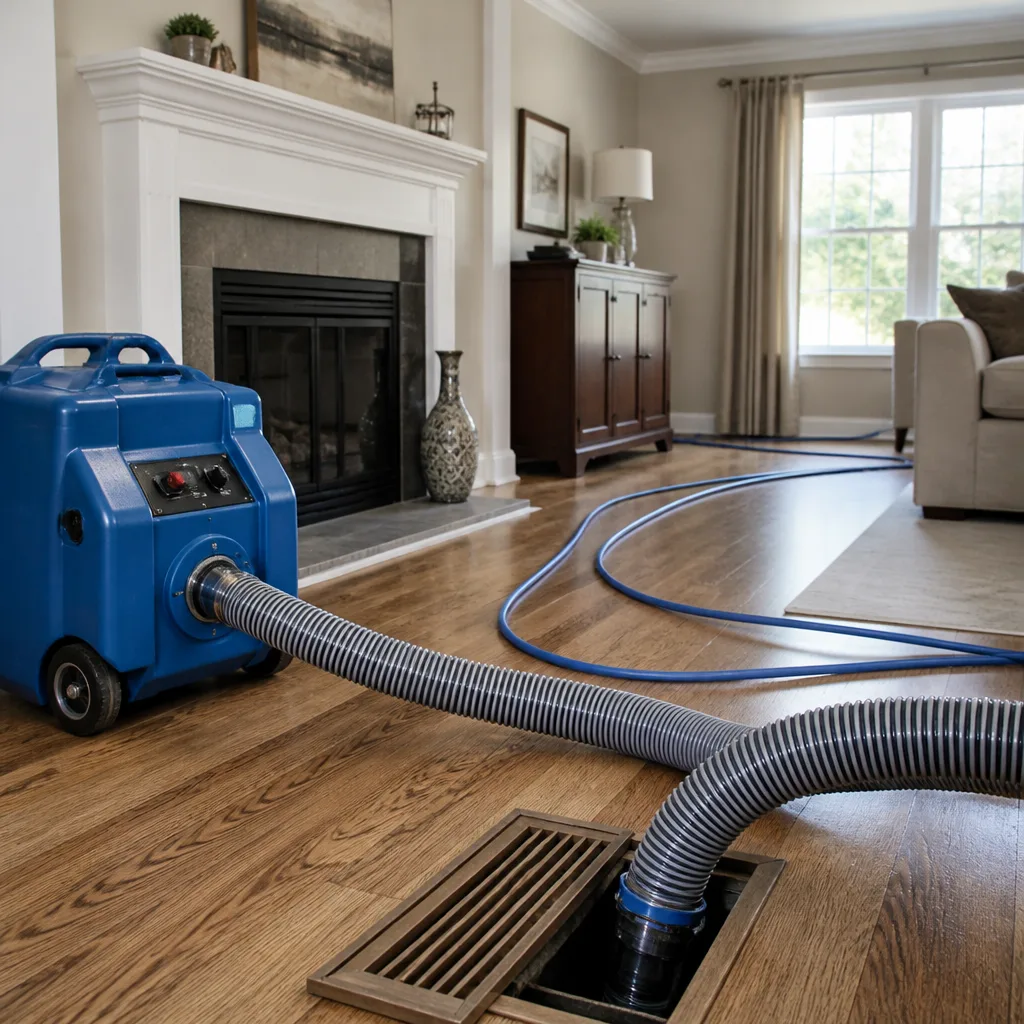 Whole-home duct cleaning
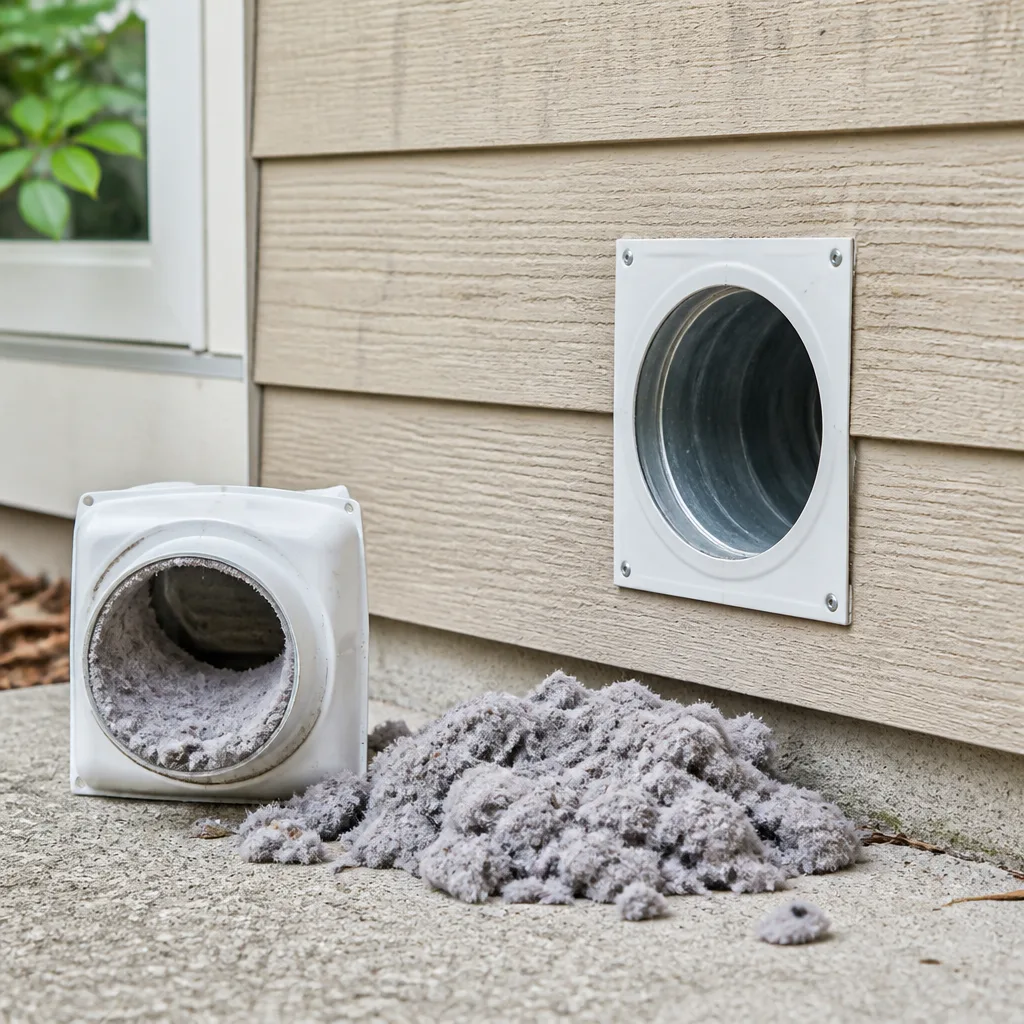 Dryer vent cleaning
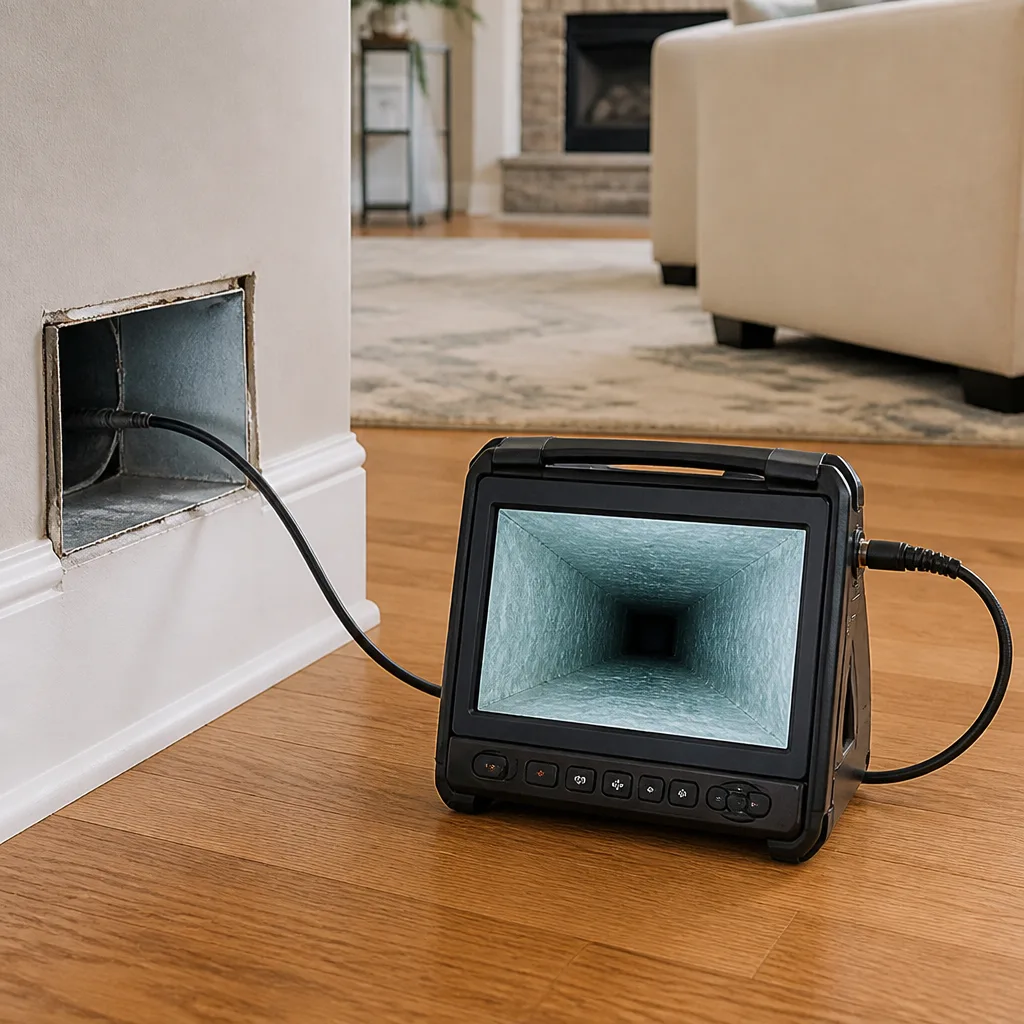 Camera inspection
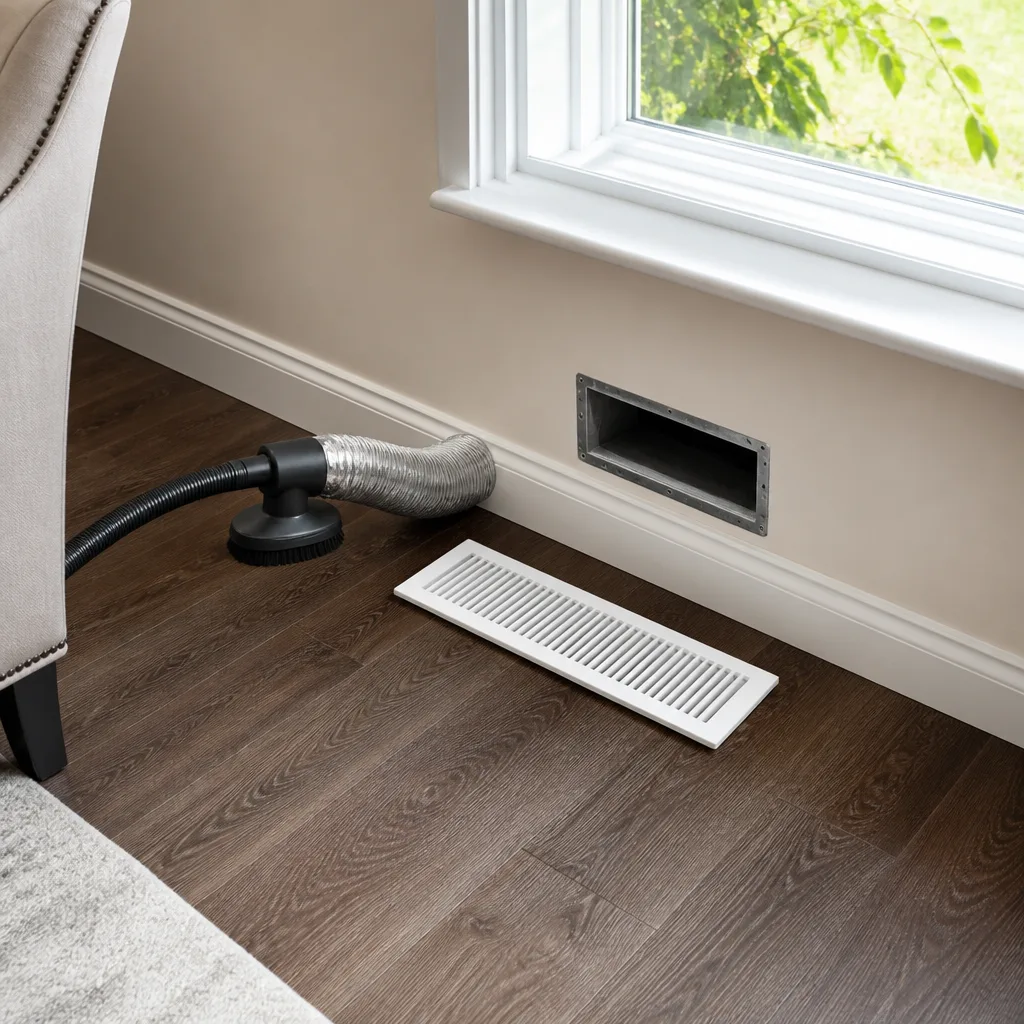 Sanitizing & deodorizing
Whole-system duct and dryer vent check with before-and-after photos - you see exactly what came out of your vents
That "$99 whole-house special" is a bait ad - the real number appears once they are in your hallway, or the "clean" is a shop-vac at the register. We photograph the inside of your ducts before and after instead.
The Complete Air Duct Cleaning Guide for San Pedro Homeowners
San Pedro sits within two miles of one of the busiest ports in North America. The particulate load your ducts filter isn’t the same as a home in the Valley, and cleaning it shouldn’t be either. This guide explains what’s actually building up inside your ductwork, why coastal air changes the equation, and how to know whether the job was done right. We’ll cover what our equipment does that a shop-vac rig can’t, how often San Pedro homes actually need service, and the specific contamination patterns we see across this peninsula.
Quick Answer
Air duct cleaning in San Pedro typically costs $350 – $650 for a full single-system home, and most homeowners should schedule it every 3 – 5 years due to coastal moisture and port-area particulates. The job isn’t just vacuuming: effective cleaning requires a contractor-grade negative air system that captures dislodged debris, not a portable unit that redistributes it into your living room. Air Duct Cleaning in San Pedro uses Rotobrush contact-vacuum systems and Abatement Technologies HEPA equipment to extract what coastal air deposits in ductwork.
Styles & brands we work with
- Whole-home duct cleaning
- Dryer vent cleaning
- Camera inspection
- Sanitizing & deodorizing
Table of Contents
- Why San Pedro Ducts Get Dirtier Than Inland Homes
- What’s Actually in Your Ducts: Coastal Contaminants Explained
- Why Equipment Makes the Difference: Contact Vacuum vs. Shop Vac
- How Much Does Air Duct Cleaning Cost in San Pedro?
- How Often Should San Pedro Homeowners Clean Their Ducts?
- How to Audit Your Duct System Before Calling Anyone
- What a Proper Cleaning Looks Like Step-by-Step
- When Cleaning Isn’t Enough: Duct Repair Signs
Why San Pedro Ducts Get Dirtier Than Inland Homes
San Pedro’s geography works against your ductwork in three specific ways. First, the Port of Los Angeles generates continuous diesel particulate, fine dust, and cargo residue that drifts inland on prevailing westerly winds. Homes in the 90731 and 90732 ZIP codes sit directly in that particulate plume. Second, marine humidity keeps interior air moisture elevated year-round, and moisture is the single biggest accelerator of microbial growth inside ducts. Third, much of San Pedro’s housing stock predates 1980, meaning decades of accumulated dust, fibreglass insulation fragments, and construction debris have settled into return and supply plenums that were never designed for easy access.
A home in Northridge or Sherman Oaks might go five to seven years between cleanings without visible issues. In San Pedro, we routinely pull two to three times the debris weight from coastal homes than from comparable inland properties. The reason is simple: salt air binds to dust and creates a heavier, sticker residue that clings to duct walls rather than passing through. That same salt-laden moisture feeds the kind of slow-growing mold that thrives in dark, temperate environments.
The practical upshot: San Pedro homeowners can’t borrow maintenance schedules written for inland climates. The NADCA recommendation of every three to five years is the *minimum* here, not the target. Homes within a half-mile of Western Avenue or Gaffey Street, closer to the port’s truck corridors, often benefit from inspection at the three-year mark.
What’s Actually in Your Ducts: Coastal Contaminants Explained
When we open a duct access panel in San Pedro, we typically find a layered deposit that tells a story about the home’s history. The layers matter because different contaminants require different removal approaches.
- Port particulates: Diesel soot and fine black carbon dust from ship and truck traffic. This is the finest, most pervasive layer and the hardest to remove without HEPA capture. It penetrates deep into porous duct insulation and requires agitation plus simultaneous extraction.
- Marine mold strains: Coastal humidity supports Cladosporium and Aspergillus species that colonize dust deposits. You may not see visible mold on registers, but a dark grey film inside the plenum is common. This isn’t the same as toxic black mold, but it contributes to persistent musty odors and allergy symptoms.
- Salt crystals: Invisible individually, but in aggregate salt binds with dust to form a crust on duct walls. That crust traps humidity against the metal, accelerating corrosion on aging galvanized ductwork.
- Aging construction debris: Houses built before 1980 often contain drywall dust, plaster crumbs, and fibreglass fibers from original construction that never left the system. We’ve pulled debris from ducts in the Vista del Oro neighborhood that included 50-year-old wood shavings from original framing.
- Pet dander and hair: San Pedro’s dense single-family housing means most homes have at least one pet. Fine dander is lightweight and easily recirculated, but it adheres to the salt-dust crust and accumulates faster than in dry climates.
These layers don’t respond equally to the same level of agitation. Surface dust vacuums out easily. The salt-dust crust needs mechanical brushing. Port particulates need HEPA filtration to prevent them from blowing back into the living space. A one-method cleaning leaves the deeper layers behind, and that’s why homeowners report that their ducts looked clean for about a month before dust returned.
Why Equipment Makes the Difference: Contact Vacuum vs. Shop Vac
The most visible difference between a real duct cleaning and a low-bid job shows up in the debris container before and after. We’ve weighed what comes out of San Pedro systems for years, and the numbers are consistent: a portable shop-vac rig might pull a half-pound of light dust. A Rotobrush contact-vacuum system pulling on the same home pulls three to six pounds of compacted material. That’s the gap between agitating the surface and actually removing the salt-dust crust.
Here’s what happens mechanically. A shop vac simply lowers air pressure at the end of a hose. The hose sits in the duct and pulls whatever is loose enough to move. That’s fine for sawdust on a garage floor. It’s not fine for a salt-bound contaminant layer fused to galvanized steel by years of marine humidity.
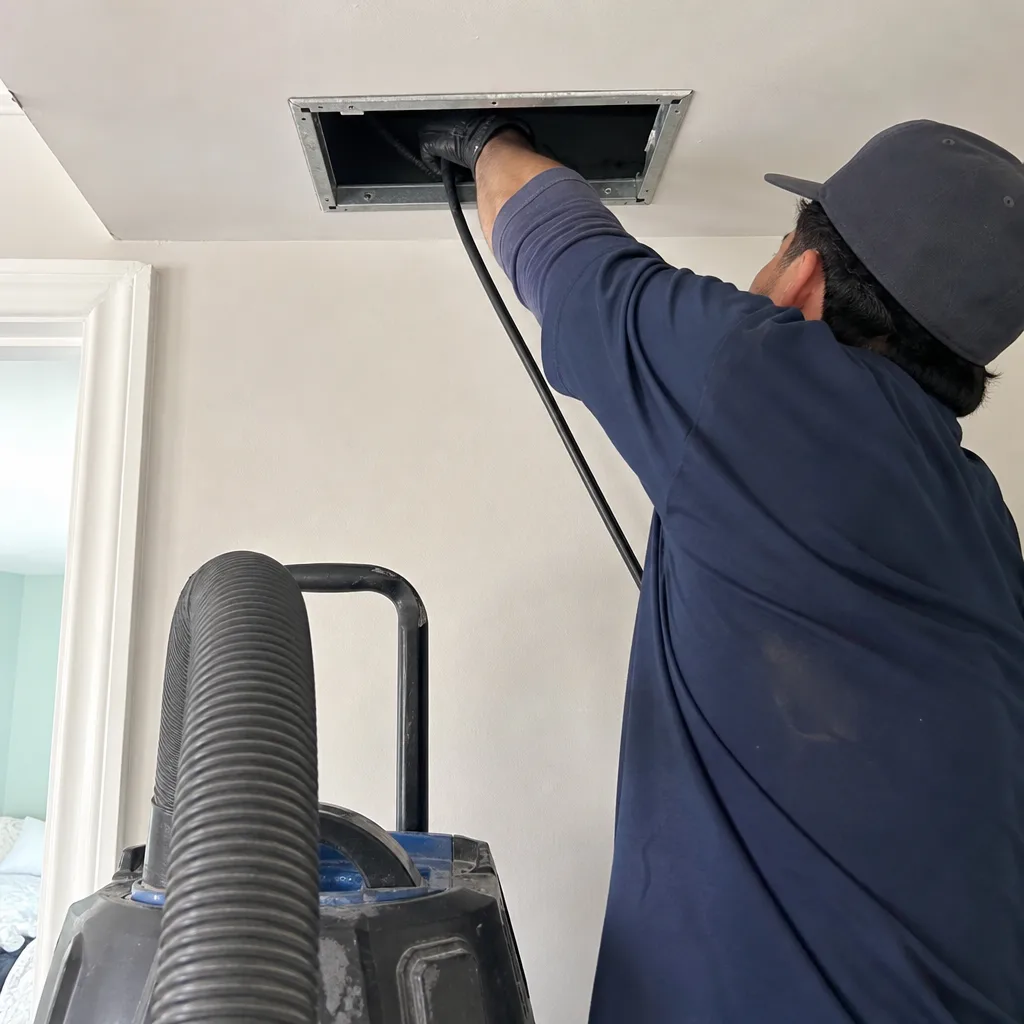
A Rotobrush contact-vacuum brush system combines agitation and extraction in a single head. Rotating nylon brushes physically break the crust loose while negative air pressure immediately pulls the dislodged debris into the vacuum stream. The brush touches the duct wall. That’s the “contact” part, and it’s what separates this from a blower-and-hose approach.
On larger systems, we pair that with Nikro negative air machines. Nikro is the brand restoration contractors use after fires and floods. The machine creates a continuous negative pressure environment inside the duct system, meaning air flows from the living space *into* the ducts, not the reverse. That’s important. Without negative pressure, every agitation stroke pushes a plume of fine particulate back through the registers and into your home. With it, dislodged debris has one path: into the capture filter.
Abatement Technologies HEPA filtration adds the final layer. HEPA-rated filters capture 99.97% of particles at 0.3 microns, which is the size range of port diesel particulates and fine mold spores. A standard vacuum filter doesn’t. The difference is visible. After a cleaning with HEPA capture, you won’t find a fine film of dust settling back onto furniture within a day or two. With a low-bid rig, that film is almost guaranteed.
If you want a simple way to evaluate any duct cleaning company in San Pedro, ask whether they run negative pressure. If they pause or talk around the question, that’s your answer.
How Much Does Air Duct Cleaning Cost in San Pedro?
Honest pricing in this industry is hard to find, so let’s set a baseline. For a single-family San Pedro home with one HVAC system, a legitimate full-system cleaning costs between $350 and $650. That’s not a teaser rate. That’s the price range for a job that includes access to the supply and return plenums, mechanical agitation of all accessible runs, negative-pressure extraction, and debris removal.
Homes with two systems (common in larger San Pedro hillside properties near Averill Park or South Shores) run $500 to $900. Add-on work like dryer vent cleaning or air duct repair is quoted separately and should be priced line-item, not folded into a murky bundle.
Here’s the pricing structure we use, broken out:
- Single HVAC system (up to 3,000 sq ft): $350 – $550
- Larger home, one system (3,000+ sq ft or complex layout): $500 – $650
- Two HVAC systems: $500 – $900 total
- Dryer vent cleaning (add-on or standalone): $90 – $150
- Duct repair / sealing (per-access, quoted after inspection): $150 – $400 typical
Any quote below $250 for a full single-system cleaning should be read as a lead-generation price. The business model behind those numbers relies on the technician finding “problems” once they’re in the home. Maybe the ducts need “sanitizing.” Maybe there’s “mold evidence” that requires a fog treatment. Maybe the system needs a $900 UV light. The van is on the driveway, the homeowner feels obligated, and the final invoice lands at $1,200.
That’s not how we structure our pricing. We quote one flat price per system before work starts. The price covers the full job: access, agitation, negative-pressure extraction, HEPA capture, and cleanup. If we find something that needs repair, we show you the issue, we quote it separately, and you choose. There’s no bait-and-switch because there’s no bait.
Call (877) 573-0759 for an exact quote on your San Pedro home. Estimates are free, and you’ll get a real number, not a range that depends on whatever the tech finds.
How Often Should San Pedro Homeowners Clean Their Ducts?
The NADCA standard says every three to five years. That’s the right starting point for most of the country. For San Pedro, coastal conditions push a meaningful share of homes toward the three-year end of that window.
Here’s a simple way to calibrate your own schedule:
- Within 1 mile of the port or major truck routes: Inspect at three years. Homes near Harbor Boulevard, Gaffey Street, and the I-110 corridor see accelerated particulate loading. If you see black dust on register vanes within months of cleaning, you’re in this group.
- Coastal marine zone (within a few blocks of the bluff): Inspect at three to four years. Salt air crusts form faster here, even if visible dust is lower.
- Inland San Pedro hillsides (Averill Park, The Gardens, Vista del Oro): Four to five years is typically adequate, unless you have pets, smokers, or recent renovation work.
- Any home with a recent remodel: Clean within 60 days of construction completion, regardless of last service date. Drywall dust is abrasive and clogs evaporator coils.
- Any home with a new HVAC system: Clean before the new system runs. Old duct debris on a new blower motor shortens its service life and can void warranty coverage on some brands.
The wildcard is mold. If you smell mustiness when the system cycles on, or if you’ve had any water event – a roof leak, a plumbing leak, an overflown drip pan – you’re not on a maintenance schedule anymore. You’re on an inspection-now basis. Microbial growth won’t wait for the five-year mark.
How to Audit Your Duct System Before Calling Anyone
You can gather useful information about your ductwork before the first phone call. This matters because it lets you evaluate what a technician tells you against what you’ve already seen with your own eyes. A homeowner who has opened an access panel and looked is harder to upsell.
Here’s the audit, step by step:
- Find your access panel. The return plenum (the large box where your filter sits) is usually in a closet, hallway, or garage wall. Remove the filter and use a flashlight to look inside. You’re checking for: visible dust crust on the metal surfaces, grey or black biofilm, debris from construction, or signs of water staining. Take a photo with your phone before and after cleaning so you have a comparison.
- Compare airflow room to room. Close all doors, set the fan to “on” (not auto), and walk the house. Place a tissue near each supply register. Rooms that show weak airflow compared to others indicate restrictions: crushed flex duct, disconnected runs, blocked returns, or a failing damper. That’s diagnostic information a good tech wants to know.
- Check your filter. Pull it and hold it up to a light. If you can’t see light through it, it’s past replacement. A clogged filter means the system has been pulling air from gaps around the filter frame, bypassing filtration entirely. That unfiltered air deposits directly into your return plenum.
- Inspect visible registers and grilles. Black streaking or particulate staining around supply registers often indicates duct leakage pulling attic or wall-cavity dust into the airstream. It’s a repair issue as much as a cleaning issue.
- Note any moisture indicators. Rust on register screws, water stains on ceiling tiles, or condensation on ductwork in unconditioned spaces all point to humidity problems that cleaning alone won’t fix. The source has to be addressed, or the buildup will return.
This audit takes 20 minutes and costs nothing. It doesn’t replace a professional inspection, but it makes you an informed participant in the process rather than a passive recipient of a sales pitch.
What a Proper Cleaning Looks Like Step-by-Step
A legitimate air duct cleaning in San Pedro follows a defined sequence. That matters because steps can’t be skipped without consequences. If a company quotes you one hour for a full-system cleaning, they’re skipping most of these steps.
- System assessment and containment. The tech should inspect the plenums, identify the number of access points needed, and seal off supply registers to create controlled airflow. Closing registers isn’t optional; it forces agitation debris toward the extraction point instead of into the room.
- Negative air setup. A Nikro or equivalent negative-air machine connects to the return plenum or a dedicated access point. The machine runs continuously through the cleaning, maintaining inward airflow from the living space into the system. This is the containment step that separates professional work from a shop-vac job.
- Access point creation. Ducts rarely have enough existing openings. A 6- to 10-inch access hole is cut (and later sealed with a proper cap) in the supply plenum and sometimes mid-run. This is normal. A company that refuses to cut access is probably not cleaning deep enough to matter.
- Mechanical agitation. Rotobrush contact-vacuum heads run through every accessible supply and return run. The brush breaks the crust; the vacuum captures the debris simultaneously. This is the work that removes the salt-dust layer a plain vacuum leaves behind.
- Plenum and coil cleaning. The return plenum, supply plenum, and (when accessible) evaporator coil surfaces get brushed and extracted. The coil is a major catch point for the fine port soot that passes through the filter, and a fouled coil reduces system efficiency more than dirty ducts do.
- HEPA final pass. With agitation complete, the negative-air extraction continues for several minutes to pull residual airborne particulates from the system. Abatement Technologies HEPA filters capture the finest fractions – the diesel particulate and mold spores that pass right through standard filters.
- Access sealing and system test. Access points are capped and sealed with foil tape or proper duct caps. The system is cycled on, airflow is confirmed at each register, and the debris container is shown to the homeowner. You should see it. If a company won’t show you what came out, ask why.
The entire process on a single-system San Pedro home takes three to five hours. Anything shorter suggests skipped steps. Anything much longer suggests the tech is padding time or the system is exceptionally contaminated. Both are worth understanding before work begins.
When Cleaning Isn’t Enough: Duct Repair Signs
Sometimes a cleaning reveals that the system has problems no amount of brushing can solve. That’s when air duct repair in San Pedro becomes the right call, and it’s why we handle repair work in-house rather than sending you to another contractor.
Here are the situations where cleaning alone won’t fix the problem:
- Disconnected runs. In attics and crawlspaces, flex duct separates from boots or tees over time. The system is conditioning the attic while your bedroom gets a trickle. Cleaning the ducts doesn’t reconnect them.
- Crushed or kinked flex duct. A crushed run can’t be cleaned effectively because the brush can’t pass through the restriction. The section needs replacement.
- Duct leakage at seams and joints. Older sheet metal ductwork in pre-1980 San Pedro homes leaks at seams. Air you paid to condition escapes into the attic. Sealing with Guardsman-brand sealant products addresses this properly.
- Water-damaged sections. If a section of duct shows rust, staining, or fiberglass deterioration from a previous leak, that material is compromised. It can’t be cleaned back to health.
- Undersized returns. Common in older homes. The system chokes because it can’t pull enough return air. This is a design issue, not a cleaning issue, and it typically requires adding return capacity.
The advantage of a contractor who does both cleaning and repair is that these findings get addressed in the same visit. You’re not waiting two weeks for another company to come out, and you’re not paying a second diagnostic fee.
Common Mistakes to Avoid
- Hiring on price alone. The $99 whole-house duct cleaning doesn’t exist. It’s a front-end number designed to get a technician into your home. The final invoice will make up the difference, and the work won’t include the containment and extraction steps that actually matter in a coastal environment.
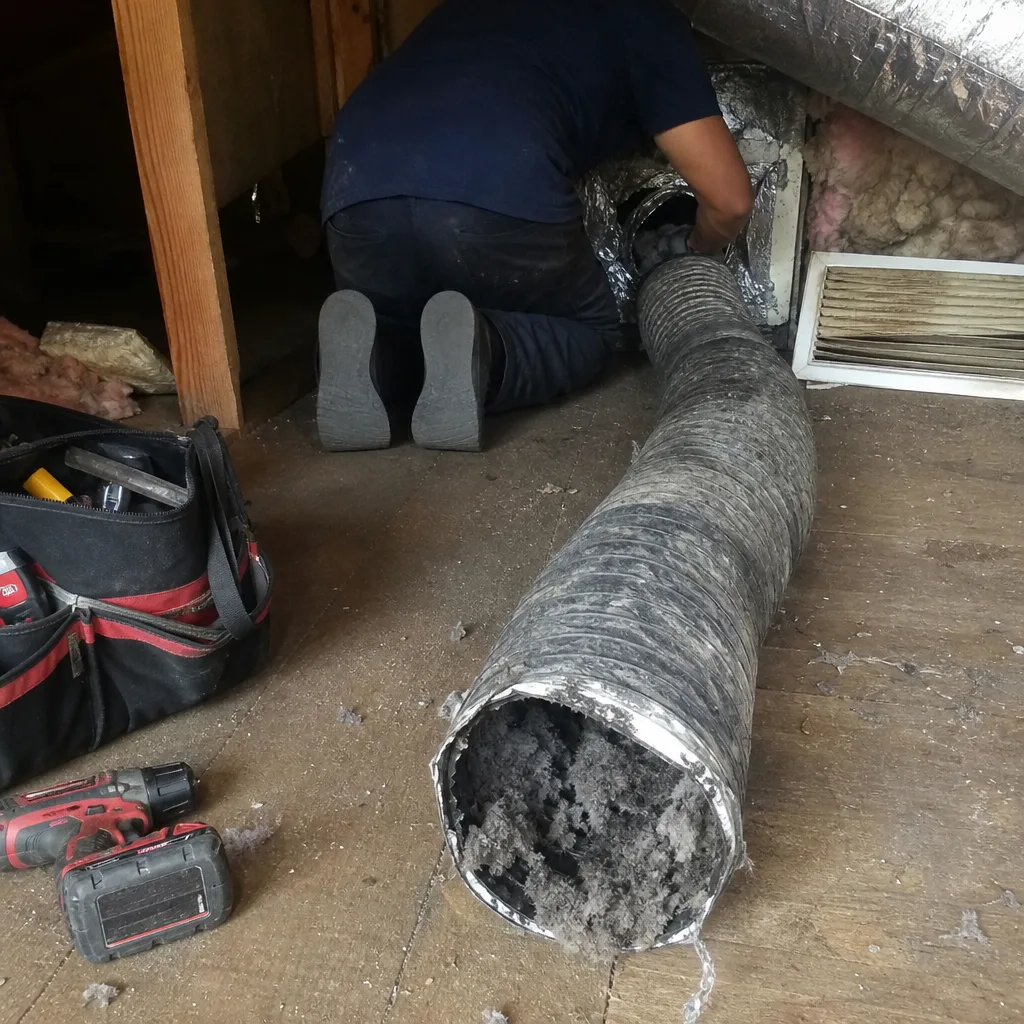
- Skipping the pre-inspection photo. If you don’t look inside before they start, you can’t verify the before/after difference. Always ask to see the debris container after the job, and ask them to point to what came out of the plenums specifically, not just the floor-level regs.
- Assuming a “duct sanitation” fog is necessary. Fogging is not a substitute for mechanical removal. In most cases, if the physical debris is properly removed and the moisture source addressed, fog treatments are unnecessary. They’re often a high-margin add-on when the base price is too low.
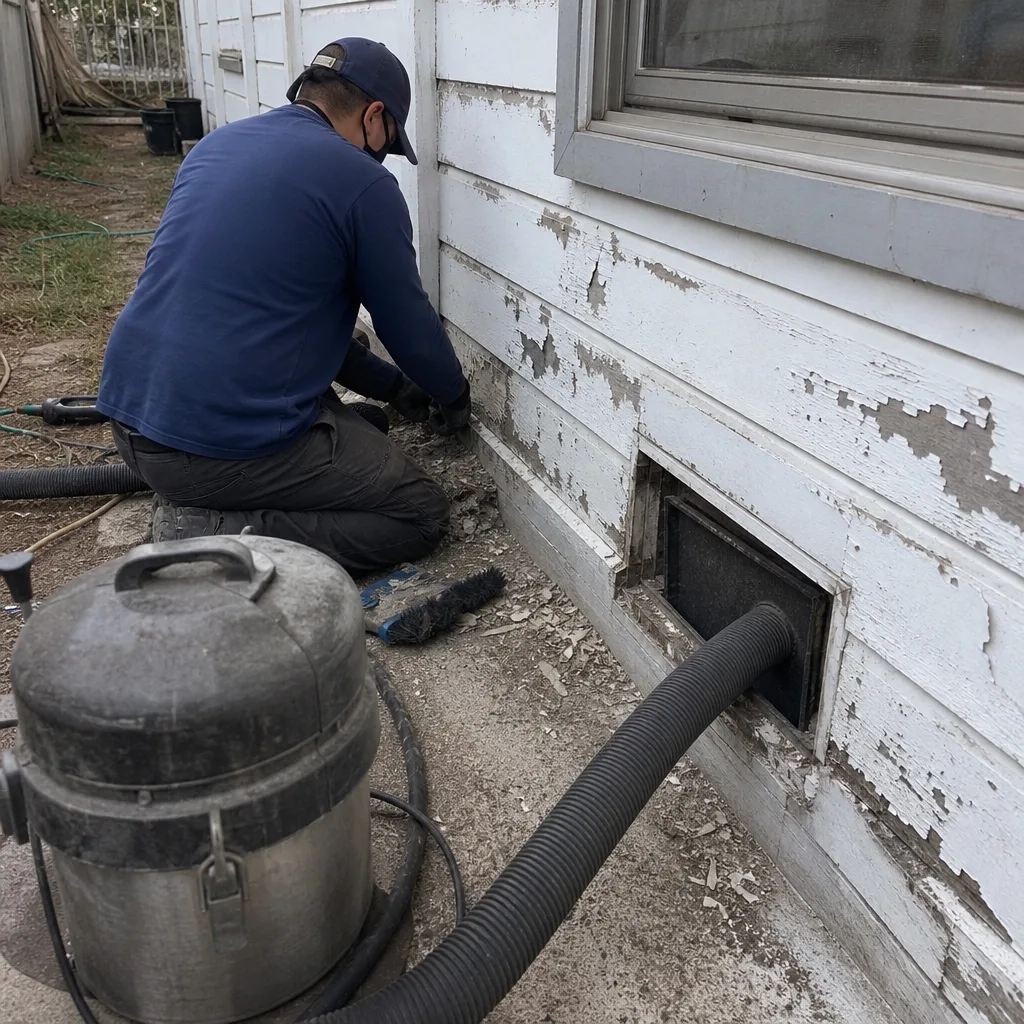
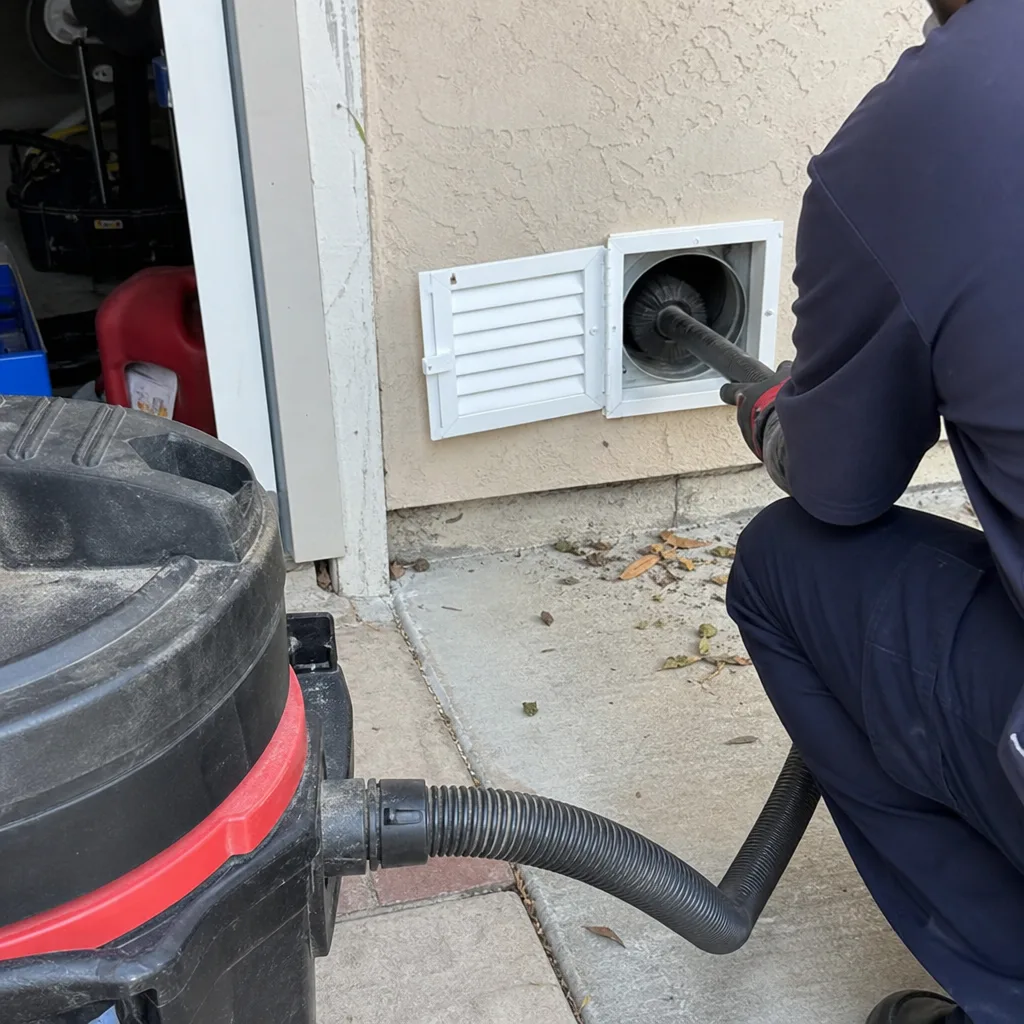
- Ignoring dryer vents. Dryer vent cleaning is a distinct safety issue, not a duct-cleaning upsell. Lint-clogged dryer vents are a leading cause of residential fires, and in San Pedro’s older homes, the vents are often long, kinked, or poorly routed. Dryer vent cleaning in San Pedro should be handled as its own scheduled service.
- Expecting a cleaning to fix an airflow problem. If one bedroom has weak airflow while the rest of the house is fine, that’s a duct restriction or disconnection, not a dirt problem. Cleaning won’t restore airflow to a crushed flex run.
- Believing the three-year rule applies everywhere. A home off Western Avenue near the port corridor accumulates particulate far faster than a home above Western near Averill Park. San Pedro is not one microclimate, and your maintenance schedule should reflect what you observe, not a generic industry average.
See the difference
 Before
 After
 Before
 After
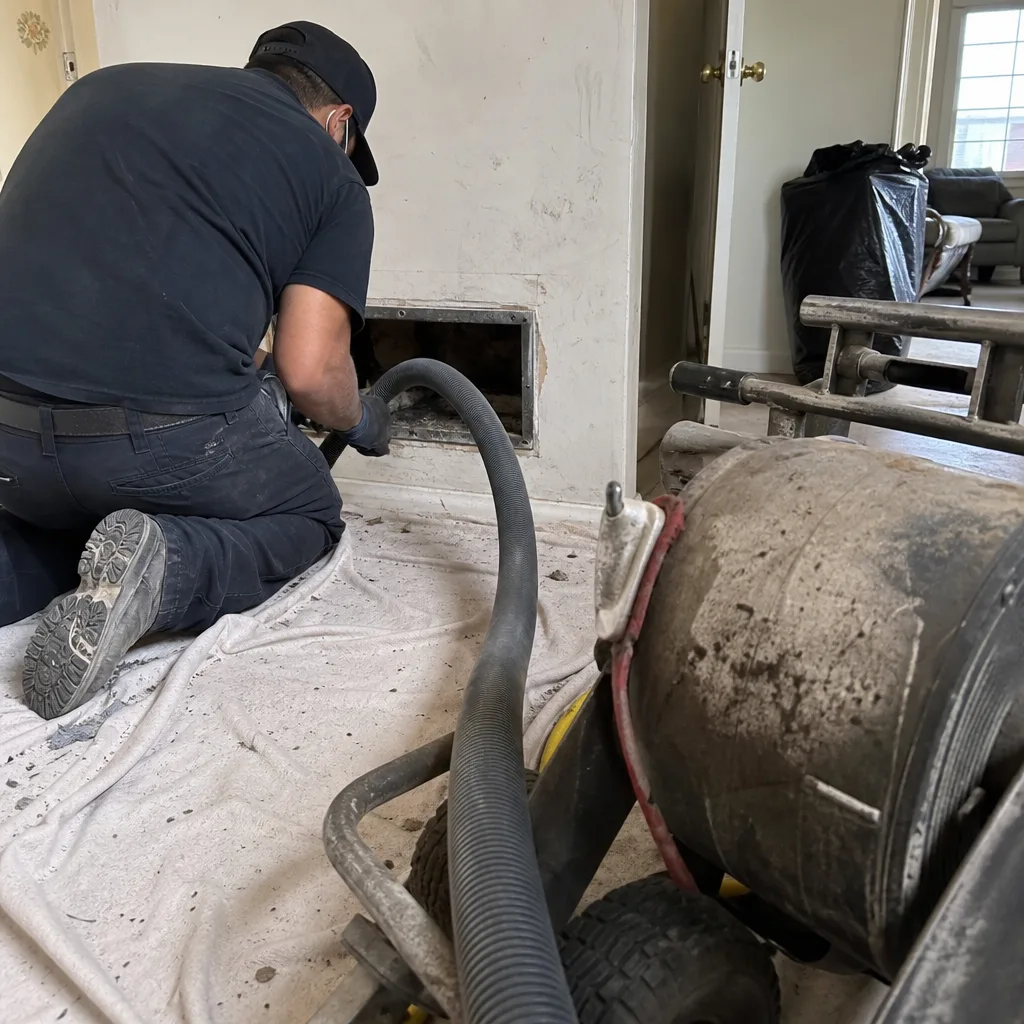 Before
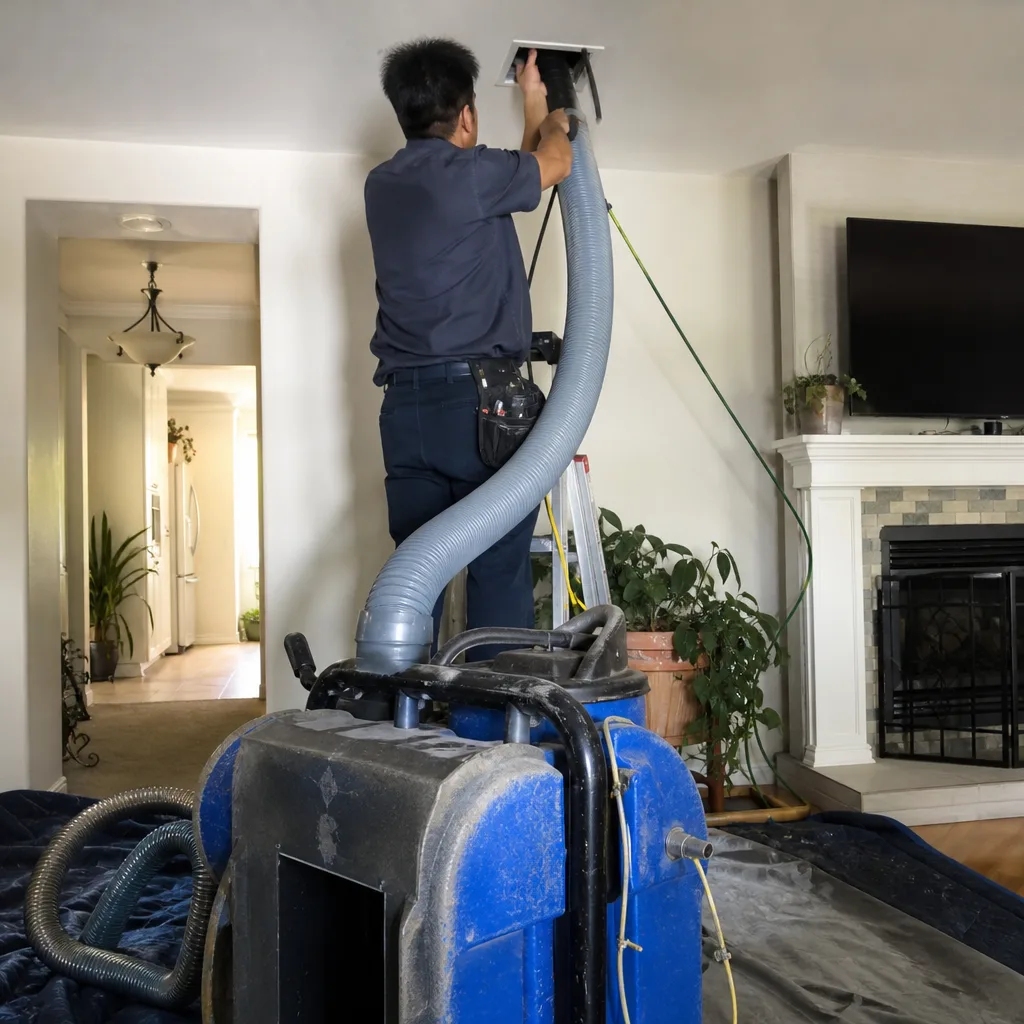 After
When to Call a Professional
You should call for an inspection if you see black particulate streaking around supply registers, if you smell mustiness when the HVAC cycles on, if your filter clogs faster than a month, or if family members experience allergy symptoms that improve when away from home. These are signs the system is circulating something it shouldn’t. You should also call if you’ve never had the ducts cleaned and your home predates 1990; the accumulated load in those systems can’t be judged from the outside.
Air Duct Cleaning San Pedro offers free estimates throughout San Pedro. Call (877) 573-0759 to schedule one. We’ll show you what’s in your ducts, give you a flat price per system, and do the work with equipment that captures what it removes. That’s the standard, and it’s the same standard we’d want in our own homes.
Frequently Asked Questions
How much does air duct cleaning actually cost in San Pedro?
A legitimate single-system air duct cleaning in San Pedro costs between $350 and $650 for a typical single-family home. Homes with two HVAC systems run $500 to $900. Any quote under $250 for a full-system job should be treated as a lead-generation price that will likely increase once the technician finds “problems” requiring add-on services. Call (877) 573-0759 for a firm quote on your San Pedro home.
Why are some duct cleaning quotes so much cheaper?
Cheaper quotes come from companies that skip containment and extraction. A portable shop-vac rig without negative pressure simply agitates and redistributes debris, leaving most of the salt-dust crust behind. The homeowner sees a lower price and less evidence of actual work. The Rotobrush and Nikro equipment we run is the same class used by restoration contractors, and the difference is visible in the debris container.
How do I know the work was actually done?
Ask to see the debris container after the job. A legitimate cleaning of a coastal San Pedro system typically removes three to six pounds of material from a single-family home. If the container is nearly empty and you’ve never cleaned the ducts, the work wasn’t done properly. You should also see sealed access points where the tech cut into the plenum to clean it.
How often does it really need doing?
Most San Pedro homes need duct cleaning every three to five years, with homes closer to the port corridor landing on the shorter end. The NADCA baseline is three to five years nationally, but marine humidity and port particulates accelerate loading here. Homes with pets, recent construction, or a history of water intrusion should inspect sooner.
Can salt air really affect my ductwork?
Yes. Salt crystals bind with household dust to form a crust on duct walls that traps moisture against the metal. That creates conditions for corrosion on galvanized ducts and provides a substrate for mold growth. A brush-and-extract system like Rotobrush is designed specifically to break that crust, which is why coastal homes benefit from more aggressive mechanical cleaning than inland equivalents.
Is duct cleaning worth it if I change my filter regularly?
A clean filter protects the equipment downstream, but it doesn’t clean the ducts. The filter sits upstream of the blower, capturing what goes into the system; it has no effect on the accumulated layer of dust, salt crust, and debris already coating the duct walls. Filter changes slow loading. They don’t remove what’s there.
Should I have my dryer vent cleaned at the same time?
Yes, and it’s a separate service with a separate reason for existing. Dryer vent cleaning is a fire-risk issue, not an air-quality issue. Lint accumulation in the vent line ignites easily and burns hot. If you haven’t had the vent cleaned in two years or more, schedule it alongside your duct cleaning.
The Bottom Line
San Pedro’s coastal location creates duct contamination patterns that inland guides don’t address. Salt air, marine humidity, and port-area particulates combine into a dense, sticky layer that surface vacuuming can’t remove. Effective cleaning requires contact agitation, negative-pressure extraction, and HEPA capture – the same approach used by restoration contractors. Legitimate San Pedro pricing for a single-system home runs $350 to $650, with most homes needing service every three to five years. The provider you choose should show you what they removed, seal their access points cleanly, and handle repairs in-house rather than sending you elsewhere. That’s the complete picture, and it’s the standard we work to on every Air Duct Cleaning San Pedro home we service.
Written by the team at Air Duct Cleaning San Pedro, serving San Pedro since 2017.