
Last updated November 2, 2026
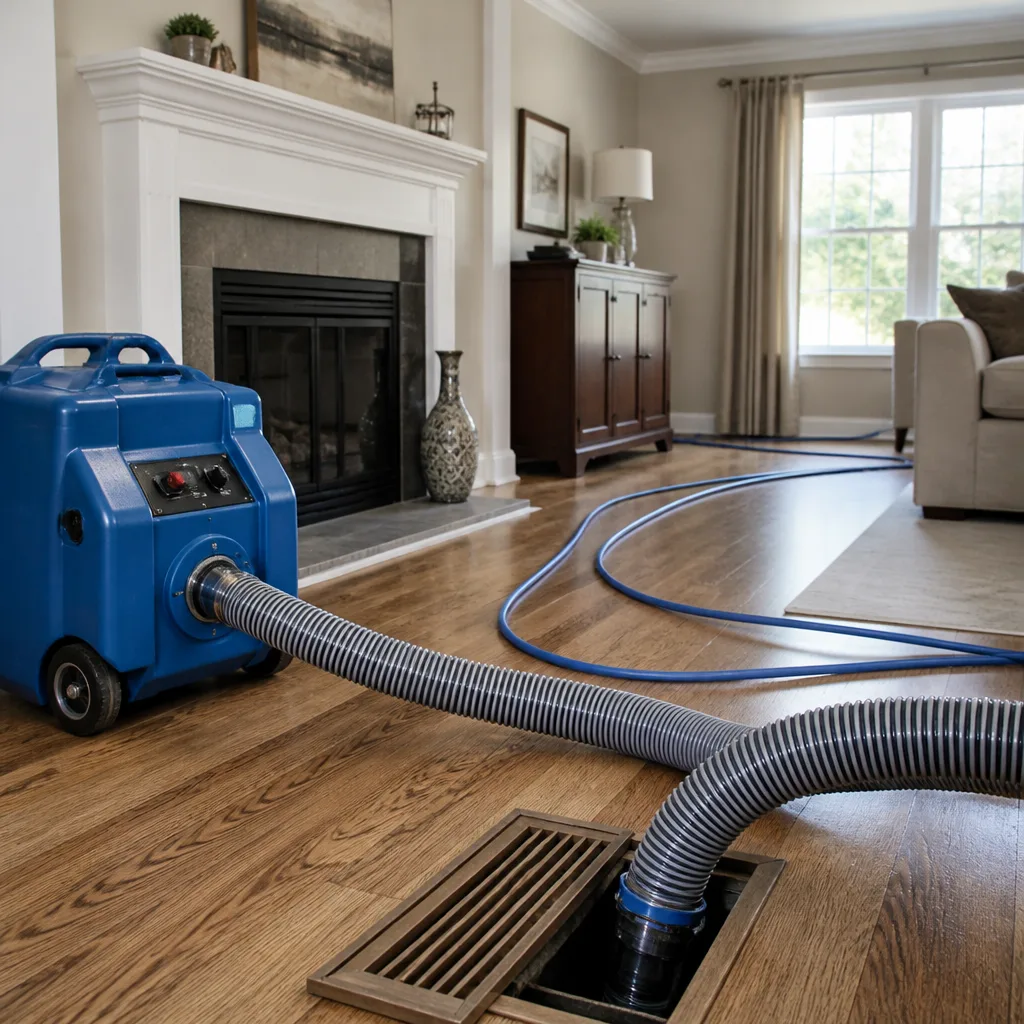 Whole-home duct cleaning
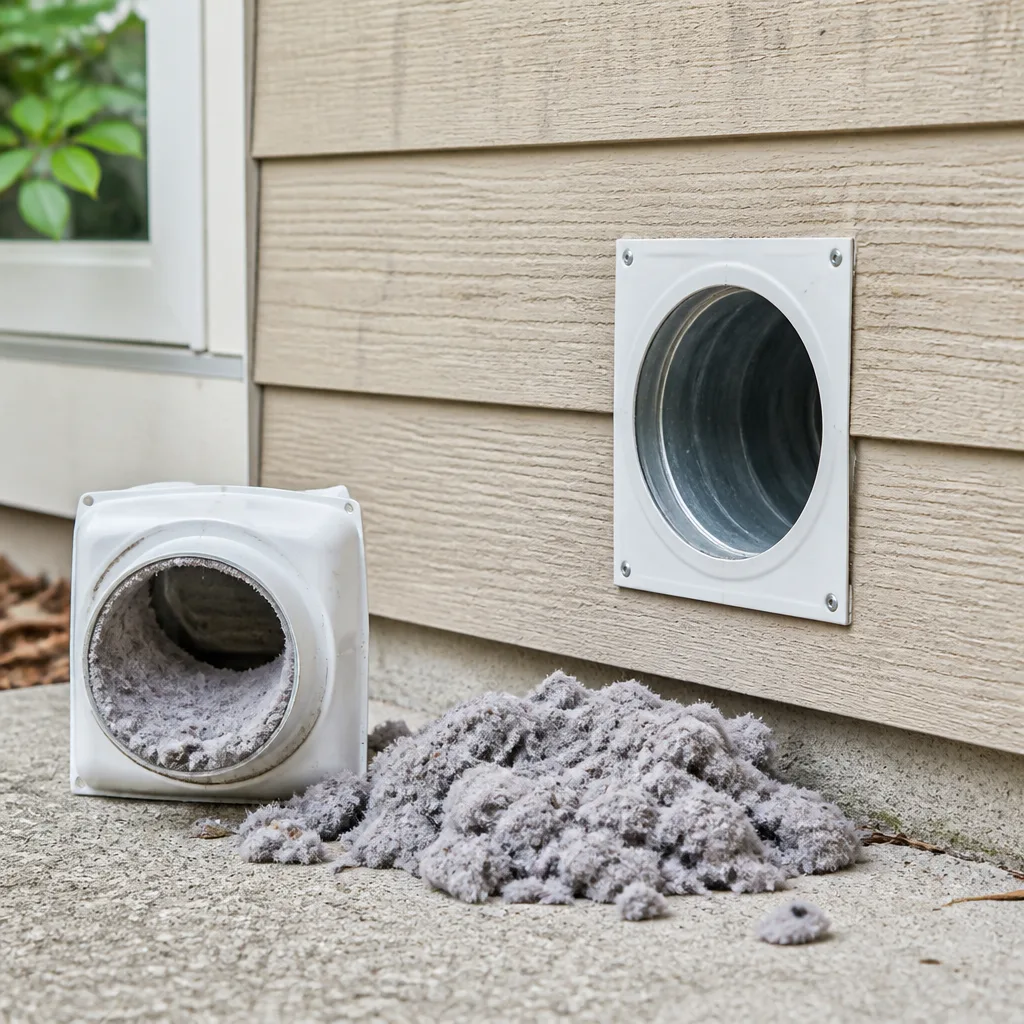 Dryer vent cleaning
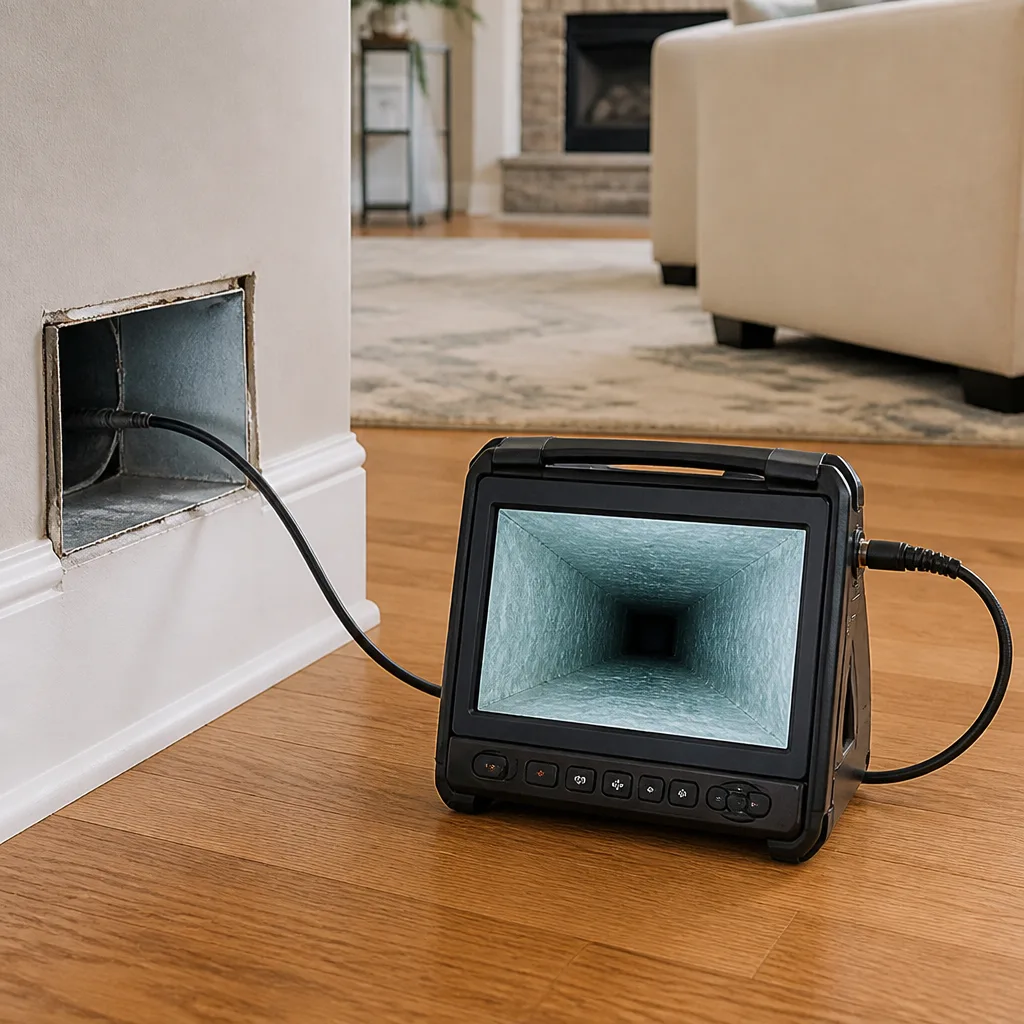 Camera inspection
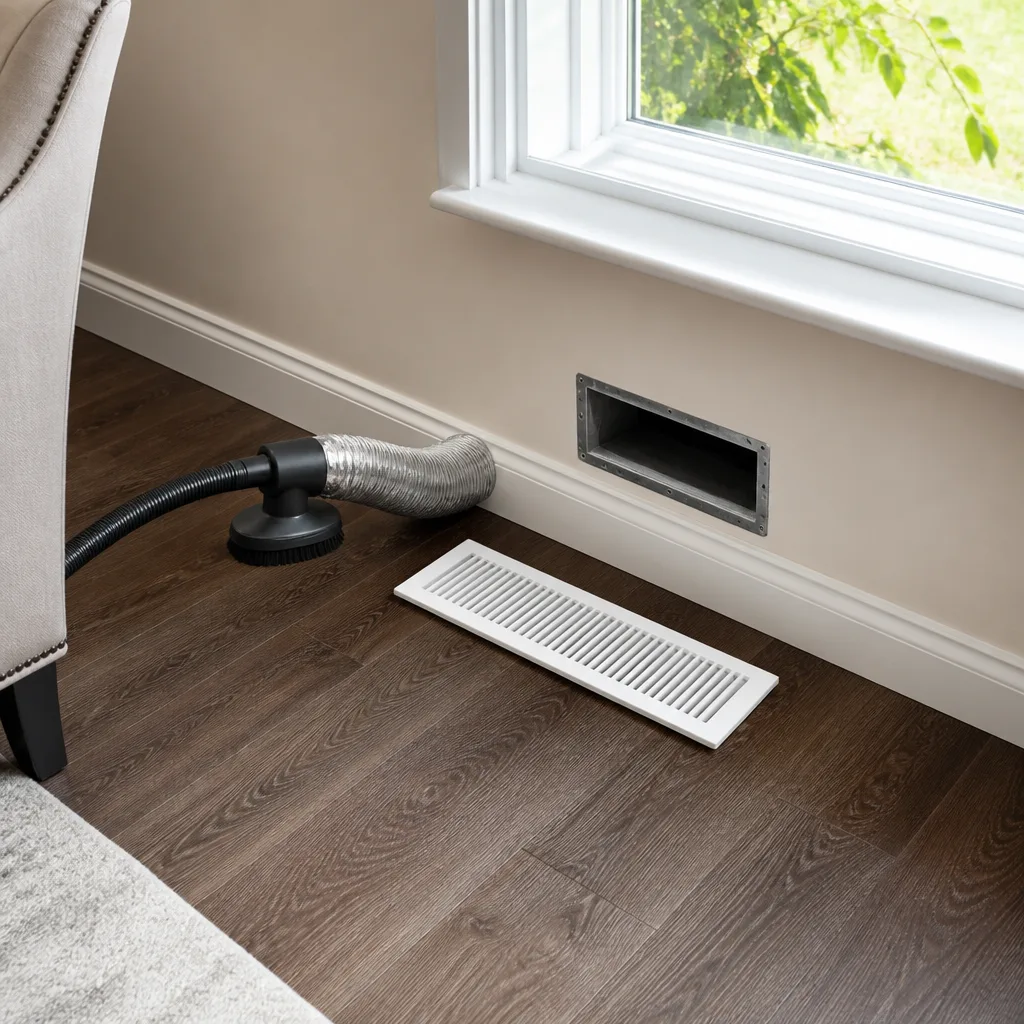 Sanitizing & deodorizing
Whole-system duct and dryer vent check with before-and-after photos - you see exactly what came out of your vents
That "$99 whole-house special" is a bait ad - the real number appears once they are in your hallway, or the "clean" is a shop-vac at the register. We photograph the inside of your ducts before and after instead.
Seasonal Air Duct Cleaning Care for San Pedro: Year-Round Homeowner’s Guide
Most seasonal duct cleaning guides are written for places with real winters. San Pedro doesn’t have those. What we have instead is a marine layer that parks over the harborside for months, Santa Ana winds that push desert dust and wildfire ash into every window seal and vent register, and port traffic that produces a steady background of diesel particulate most homeowners never think about until the inside of their return grille turns gray. This guide maps those four distinct stress periods against your HVAC system, so you know when Air Duct Cleaning actually matters here, not in Ohio.
Quick Answer
In San Pedro, the highest-priority duct cleaning window is late September through early November, before the first Santa Ana event of the season, because single high-particle wind events can load a clean system faster than six months of normal operation. Spring cleaning, around April, is the second most useful window, targeting marine-layer condensation and mold risk. Homeowners should also adjust filter-change cadence to AQI alerts rather than calendar dates. Before we go further: if you haven’t had your ducts evaluated, start with our Air Duct Cleaning in San Pedro guide to understand what a proper cleaning involves.
Styles & brands we work with
- Whole-home duct cleaning
- Dryer vent cleaning
- Camera inspection
- Sanitizing & deodorizing
Table of Contents
- San Pedro’s Actual HVAC Stress Calendar
- Why Fall Matters More Than Spring in San Pedro
- The Marine Layer and Mold Inside Ductwork
- Santa Ana Events: Single-Day System Contamination
- Port Traffic and Diesel PM2.5: The Slow Accumulator
- Filter Changes Tied to AQI, Not Calendar Months
- Post-Santa Ana Event Inspection Protocol
- Common Mistakes to Avoid
San Pedro’s Actual HVAC Stress Calendar
San Pedro homes don’t follow the textbook “clean before summer cooling season” rule that inland guides push. Our HVAC systems run hardest in September and October during Santa Ana-driven heat spikes, not July. July is actually mild here, with the marine layer keeping temperatures in the low 70s while inland areas bake. That means the traditional pre-summer cleaning recommendation arrives about three months early for most San Pedro households. Here’s what the year actually looks like for your ductwork:
- December through February (Winter Marine Layer): Persistent low clouds and high humidity. Condensation risk inside poorly insulated flex duct. Mold and mildew become the primary concern, especially in crawlspaces and attic runs.
- March through May (Spring Wind Events): Transitional weather brings gusty onshore winds. Pollen from the Palos Verdes hillsides, fine dust from construction, and salt spray from the breakwater enter through intakes. Particulate infiltration peaks.
- June through August (Port Activity Peak + Marine Layer Mix): Cargo volume at the Port of Los Angeles peaks for consumer goods imports. Diesel PM2.5 from drayage trucks and terminal equipment drifts into residential areas, particularly north of Gaffey Street and east of Pacific Avenue. The marine layer can still linger until midday, keeping particulates suspended near ground level.
- September through November (Santa Ana Season + Wildfire Smoke): The highest-stress period. Northeast winds bring dry desert dust, and wildfire smoke from inland fires gets pushed toward the coast. HVAC systems run hardest during heat spikes. A single Santa Ana event can deposit more debris in your ducts than the previous eight months combined.
What this means in practical terms: if you’re going to pick one cleaning window, it’s fall. If you want to maintain year-round baseline performance, pair a spring cleaning with filter changes tuned to AQI alerts.
Why Fall Matters More Than Spring in San Pedro
Autumn air duct cleaning in San Pedro is not a scheduling convenience. It’s the difference between walking into Santa Ana season with a clean system or a loaded one. Here’s the sequence: Santa Ana winds arrive after months of marine layer, meaning your ducts have already accumulated humidity-associated debris. Then the wind shifts direction and pulls in dry, fine particulate from the inland deserts. That particulate doesn’t just sit on top of existing buildup; it embeds into it, creating a denser, harder-to-remove layer that compacts against flex duct walls. When the next heat spike hits and the system runs constantly, that material recirculates through every room.
South Coast AQMD monitoring data for the 90731 and 90732 zip codes shows consistent PM10 and PM2.5 elevation during fall wind events compared to summer baselines. That’s not speculation; it’s measurable. A fall cleaning, done between late September and early November, gives your system its best chance to operate cleanly through the highest-stress months. If you need to address more than just cleaning, our Air Duct Repair in San Pedro page covers what happens when we find leaks or disconnected sections during a clean.
The Marine Layer and Mold Inside Ductwork
The marine layer isn’t just fog. It’s a persistent humidity source that penetrates poorly sealed duct runs and creates the precise conditions where mold spores proliferate. In San Pedro, homes built before the 1990s often have flex duct runs through unconditioned crawlspaces or attics. When warm, humid air from the house meets cooler duct surfaces during marine layer months, condensation forms. That moisture mixes with accumulated dust and organic material, and mold colonization begins. What starts as a thin film on the inside of a return boot becomes a recurring source of musty odor that returns within days of cleaning if the underlying condensation problem isn’t addressed.
The transition from cosmetic to structural concern happens when the dampness reaches the fiberglass insulation inside flex duct. Once insulation gets wet, it loses R-value, and the inner liner can separate or sag. That’s no longer a cleaning issue; it’s a repair issue. Rotobrush contact-vacuum brush systems can remove surface mold from duct walls, but if the insulation layer is compromised, the section needs replacing. That’s one reason we work with Abatement Technologies negative-air and HEPA filtration equipment during cleans: it captures dislodged mold spores instead of blowing them into living spaces.
Santa Ana Events: Single-Day System Contamination
A single Santa Ana wind event can deposit more debris in your ductwork than six months of normal operation. Here’s how it works mechanically: the northeast winds pick up fine desert dust, construction dirt, and, increasingly, wildfire smoke particulate. That material enters homes through attic vents, window frames, and exterior door gaps. Your HVAC system, running hard during the associated heat spike, pulls that particulate into return registers and distributes it throughout the duct network. The result is a fine gray film on the inside of supply ducts, coating register boxes, and layering over any existing dust accumulation.
What makes this particularly bad in San Pedro is the contrast between marine layer humidity and Santa Ana dryness. The dry dust doesn’t clump. It stays fine and easily resuspended, meaning every system cycle during and after an event keeps a portion of it airborne. If you’ve ever noticed a thin layer of dust on furniture within 48 hours of a Santa Ana event despite running your system, that’s why.
After a particularly intense Santa Ana event or one that coincides with wildfire smoke intrusion, we recommend the Air Duct Cleaning Emergency Preparedness Guide for San Pedro Homes inspection protocol below. If smoke odor lingers inside the house days after the air clears outside, the particulates are likely sitting in your ducts and being re-released with each cycle.
Port Traffic and Diesel PM2.5: The Slow Accumulator
The Port of Los Angeles processes millions of containers annually, and the drayage trucks, yard tractors, and cargo handling equipment produce diesel particulate matter that doesn’t respect neighborhood boundaries. In San Pedro, residential areas north of the 110 Freeway and east of Pacific Avenue receive measurable PM2.5 from port operations, particularly during peak cargo seasons in late summer and early fall. This isn’t a knock on the port; it’s a physical reality of living near one of the world’s busiest container terminals. Diesel PM2.5 is fine enough to remain suspended for hours and deposits itself in HVAC systems with remarkable efficiency, especially when return vents are located near exterior walls or windows. Over time, this dark, oily particulate builds up in supply ducts and coats blower motor housings. It doesn’t look like ordinary household dust; it’s darker, stickier, and more resistant to basic brushing.
Homeowners who run whole-home filtration systems from Honeywell or Aprilaire see slower accumulation because those filters capture more of the incoming particulate before it reaches the coil and duct walls. We work around those systems regularly and have seen firsthand how a properly maintained media filter cabinet reduces the amount of port-related soot that reaches downstream duct surfaces. It doesn’t eliminate the need for periodic cleaning, but it extends the intervals meaningfully. Air Duct Cleaning San Pedro home services are designed around these local contamination patterns, not generic national averages.
Filter Changes Tied to AQI, Not Calendar Months
The standard advice of “change your filter every 90 days” fails in San Pedro because our particulate load swings wildly based on wind events and port activity rather than seasonal heating or cooling demands. A better framework is to tie filter changes to the Air Quality Index from South Coast AQMD monitoring stations serving the 90731 and 90732 zip codes. Here’s the cadence that reflects how San Pedro’s air actually behaves:
- AQI Green (0-50) for 30+ days: Standard filtering. Check the filter at 60 days; replace at 90 days unless visibly loaded earlier.
- AQI Yellow (51-100) for 7+ consecutive days: Compressed schedule. Inspect the filter at 30 days and replace at 45-60 days. Marine layer mornings that push particulate levels up repeatedly qualify.
- AQI Orange or Red (101-150+) during a Santa Ana event: Immediate inspection after the event clears. If the filter is gray or brown, replace it regardless of age. Then schedule a duct inspection if the filter loaded faster than 30 days.
- Wildfire smoke visible or odor present indoors: Replace the filter immediately after air quality improves, and run the system fan continuously with a high-MERV filter during the event if your system can handle the static pressure drop. Confirm your system can accept higher MERV ratings before installing; some older blowers can’t.
The point is responsiveness, not rigid calendar adherence. A filter that turns from white to dark gray in two weeks is telling you something about what’s entering your home. Listen to it.
Post-Santa Ana Event Inspection Protocol
After any Santa Ana event that lasted more than 48 hours or brought visible dust into your home, run this inspection sequence. It takes 15 minutes and will tell you whether the event overloaded your system or just tested it:
- Visual filter check: Remove the filter and hold it against a white surface in good light. If the filter color has shifted noticeably from its baseline, replace it. Mark the installation date on the frame.
- Return grille inspection: Remove one return grille, ideally the one nearest an exterior wall or window, and wipe the inside of the duct opening with a clean white cloth. Gray or brown residue means the event deposited particulates past the filter boundary.
- Supply register check: Look at the inside of a supply register in a bedroom or living area. Fine gray dust on the damper blades or inside the boot indicates particulates have moved through the system and are now exiting into living spaces.
- Blower compartment check: If you’re comfortable removing the access panel on your air handler, inspect the blower motor housing for visible accumulation. A thin film is normal; a visible coating indicates the system needs cleaning.
- Odor test: Close the house for 20 minutes with the system off, then turn the fan on and stand in the room farthest from the air handler. If you smell dust, smoke, or a stale “heated” odor, the debris load is high enough to warrant professional attention.
If steps 2 through 4 all show visible particulate, the event loaded your system faster than normal operation would over a full year. At that point, a professional cleaning with captured containment, not a shop vac, is the right next step. Nikro professional duct cleaning equipment is designed to handle exactly this kind of heavy particulate removal, and it’s what we bring to every job.
Common Mistakes to Avoid
- Cleaning only when there’s a visible problem. By the time dust is visibly blowing from registers or odors are noticeable, the system has been recirculating that material for weeks. Duct contamination compounds; early intervention prevents the deepest buildup.
- Following inland seasonal calendars. Cleaning in June because a national guide says “before summer cooling season” ignores that San Pedro’s peak HVAC stress arrives in September and October. You’ll miss the critical window.
- Using cheap fiberglass filters during marine layer months. Those filters capture large particles but allow the fine mold spores and PM2.5 from the port to pass through. A mid-MERV pleated filter, compatible with your system, provides meaningful protection during high-humidity periods.
- Hiring a low-bid cleaner with a shop vac. Low-bid duct cleaners in the San Pedro area often lack the negative-air and HEPA containment equipment needed to capture dislodged debris. The result is debris redistributed into living spaces rather than removed. This is the single most common disappointment we hear about from homeowners who’ve had prior cleanings.
- Ignoring the dryer vent while focusing on HVAC ducts. Dryer vents are a separate system with a separate risk profile: lint buildup is a leading cause of residential fires. Our Dryer Vent Cleaning in San Pedro page explains why this deserves annual attention regardless of HVAC duct condition.
- Delaying repairs found during a cleaning. Disconnected or leaking duct sections pull unconditioned air from crawlspaces and attics into the system. Cleaning without repairing those leaks means the problem returns quickly. Our Air Duct Repair in San Pedro team handles both, so the fix happens in the same visit.
- Assuming new construction means clean ducts. Newer San Pedro homes are often cleaner at baseline, but construction debris, drywall dust, and paint overspray are common in systems that were never cleaned after the build was completed. Age of the home isn’t a reliable indicator of duct condition.
See the difference
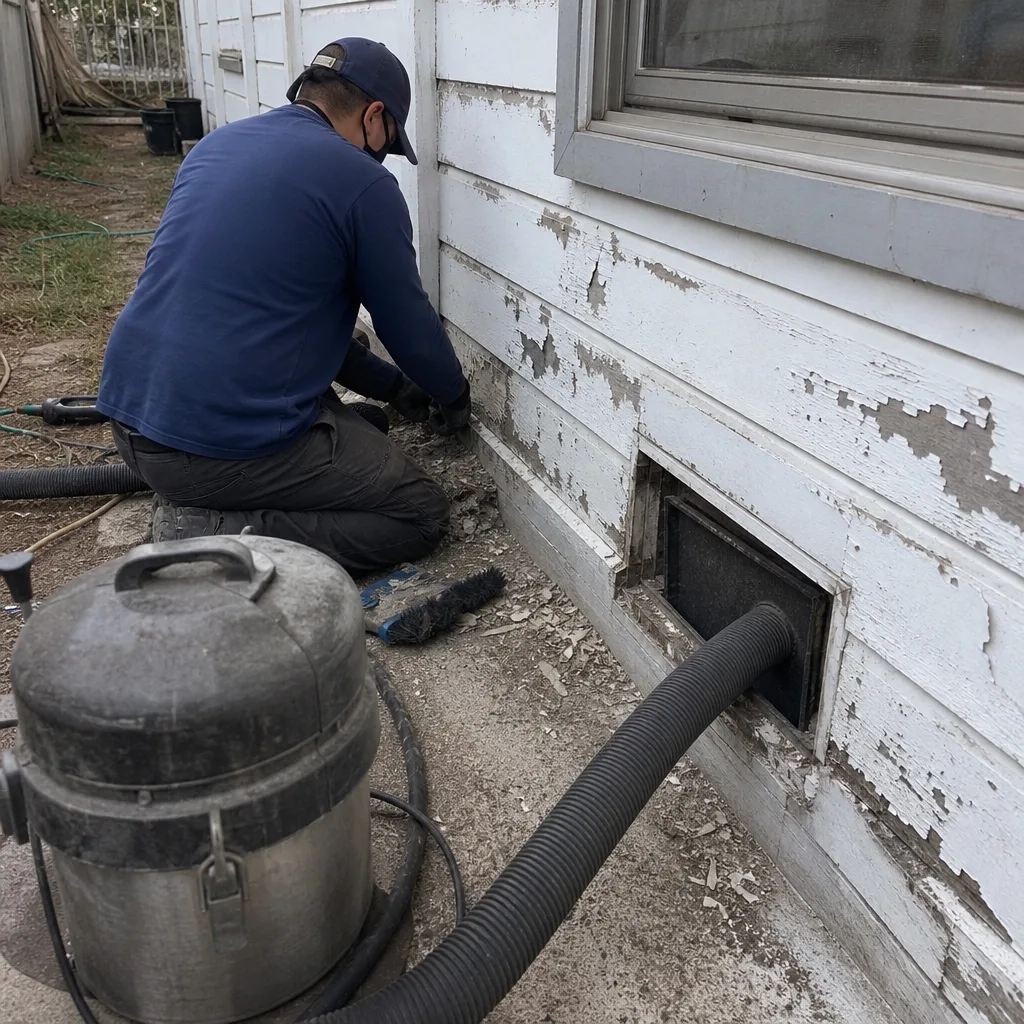 Before
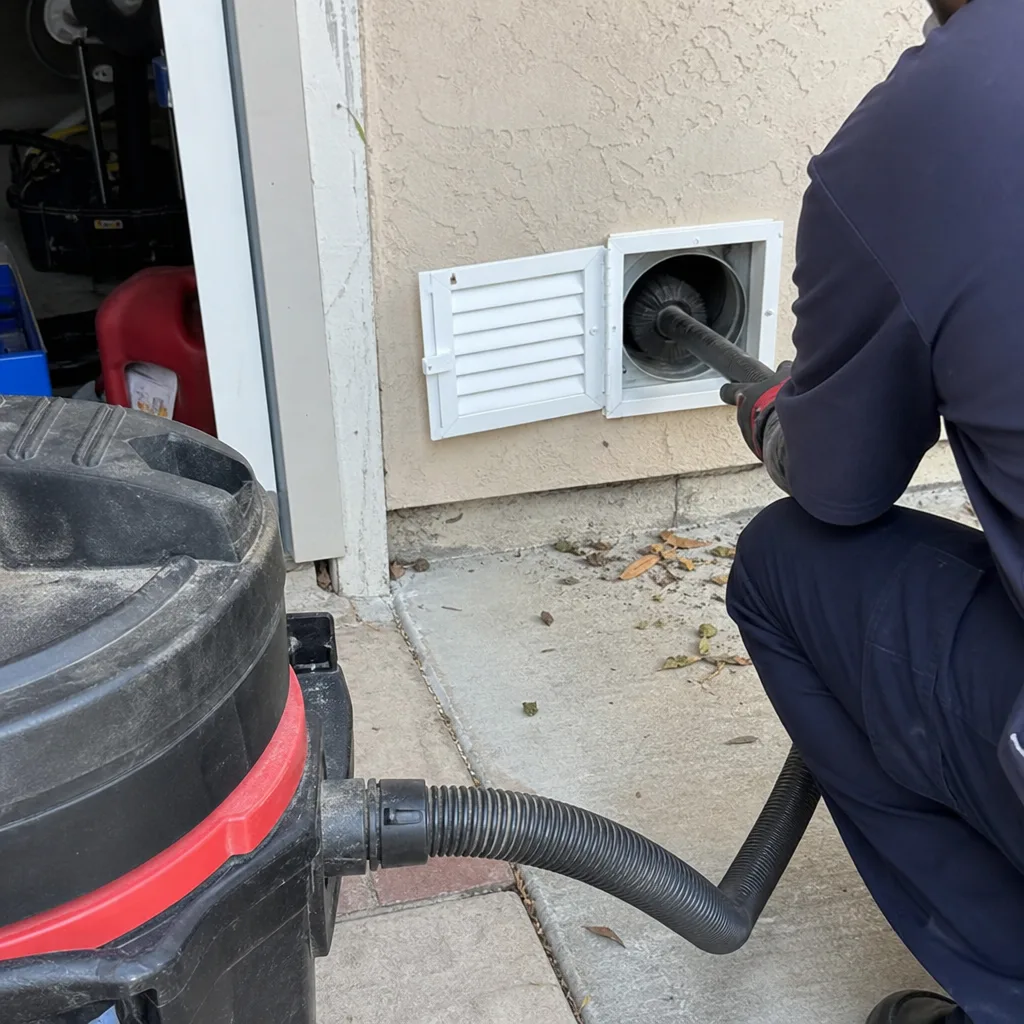 After
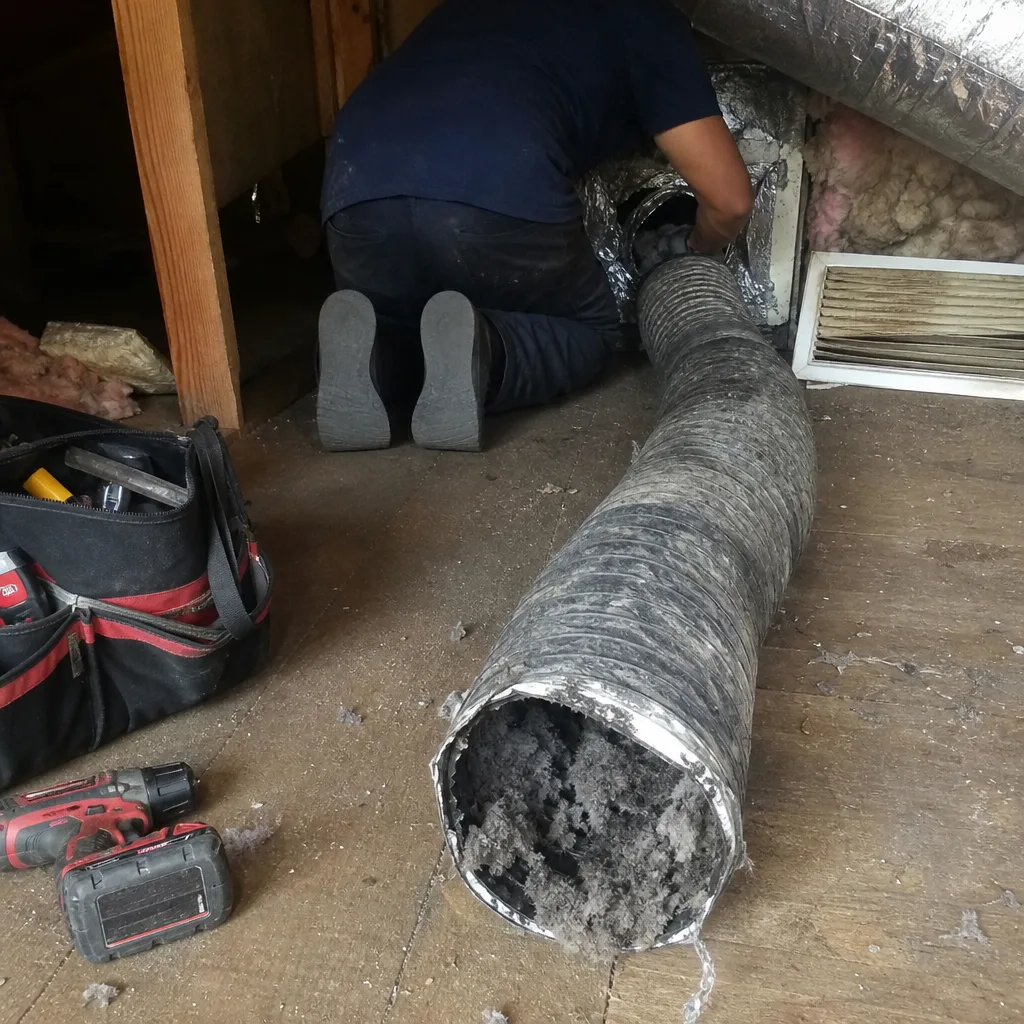 Before
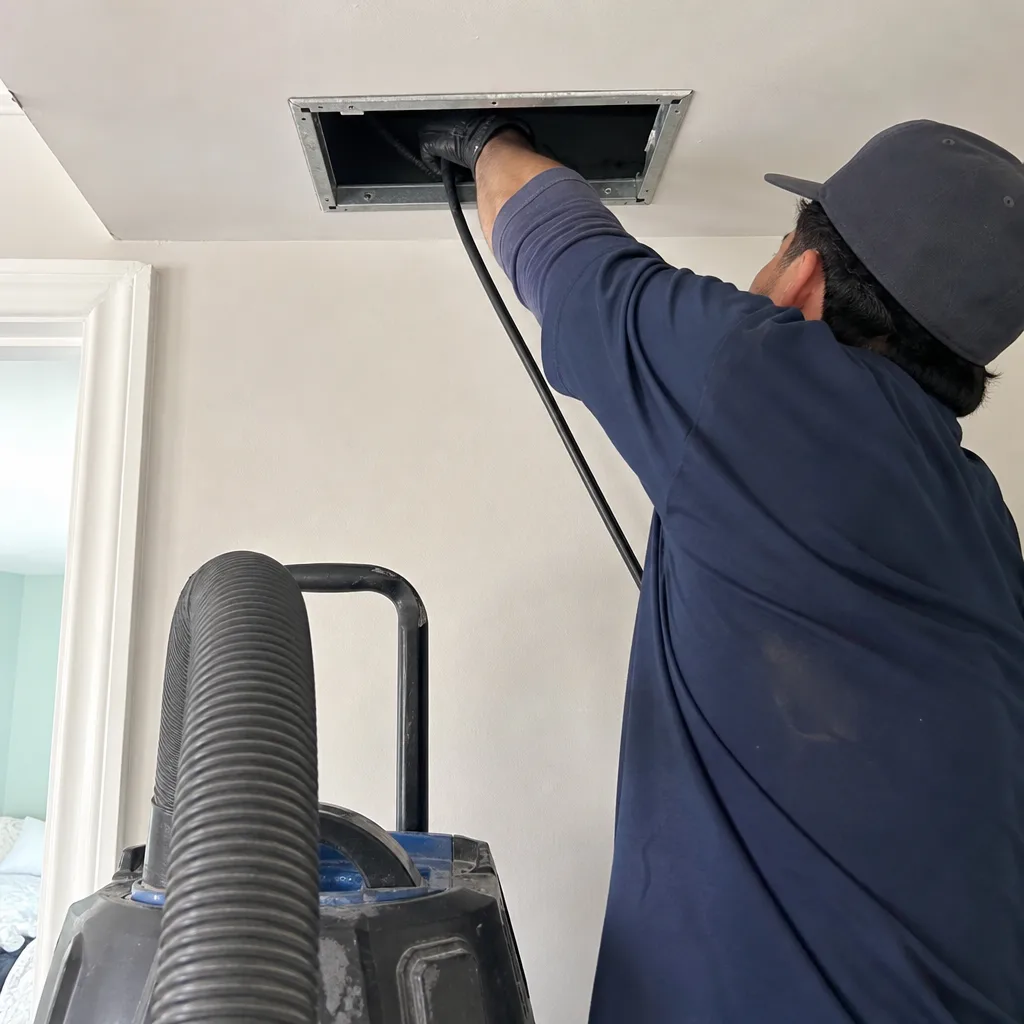 After
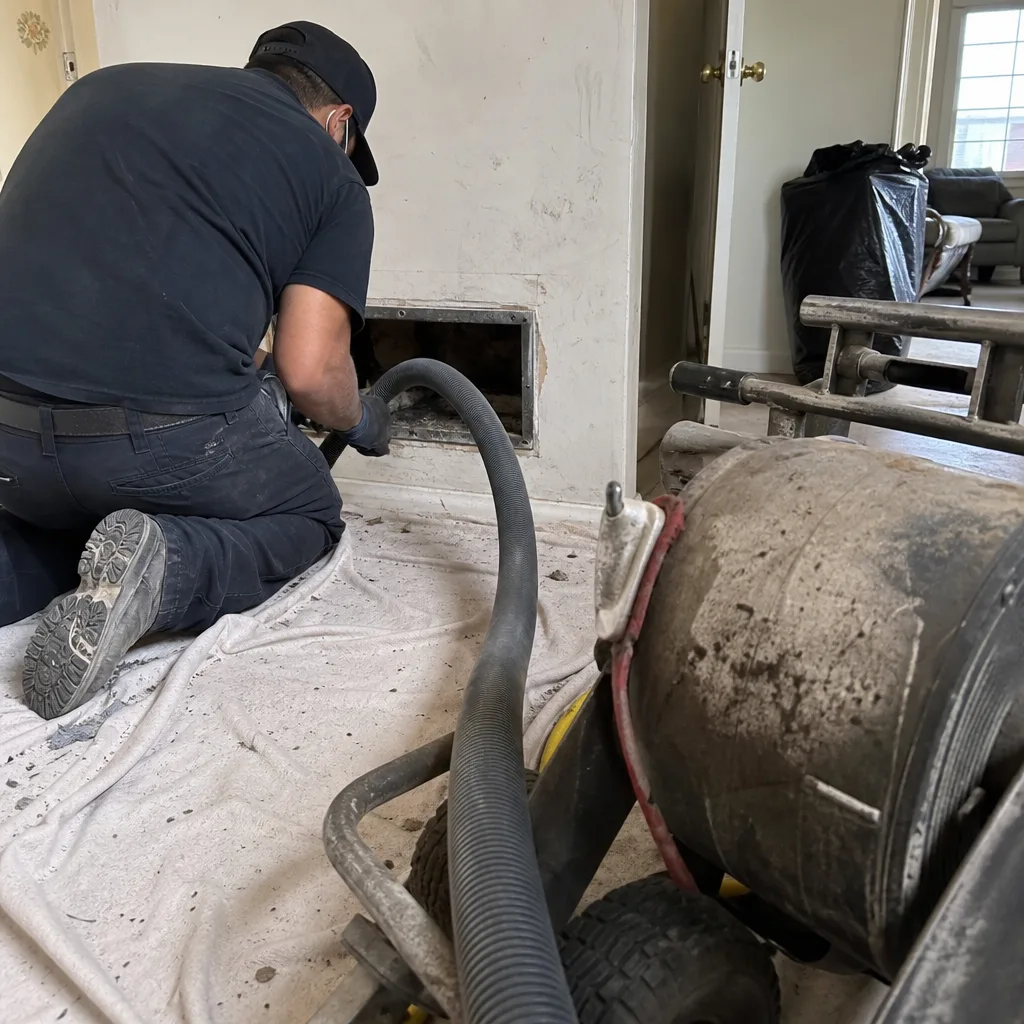 Before
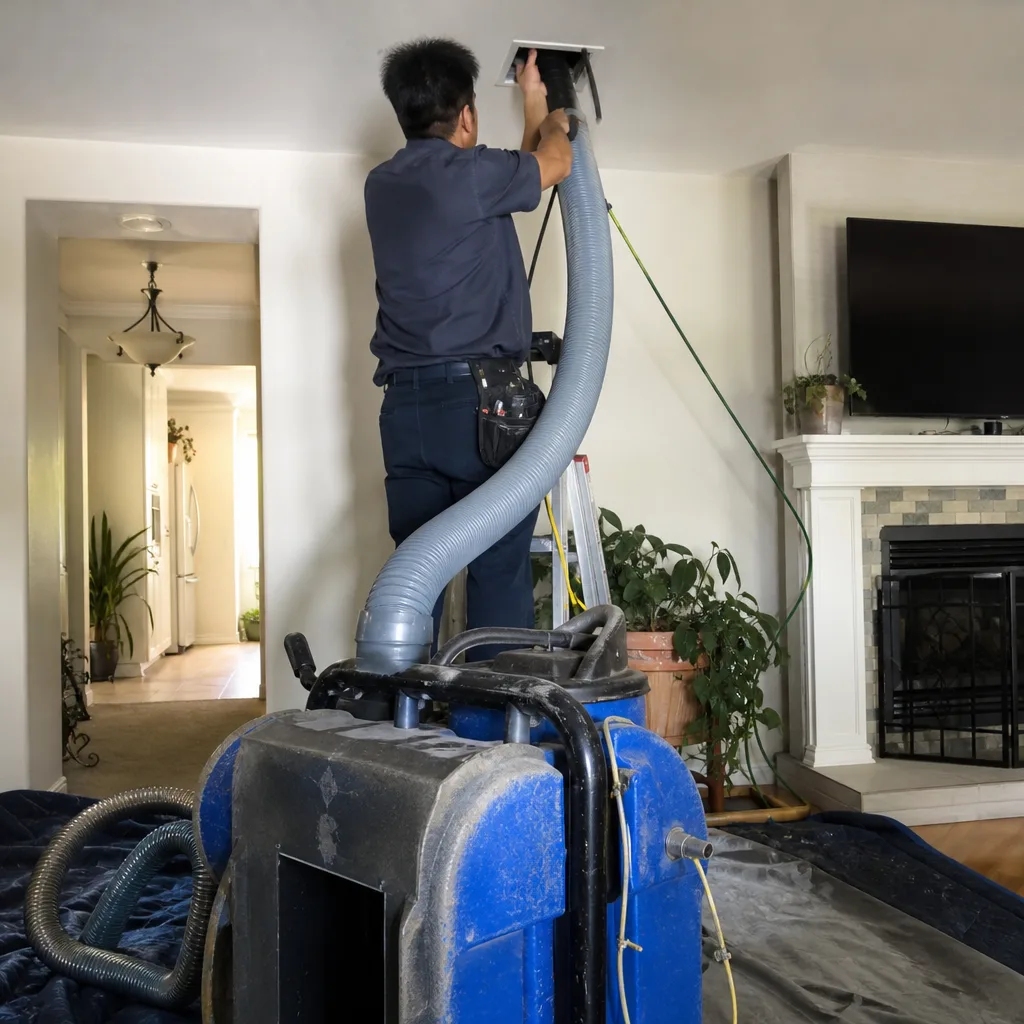 After
When to Call a Professional
Call a professional when the post-Santa Ana inspection protocol shows visible particulate in more than one location, when marine layer humidity has produced a musty odor that returns even after filter changes, or when you’ve never had your ducts cleaned and you’ve lived in the home for more than three years. Also call if you’ve had a recent cleaning done by a low-bid operation and saw no visual difference afterward; that’s the sign of equipment that couldn’t reach the duct walls. Air Duct Cleaning San Pedro offers free estimates in San Pedro. Call (877) 573-0759 and we’ll evaluate your system with the same professional-grade approach described here.
Frequently Asked Questions
Every three to five years for most San Pedro homes, with the interval shortening to two to three years if you live north of Gaffey Street where port particulate is heavier, or if anyone in the home has respiratory conditions. Homes that experience significant Santa Ana-driven particulate intrusion or wildfire smoke events may need cleaning sooner. Call (877) 573-0759 and we’ll help you determine whether your system is due based on your specific location and conditions.
Whole-system air duct cleaning in San Pedro typically ranges from $425 to $800 for a single-system home, depending on square footage, number of vents, and whether the ductwork uses flex or rigid runs – see our Air Duct Cleaning Cost Breakdown: The San Pedro Homeowner’s Reference for 2026 for full pricing details. Homes with two HVAC systems or extensive rigid duct runs run higher. Anyone pricing per vent is likely to inflate the final invoice with add-ons; insist on one flat price per system agreed before work starts. Call (877) 573-0759 and we’ll give you an exact quote, with no per-vent games.
The lower quote is almost always a shop vac connected to a rotating brush, with no negative-air containment or HEPA filtration. The operator agitates debris off the duct walls, but the debris resettles or gets blown through the registers into your living space. Professional-grade equipment from Rotobrush and Nikro, combined with Abatement Technologies negative-air systems, costs more to operate and takes longer, which is reflected in the honest price. If the quote is under $200 for a whole system, the equipment can’t do the job.
Ask for before-and-after photos of the inside of your supply ducts, not just the return. A proper cleaning will show visible color change on the duct walls. You should also notice reduced dust accumulation on surfaces within two weeks, and the system should smell neutral when running. If the cleaner can’t provide duct-wall photos, they didn’t have the equipment to see what they were cleaning. We provide before-and-after photos of your own ducts on every job.
Yes, when the duct runs pass through unconditioned spaces like attics or crawlspaces where condensation can form during San Pedro’s extended marine layer periods from December through February. Mold colonizes on the boundary where moisture meets accumulated organic dust on the duct interior. The musty smell that comes and goes with humidity changes is typically the first sign. A professional cleaning with negative-air containment removes the mold film, but fixing the underlying condensation source is the only permanent solution.
Yes, and for a different reason. The dryer vent is a separate system from your HVAC ducts with a separate risk profile. Lint accumulation restricts airflow, increases drying time, and creates a fire hazard. The leading cause of residential dryer fires is failure to clean the vent. If you’re having your HVAC ducts cleaned, having the dryer vent done at the same time completes the indoor air system. We handle both services, so one appointment covers the full duct ecosystem. Call (877) 573-0759 to schedule both.
The Bottom Line
San Pedro’s duct cleaning calendar doesn’t follow national patterns. The marine layer brings mold risk in winter, spring winds push particulate through intakes, port traffic adds diesel PM2.5 through late summer, and Santa Ana events in fall deliver a concentrated contaminant load that inland guides never mention. Cleaning in late September through early November, before the first Santa Ana event, is the single highest-impact action you can take. Tie filter changes to AQI alerts rather than calendar months, run the post-event inspection protocol after major wind events, and when you hire a professional, ask what equipment they’re bringing. If the answer is a shop vac, keep looking. Air Duct Cleaning San Pedro brings Rotobrush, Nikro, and Abatement Technologies equipment because San Pedro’s air demands professional-grade capture, not theater.
Written by the team at Air Duct Cleaning San Pedro, serving San Pedro since 2017.