
Last updated November 2, 2026
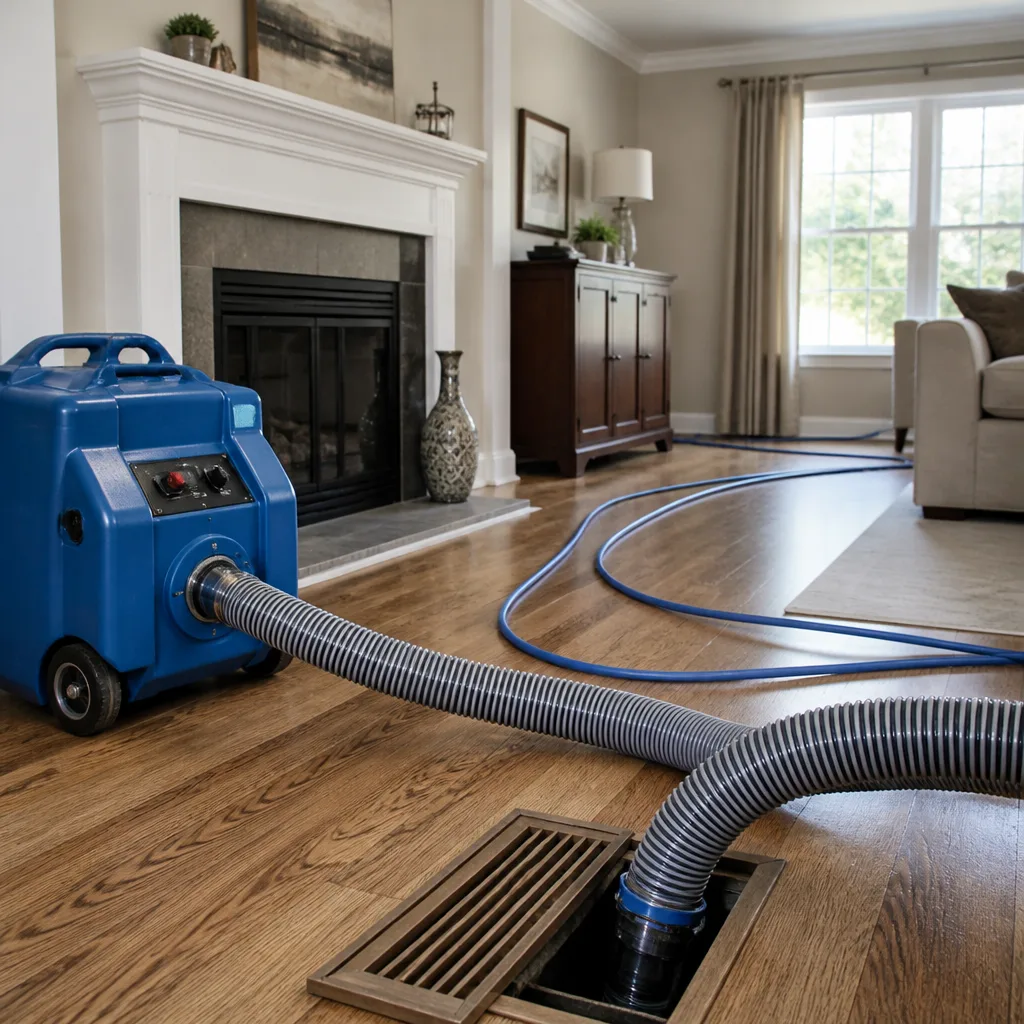 Whole-home duct cleaning
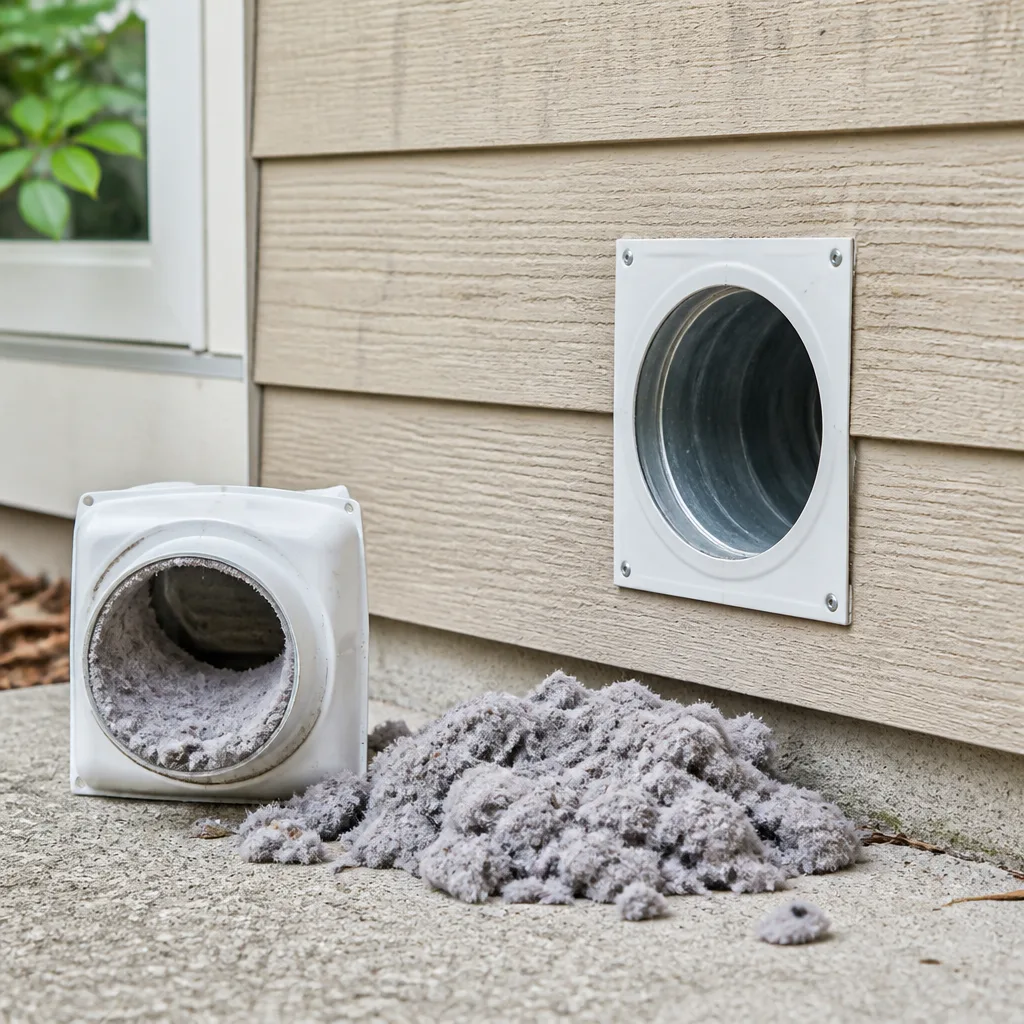 Dryer vent cleaning
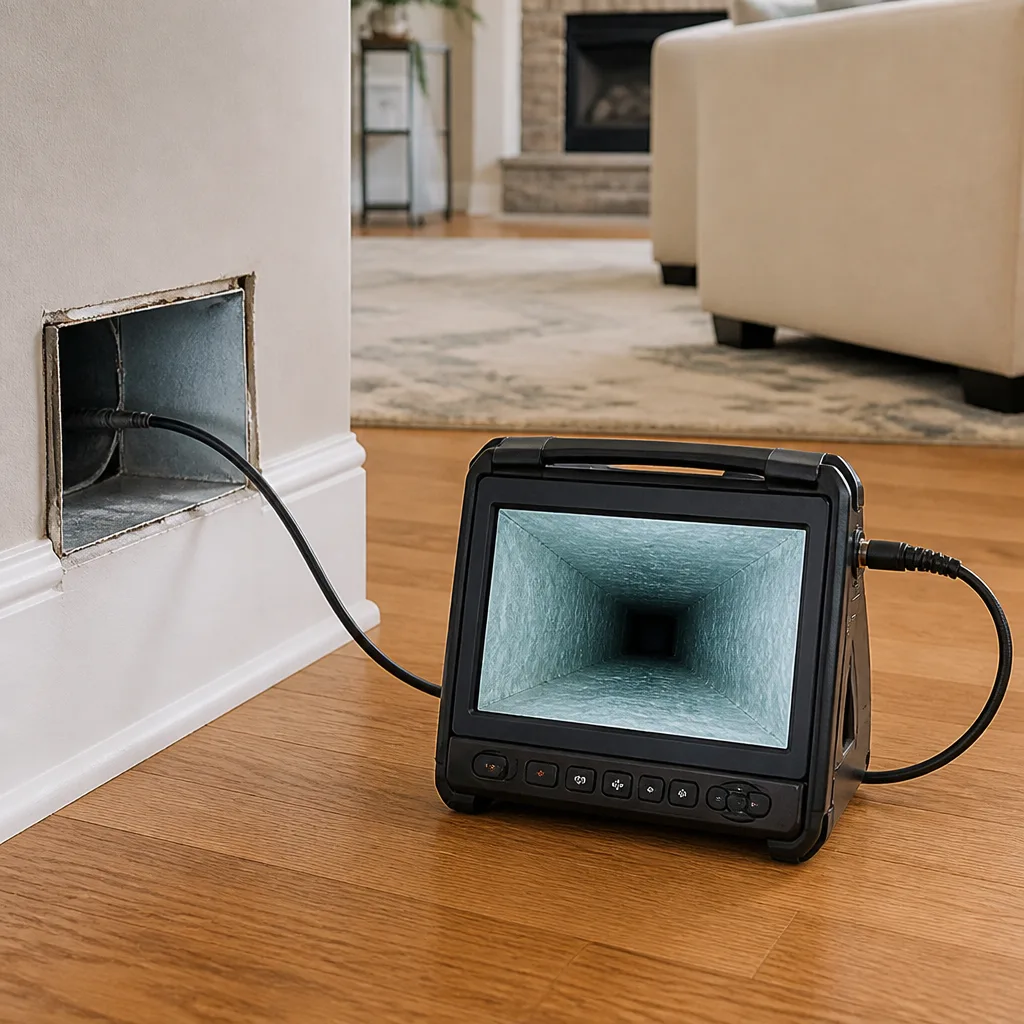 Camera inspection
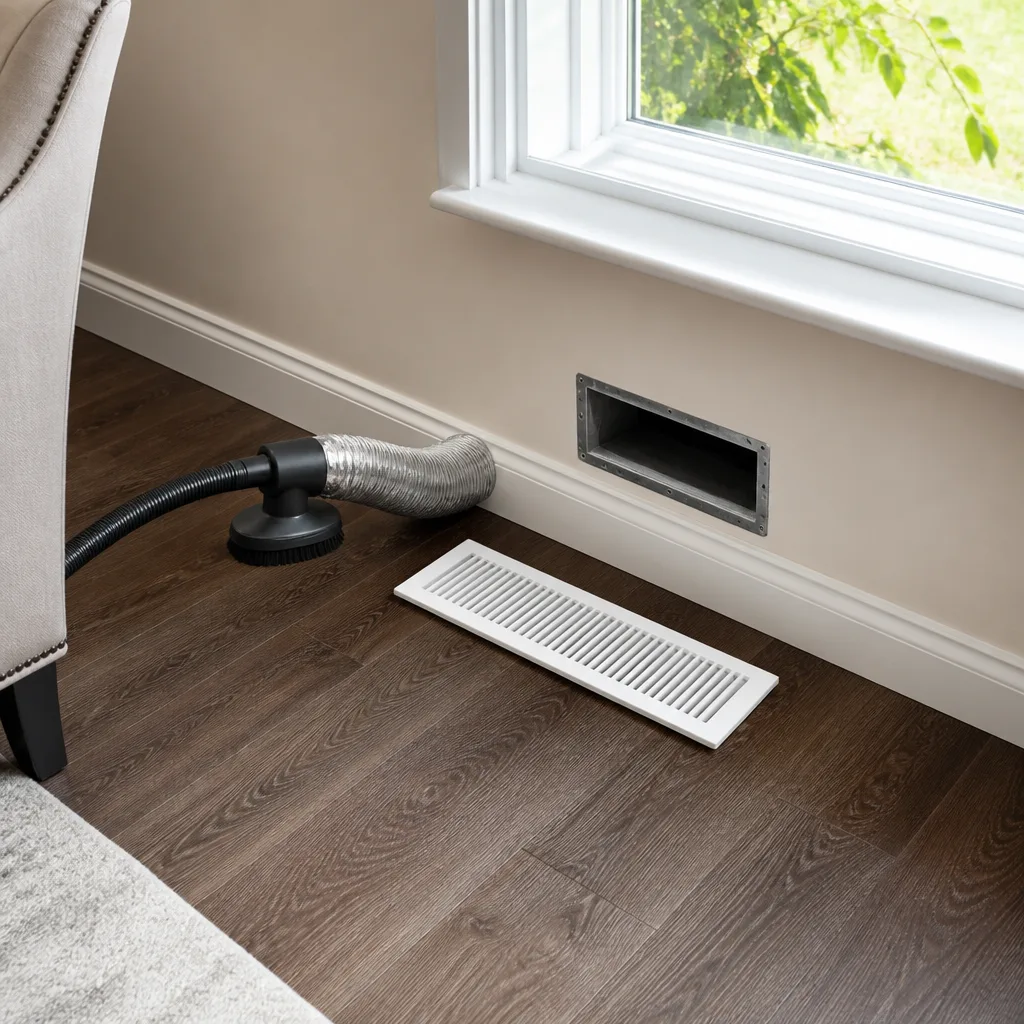 Sanitizing & deodorizing
Whole-system duct and dryer vent check with before-and-after photos - you see exactly what came out of your vents
That "$99 whole-house special" is a bait ad - the real number appears once they are in your hallway, or the "clean" is a shop-vac at the register. We photograph the inside of your ducts before and after instead.
DIY vs Professional Air Duct Cleaning: The San Pedro Homeowner’s Decision Guide
The highest-rated consumer duct cleaning kit on Amazon pulls about 100 cubic feet per minute (CFM) of suction. A professional negative-pressure extraction unit pulls 2,000 to 4,000 CFM. That is not a 20% difference you can close with patience or a second pass. It is a 20x to 40x gap in the physical force required to move compacted debris out of duct interiors. If you own a home in San Pedro and you are weighing a weekend DIY project against hiring a professional, you are not actually choosing between two versions of the same task. You are choosing between two completely different actions: agitating dust versus removing it. This guide breaks down exactly what consumer equipment can and cannot do, what safe DIY tasks exist, how professional Air Duct Cleaning systems work, and what it actually costs in the San Pedro market.
Quick Answer
Professional air duct cleaning in San Pedro uses negative-pressure extraction at 2,000 to 4,000 CFM to dislodge and simultaneously capture debris from duct interiors. Consumer DIY tools, which max out around 100 to 200 CFM, cannot generate the airflow required to pull debris out of the duct system, meaning DIY attempts agitate dust into living spaces rather than removing it. The honest DIY answer is limited to filter replacement, register cleaning, and dryer vent brushing. True duct extraction requires contractor-grade equipment. Call (877) 573-0759 for a free estimate in San Pedro.
Key Takeaways:
- No consumer or prosumer tool on the market generates the CFM required for actual duct extraction.
- Safe DIY tasks are limited to register grilles, return covers, filter replacement, and dryer vent brushing at the exterior connection.
- DIY attempts with leaf blowers or drill brushes without simultaneous extraction push debris back into living spaces.
- The real decision is not DIY vs. professional. It is which tier of professional equipment is being used.
- Contractor-grade systems like Rotobrush, Nikro, and Abatement Technologies capture debris while dislodging it, a containment step consumer tools lack entirely.
Styles & brands we work with
- Whole-home duct cleaning
- Dryer vent cleaning
- Camera inspection
- Sanitizing & deodorizing
Table of Contents
- The Physics Problem: Why CFM Makes DIY a Category Error
- What a San Pedro Homeowner Can Legitimately Do Themselves
- The Risk of Partial DIY: Agitation Without Extraction
- Which Contractor Tier: Understanding Professional Equipment Levels
- Cost Honesty: What DIY Actually Accomplishes vs. Professional Extraction
- San Pedro-Specific Factors: Climate, Housing Stock, and Duct Conditions
- Signs Your Ducts Need Professional Attention
- Common Mistakes to Avoid
- When to Call a Professional
- Frequently Asked Questions
The Physics Problem: Why CFM Makes DIY a Category Error
Duct cleaning is not a scrubbing task. It is a pneumatic task. Debris in a residential duct system includes compacted dust, pet dander, construction residue, and sometimes a decade of accumulated particulate embedded along the interior walls. Removing that material requires two forces working simultaneously: agitation to dislodge debris from the duct walls, and negative pressure to pull that loosened debris out of the system and into a contained filter.
Consumer equipment handles the agitation half poorly and the extraction half not at all. A shop vac in the 5 to 6 horsepower class pulls between 100 and 200 CFM with a 2-inch hose. That is enough to pick up sawdust from a garage floor. It is not enough to create the air velocity inside a 6-inch or 8-inch duct run required to lift compacted particulate from the full length of the trunk line. The math has been settled in the restoration and HVAC industries for decades: effective source-removal duct cleaning requires air movement measured in thousands of CFM, not hundreds.
This is why we frame the DIY vs. professional question as a category error. The homeowner asking “Can I just rent a stronger vacuum?” is already operating inside the wrong frame. Rental equipment at Home Depot tops out around 500 CFM. Professional portable units start at roughly four times that rating. Truck-mounted and stationary contractor units operate in the 2,000 to 4,000 CFM range, and that force is paired with tools engineered to stay attached to the duct system under continuous negative pressure while mechanical agitation occurs inside. The gap cannot be closed with elbow grease, more time, or a second pass. It is a hardware limitation, and it is absolute.
What a San Pedro Homeowner Can Legitimately Do Themselves
None of this means a homeowner should put their hands in their pockets and do nothing between professional cleanings. There is a legitimate DIY maintenance band that any capable person can handle, and it matters for both system health and indoor dust levels in San Pedro’s coastal climate. These tasks are cosmetic and preventive, not substitutes for extraction, but they are real and worth doing.
Here is what we tell homeowners they can safely and usefully do themselves:
- Register and return grille cleaning. Remove the stamped metal covers from floors, walls, and ceilings. Vacuum the visible side, then wash in warm soapy water. Rinse, dry completely, and reinstall. This removes surface dust and the gray film that accumulates on grilles. It does nothing for the duct interior. In San Pedro homes near the harbor, expect faster grime buildup due to salt air and marine layer moisture interacting with household dust.
- Filter replacement on schedule. A 1-inch pleated filter in a forced-air system should be replaced every 60 to 90 days. Homes with pets, occupants who smoke, or proximity to port activity may need 30-day cycles. This is the single highest-value DIY task: it protects your blower motor, reduces recirculated particulate, and costs under $20.
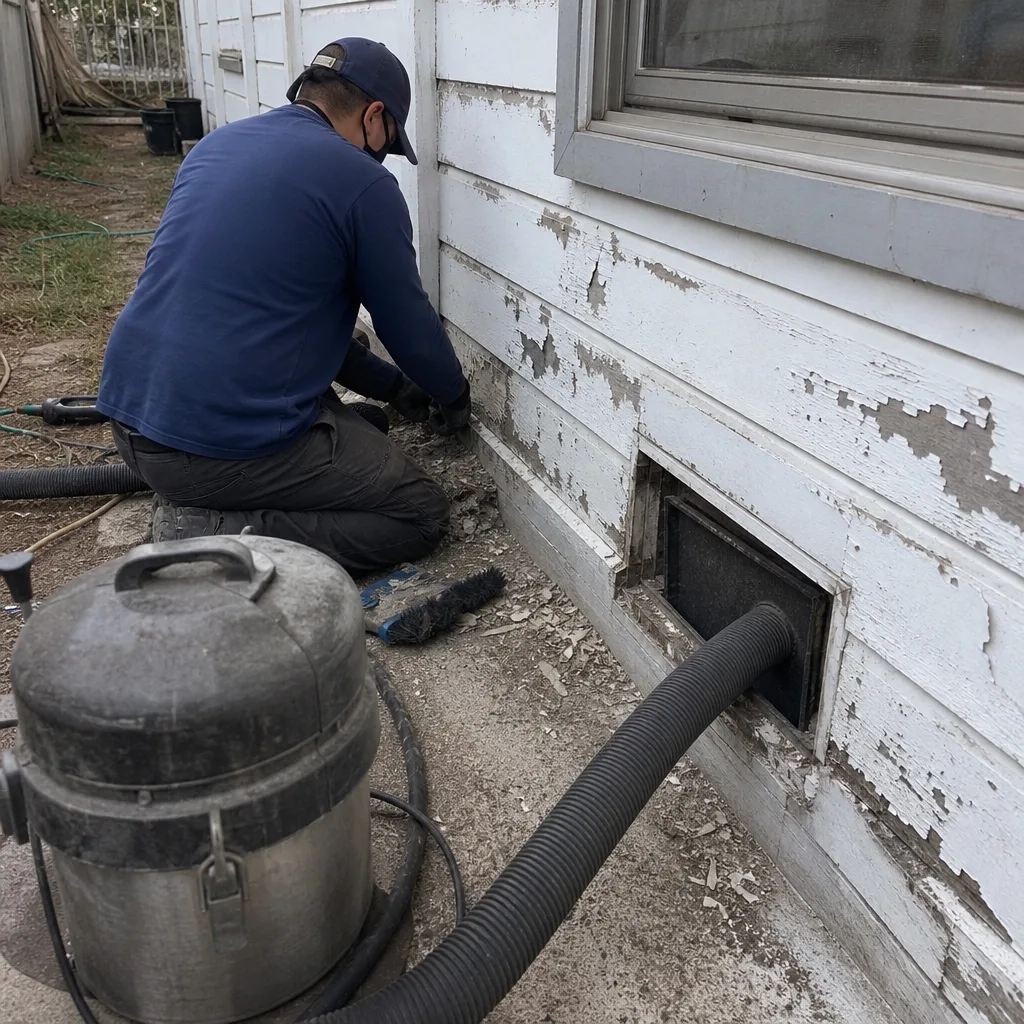
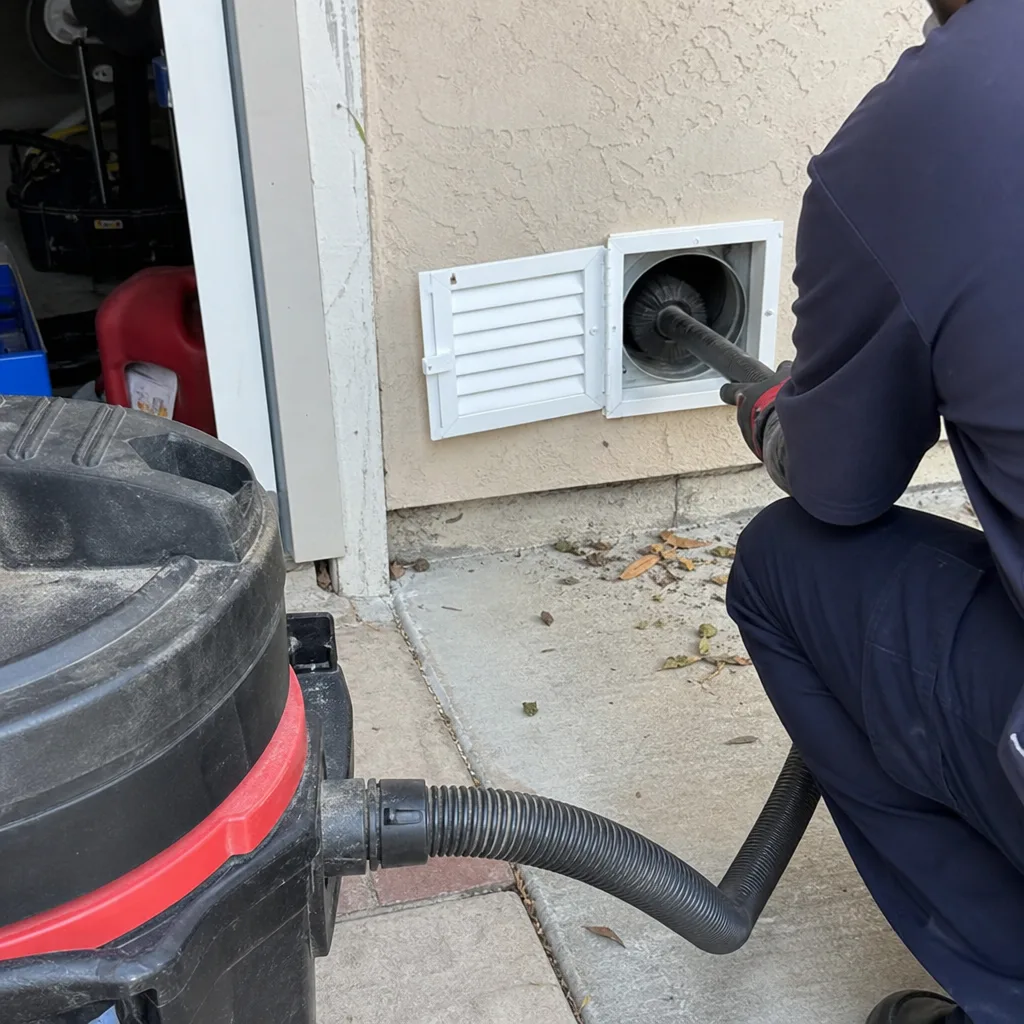
- Dryer vent disconnection and brushing. Unplug the dryer, disconnect the flex transition duct from the wall inlet, and brush out the first 2 to 3 feet of the run with a dryer vent brush kit from any hardware store. Reassemble with new clamps. This reduces lint load at the dryer connection point. It does not address the full run through the wall or any turns in the pipe. For that, see the dryer vent cleaning service we run in San Pedro.
- Exterior cap inspection. Walk outside to where your dryer vent terminates. Check that the flap opens when the dryer runs, that no birds or rodents have nested, and that lint is not building up around the opening. In San Pedro’s older hillside and canyon neighborhoods, we see exterior caps blocked by vegetation or clogged with construction debris from neighbor renovations more often than homeowners expect.
Those four tasks constitute the sane scope of DIY duct-adjacent maintenance. They are worth doing every season. They do not replace professional cleaning, and no amount of register polishing will remove the debris embedded 20 feet down the trunk line.
The Risk of Partial DIY: Agitation Without Extraction
The most dangerous DIY duct project is the half-measure: a homeowner who shoves a drill-mounted brush down a wall stack or wedges a leaf blower into a floor register to “blow out” the ducts. The intent is understandable. The outcome is predictable and unpleasant.
Here is what happens. Agitation tools dislodge the compacted layer of dust, dander, and debris from duct walls. In a professional system, that dislodged material is simultaneously pulled out of the duct by negative pressure at 2,000 to 4,000 CFM and captured in a HEPA-filtered containment unit. The debris leaves the house. In a DIY agitation attempt, the dislodged material has nowhere to go except into the airflow. When the blower motor kicks on, that loosened particulate gets distributed through every register in the house. The fine fraction, the submicron particles that cause the most allergy and respiratory irritation, stays airborne for hours. In our experience, homeowners who attempt agitation-only DIY cleaning often end up with a dustier house the week after than the week before. The debris did not disappear. It got aerosolized.
This is why equipment claims matter. A tool that spins a brush without containing the fallout is not half a solution. It is a dust redistribution machine. Professional-grade equipment, including the Abatement Technologies negative-air and HEPA filtration units we use, exists precisely because the industry learned decades ago that agitation alone makes indoor air quality worse. The containment step is not optional equipment. It is the entire job. Homeowners in San Pedro would be better off doing nothing at all than agitating duct debris without extraction.
Which Contractor Tier: Understanding Professional Equipment Levels
Once you accept that real duct cleaning requires professional-grade hardware, the next question is: which professional? This is where the San Pedro market gets complicated, and why we publish this guide and more guides & resources. Not all companies that advertise duct cleaning use the same class of equipment. The differences determine what actually gets removed and what ends up back in your living room air.
Tier 1: Portable Consumer-Grade Units (100 to 200 CFM)
Some companies arrive with equipment that is functionally a large shop vac strapped to a cart. These units pull 100 to 200 CFM. They are not capable of negative-pressure extraction across a full duct run. Companies using them typically clean only what they can reach from each register, which means they are doing cosmetic register cleaning with extra steps. The price is often low, which is the tell. The result is what you would expect: debris beyond the register face stays put. This tier is the low-bid status quo in many residential markets, including San Pedro. It is the tier most likely to leave a homeowner wondering if anything was actually done.
Tier 2: Van-Mounted Professional Portable Systems (500 to 1,200 CFM)
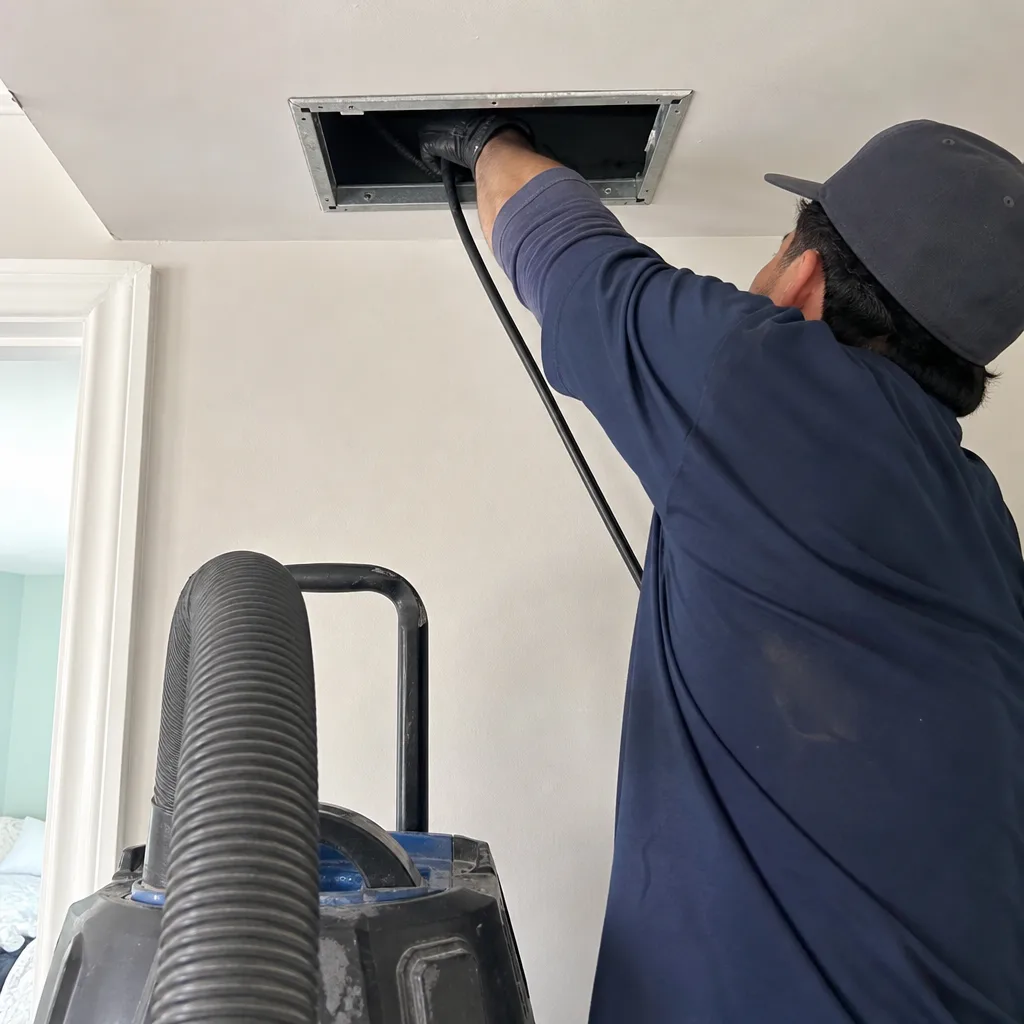
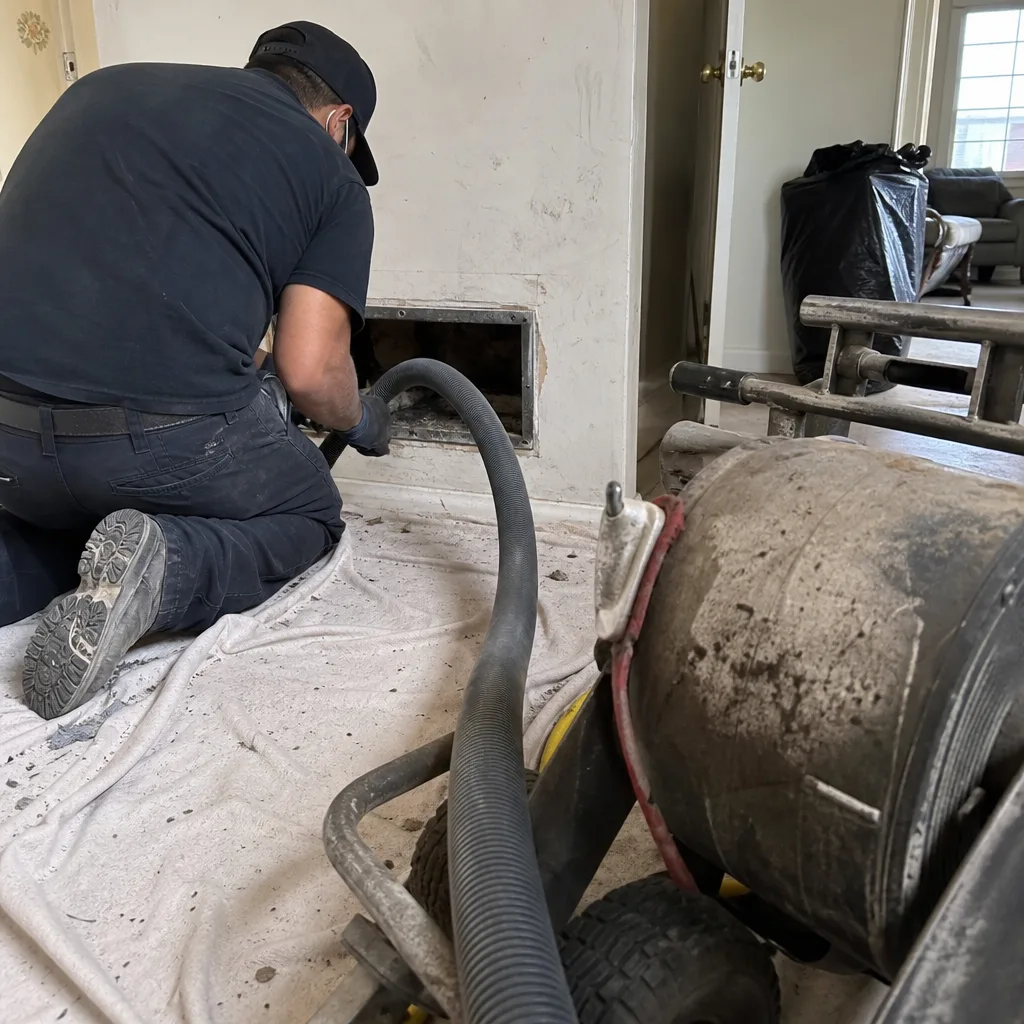
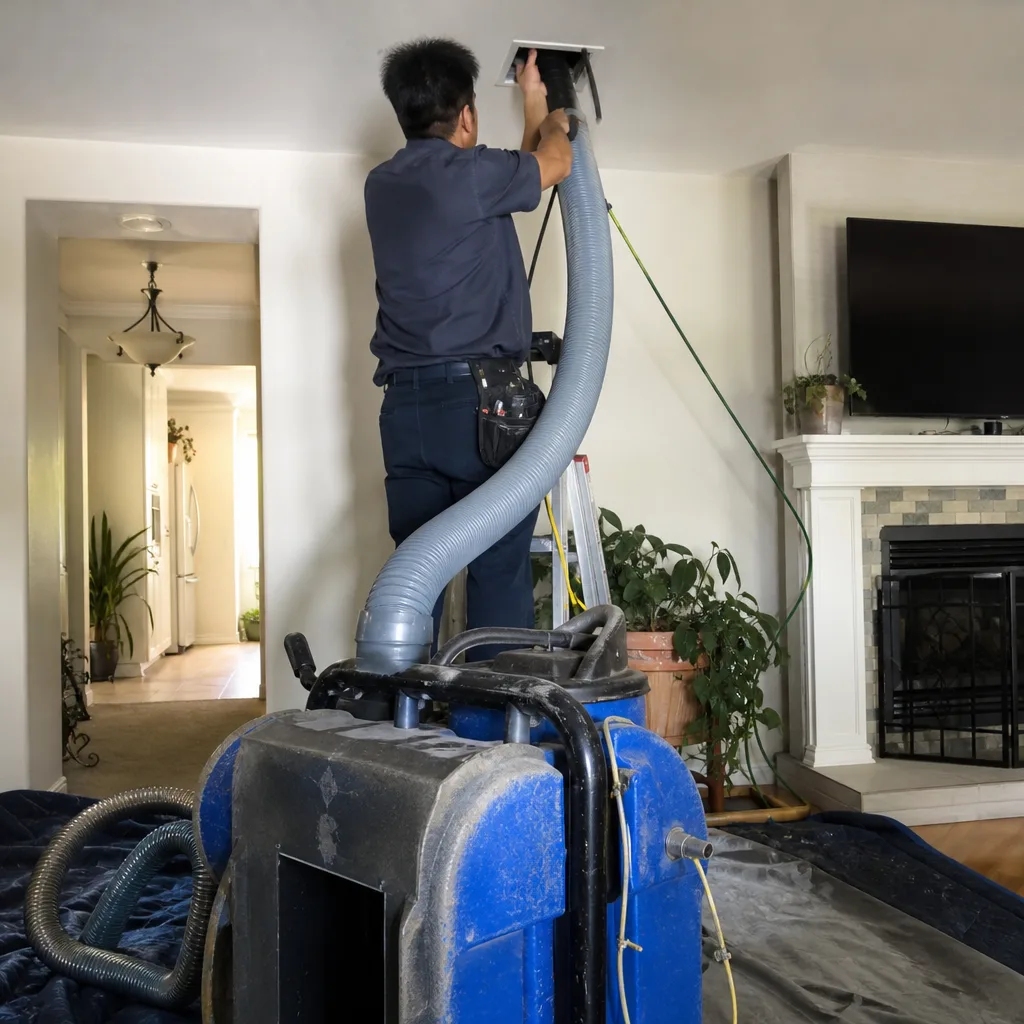
This tier includes legitimate portable extraction units like the Rotobrush contact-vacuum brush systems and Nikro duct cleaning machines we operate. They generate enough negative pressure to create real airflow through branch lines and trunk ducts. They pair agitation tools, typically rotating brushes or compressed-air whips, with simultaneous extraction. Debris gets dislodged and captured in the same pass. This is contractor-grade equipment, the kind restoration and HVAC companies rely on for residential jobs. The cleaning is genuine source removal, not surface polishing.
Tier 3: Truck-Mounted and Stationary Negative-Pressure Rigs (2,000 to 4,000 CFM)
At the top of the market are truck-mounted diesel or PTO-driven systems and stationary rigs that stay outside the home. These units pull 2,000 to 4,000 CFM through an 8-inch vacuum hose connected to the trunk line. A technician seals off the system, cuts an access point, and the entire ductwork network goes under negative pressure while agitation tools work through each register. Debris moves in one direction: toward the capture unit. Abatement Technologies makes HEPA-filtered negative-air machines used in this tier and in restoration work, which is why restoration and remediation contractors trust the brand. The airflow difference between Tier 2 and Tier 3 is significant, but both achieve genuine extraction. The gap between Tier 1 and either of the others is the gap between theater and work.
When homeowners ask us how to evaluate quotes, we tell them to ask one question: “What CFM does your extraction system pull?” A company that cannot answer, or that answers with a number under 500, is probably operating in Tier 1. A company that can answer with a named system and a credible CFM range is at least trying to do the actual job. In San Pedro, where older homes often have 40 or 50-year-old duct runs, the difference between tiers determines whether decades of accumulation actually leaves the house.
Cost Honesty: What DIY Actually Accomplishes vs. Professional Extraction
We want to be honest about what DIY effort buys you, because the home services industry has not always been honest about it. The DIY tasks in the first section, register cleaning and filter replacement, accomplish two things: they improve the visible appearance of your grilles, and they reduce the recirculated particulate load at the return side of your system. Both have real value. A clean filter protects your blower motor. Clean registers look better and stop the visible gray grime from bothering you every time you walk past a floor vent.
What DIY does not accomplish is removal of the debris compacted inside the duct walls, trunk line, and branch runs. That material has been accumulating since the ducts were installed or last professionally cleaned. It sits there regardless of what you do at the register face. In San Pedro homes near the water, that accumulation often contains a mix of household dust, salt air residue, and humidity-compacted particulate that hardens over time. It is not cosmetic. It is a source of recurring dust on furniture, occasional musty smells when the system runs, and measurable load on your HVAC blower.
Here is the value calculation in plain terms:
- DIY filter and register maintenance: $20 to $50 per quarter, keeps visible surfaces clean, protects the blower motor, does not remove duct-wall debris.
- Professional extraction (Tier 2 systems like Rotobrush and Nikro): typically $400 to $700 for a whole-home system in San Pedro depending on square footage, number of returns, and accessibility, removes compacted debris from the full duct run, captures dislodged particulate in filtration, and includes a visual inspection of the system.
- Professional extraction (Tier 3 stationary rigs): typically $800 to $1,500 for a larger or heavily contaminated system, moves the maximum airflow, used when ducts are heavily loaded or have not been cleaned in decades.
We quote one flat price per system, agreed before work starts. We do not price per vent, and we do not run a low teaser number that turns into a larger invoice once equipment is in the driveway. That bait-and-switch pattern is common in this industry, and it is a legitimate reason homeowners approach duct cleaning with suspicion. Call (877) 573-0759 for an exact quote on your San Pedro home. Estimates are free.
San Pedro-Specific Factors: Climate, Housing Stock, and Duct Conditions
San Pedro’s climate and building stock create specific duct conditions that homeowners in, say, Phoenix or Denver do not face. The marine layer that rolls in off the Pacific most mornings between March and August pushes relative humidity high enough that dust inside ducts absorbs moisture and adheres to duct surfaces instead of staying loose. This creates a compacted layer that is harder to dislodge than the dry, fluffy dust in arid climates. It also means debris stays put longer and can develop a slightly musty odor when the system cycles on after sitting unused, common in San Pedro homes that go without heat for months at a stretch.
The housing stock compounds the issue. A significant portion of San Pedro homes were built between the 1940s and 1970s. Many of those systems have never been cleaned. We have seen original duct runs in homes near Averill Park and in the Holy Trinity area that contained construction debris from the original build. Homeowners in the newer developments up Western Avenue around the Palos Verdes Drive North intersection tend to have tighter framing and more complex multi-story duct layouts, which create longer runs and more turns, both of which trap debris. For maintenance timing in this climate, see our Seasonal Air Duct Cleaning Care for San Pedro: Year-Round Homeowner’s Guide. Older craftsman and Spanish-style homes in the lower streets near Gaffey and Pacific have crawl-space duct systems that are vulnerable to rodent intrusion and moisture from the marine layer.
Access matters here. Many San Pedro homes have ductwork in low clearances, split-level configurations, or tight attic spaces that make professional equipment selection critical. A Tier 1 shop-vac-on-a-cart operation cannot physically access these systems. Contractor-grade portable systems like our Rotobrush and Nikro equipment are designed for exactly these conditions, with enough hose reach and agitation capacity to clean from existing register openings without tearing out drywall.
If you are looking for a full overview of what professional cleaning involves in this market, read our Air Duct Cleaning in San Pedro page. If you have damaged, disconnected, or leaking duct sections, our air duct repair service handles those issues during the same visit rather than referring you to a separate contractor.
Signs Your Ducts Need Professional Attention
Some homeowners know they need duct cleaning because they see it. Others suspect it because their house does things it did not used to do. Here are the signs we tell San Pedro homeowners to watch for:
- Dust returns within 48 hours of a full cleaning. If you dust the furniture and it is coated again two days later, the duct system is likely distributing particulate every time the blower runs.
- Gray streaks or stains around supply registers. This is particulate blowback marking the wall or ceiling where the register directs air.
- Musty or stale odor when the system cycles on. Moisture-compacted debris in the ducts off-gasses when warm air passes over it. In San Pedro, this is most noticeable in fall when furnaces kick on after months of disuse.
- Visible dust or debris on the register covers themselves. Look inside the register with a flashlight. If you see gray fuzz or debris beyond the opening, the duct interior is loaded.
- Allergy symptoms that improve when you leave the house. If your eyes or sinuses clear up at work but worsen at home, you are breathing something in the conditioned air. The duct system is the distribution network.
- You have never had the ducts cleaned and the home is over 20 years old. In San Pedro’s housing stock, that means decades of buildup. A first cleaning often removes material that has been there since a previous owner’s renovation.
None of these signs resolve themselves. Filters trap a percentage of recirculated particulate, but they do not remove debris already embedded in the duct walls. The longer that material sits, the more it compacts, and the harder the eventual extraction job becomes. If you see several of these symptoms in your home, you are likely past the point of DIY usefulness and into the territory where professional extraction is the only meaningful step.
Common Mistakes to Avoid
- Using a leaf blower into a register to “blow out” the ducts. You are not blowing debris out of the system. You are blasting it into the living space at high velocity. The fine particulate will stay suspended in your air for hours, and the coarse debris will recirculate through the blower and redistribute through every room. This is the single worst DIY duct mistake we see in San Pedro homes.
- Drill-mounted brushes without simultaneous extraction. The brush spins, the debris loosens, and with no negative pressure capturing the material, it becomes airborne. You have converted years of compacted debris into a day of indoor air pollution. A real extraction system would be pulling that loosened material into filtration the entire time the brush is running.
- Renting consumer equipment and expecting professional results. Rental vacuum systems at local hardware stores max out around 500 CFM, which is below the threshold for effective source removal. The rental fee plus your weekend labor produces a visible improvement at the register face and nothing further down the duct run.
- Assuming a low quote means the same service. In the San Pedro duct cleaning market, price tracks equipment tier. A $99 whole-house special is not using a Rotobrush or Nikro system. It is using a shop vac and a brush attachment. The old rule applies here: if the price is dramatically lower than two other quotes, the equipment and the work are different, not the profit margin.
- Neglecting dryer vents while focusing on air ducts. Homeowners fixate on HVAC ducts and forget the 4-inch dryer vent run. That run carries lint, which is flammable. A blocked dryer vent is a leading cause of residential fires, and in San Pedro’s older homes, long vent runs through crawl spaces accumulate lint quickly. This should be treated as a safety issue, not an optional add-on.
- Waiting until the system performs badly before cleaning. By the time airflow is noticeably reduced or dust is thick on registers, the duct interior has been loaded for years. The system was degrading the whole time. Cleaning on a 3 to 5 year schedule for most San Pedro homes prevents the heavy accumulation that makes first cleanings expensive.
When to Call a Professional
If you have never had your ducts cleaned and the home is more than 15 years old, call. If you see dust returning to furniture within days of cleaning, call. If you smell musty air when the furnace first kicks on in October, call. If you renovated, and drywall dust, sawdust, or insulation particles found their way into registers, call. If you notice rodent droppings or sounds in the ductwork, call immediately. And if your dryer takes more than one full cycle to dry a normal load, call for dryer vent service. These are not DIY-adjacent situations. They are extraction and containment jobs that require contractor-grade equipment. For help choosing, read our How to Hire an Air Duct Cleaning Contractor in San Pedro: A Step-by-Step Guide.
Air duct cleaning in San Pedro does not have to be a leap of faith. Our equipment is on the truck, not hidden behind a sales pitch. Air Duct Cleaning San Pedro offers free estimates throughout San Pedro. Call (877) 573-0759 to schedule.
Frequently Asked Questions
Professional air duct cleaning in San Pedro typically costs $400 to $700 for a whole-home system using contractor-grade portable equipment like Rotobrush or Nikro systems. Larger homes, heavily contaminated systems, or homes requiring truck-mounted negative-pressure extraction run $800 to $1,500. Pricing is per system, not per vent, and should be agreed before work begins. Call (877) 573-0759 for a free estimate on your specific home.
Lower-cost duct cleaning quotes in San Pedro almost always reflect lower-tier equipment, not a better deal. Companies charging under $200 for a whole-home cleaning are typically operating portable consumer-grade vacuums that pull 100 to 200 CFM, which cannot achieve negative-pressure extraction. The work performed is cosmetic register cleaning, not source removal. Companies using Rotobrush, Nikro, or Abatement Technologies equipment have higher operating costs and price accordingly. The gap in results is not incremental; it is the difference between cleaning debris off the register face and removing it from the duct interior.
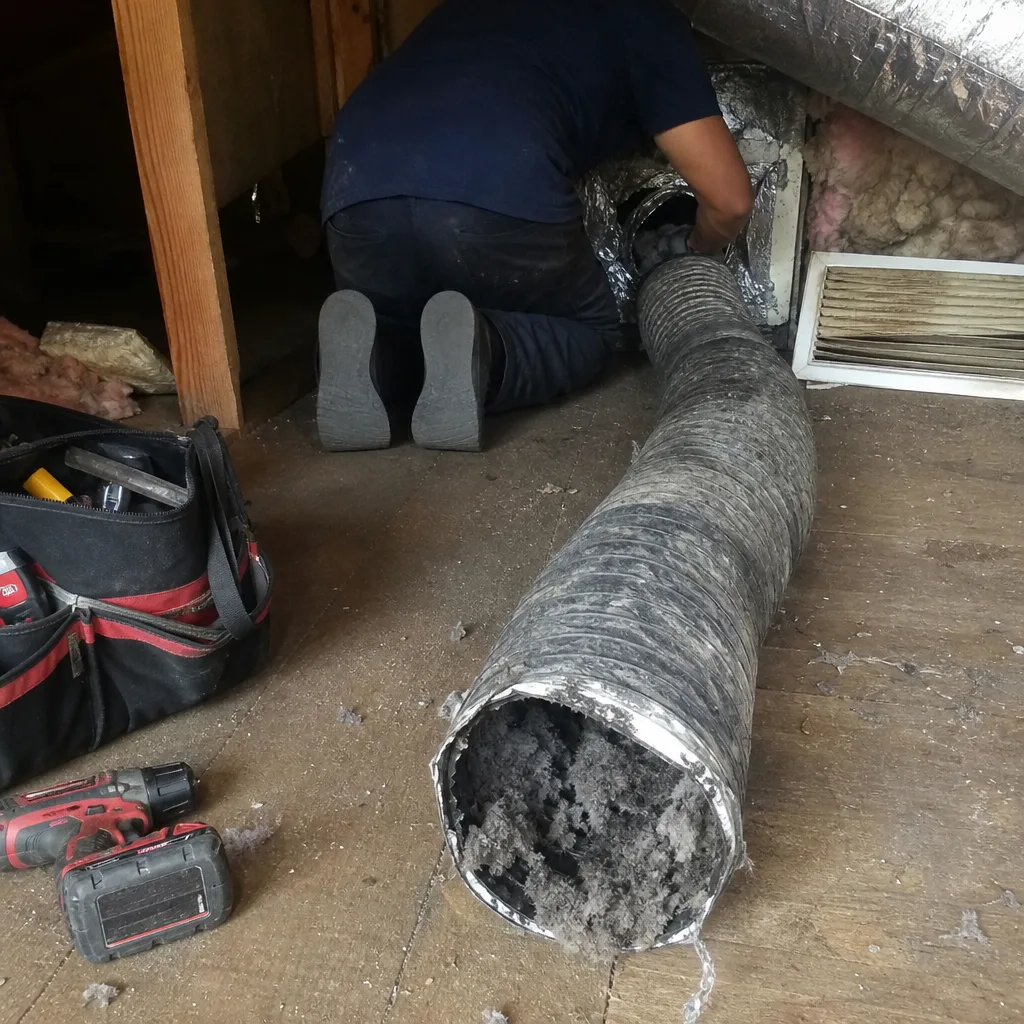
You should be able to see before and after photos of your duct interiors, taken from inside the register openings. A legitimate cleaning crew documents the condition before agitation and after extraction. You should also be able to inspect the filter media or catch bag on the extraction unit after the job. On heavily loaded systems, that material is visible and substantial. If a company finishes and produces no documentation of the interior condition, you should ask for it. We show homeowners before and after photos of their own ducts as a standard part of our service.
Most San Pedro homes benefit from professional air duct cleaning every 3 to 5 years. Homes near the port with heavy particulate loads, homes with pets or smokers, homes that recently underwent renovation, and homes with residents who have significant allergies may need cleaning every 2 to 3 years. The marine layer’s humidity compacts debris and can shorten the interval in older homes. If you cannot remember the last cleaning, or the home changed hands without documentation of one, treat it as due.
You can brush the first 2 to 3 feet of flex duct where it connects to the back of the dryer, using a dryer vent brush kit from any hardware store. That is a legitimate maintenance task. You cannot effectively clean the full run through the wall, ceiling, or crawl space without an inspection camera and rotatory brush equipment designed for the full length of the vent. Long runs, multiple turns, and exterior terminations require professional dryer vent cleaning in San Pedro. Fire risk from a partially cleaned vent is as real as from a fully clogged one.
Yes. Coastal humidity compacts dust into a dense layer that adheres to duct surfaces rather than staying loose. This makes buildup denser over time and creates the conditions for musty odor when the system cycles. Inland desert climates produce dry, loose dust that is easier to dislodge. San Pedro specifically has a marine layer that keeps mornings damp for much of the year, and older homes without vapor barriers in crawl spaces see that moisture migrate into duct runs. The result is debris that is harder to remove and more likely to produce odor, which means professional extraction with real agitation and containment matters more here than in drier regions.
The Bottom Line
The DIY vs. professional air duct cleaning decision in San Pedro is settled by physics before it is settled by price. Consumer equipment pulling 100 to 200 CFM cannot create the negative pressure required to extract debris from duct interiors. A professional system pulling 2,000 to 4,000 CFM can. The DIY tasks worth doing are filter replacement, register cleaning, dryer vent disconnection and brushing, and exterior cap inspection. Everything beyond that requires contractor-grade tools, and specifically tools with containment, because agitation without extraction makes indoor air worse. When you hire, ask what equipment the company runs and what CFM it pulls. If they answer clearly, you are probably dealing with a professional. If they don’t, you are probably paying for a shop vac in a uniform.
Written by the team at Air Duct Cleaning San Pedro. We run Rotobrush, Nikro, and Abatement Technologies systems in San Pedro homes every week; if you want an honest look at your ducts, call (877) 573-0759.
See the difference
 Before
 After
 Before
 After
 Before
 After